Hey there! I’m a supplier in the socket business, and I get asked a lot about how to tell if a socket connection is lost. It’s a crucial thing to figure out, especially when you’re relying on a stable connection for your applications. So, let’s dive right into it and explore some ways to detect a lost socket connection. Socket

1. Understanding the Basics of Socket Connections
First off, let’s quickly go over what a socket connection is. A socket is like a doorway between two programs running on different machines or even on the same machine. It allows them to send and receive data. When we talk about a socket connection, we’re referring to the link established between these two endpoints.
There are two main types of socket connections: TCP (Transmission Control Protocol) and UDP (User Datagram Protocol). TCP is a connection – oriented protocol, which means it ensures reliable data transfer by establishing a connection before sending data. UDP, on the other hand, is connection – less. It just sends data without checking if the recipient is ready or if the data arrives safely.
For the purpose of detecting a lost connection, TCP is more relevant because it’s all about maintaining a stable link. UDP doesn’t really have the concept of a "connection" in the same way, so it’s a bit different when it comes to detecting issues.
2. Using Heartbeats
One of the most common ways to detect a lost socket connection is by using heartbeats. A heartbeat is like a regular check – in between the two endpoints of the socket connection.
Here’s how it works. The client and the server agree on a specific interval at which they’ll send a small, predefined message to each other. This message is usually just a simple "ping" that doesn’t carry any real data. If the recipient doesn’t receive a heartbeat within a certain time frame, it can assume that the connection is lost.
For example, let’s say we set the heartbeat interval to 5 seconds. The client sends a heartbeat message to the server every 5 seconds. If the server doesn’t get a heartbeat for, say, 15 seconds (3 missed heartbeats), it can conclude that the connection with the client is lost.
Here’s a simple Python code example to illustrate the concept of heartbeats on the client side:
import socket
import time

# Create a TCP socket
client_socket = socket.socket(socket.AF_INET, socket.SOCK_STREAM)
server_address = ('localhost', 12345)
client_socket.connect(server_address)

heartbeat_interval = 5

try:
    while True:
        # Send a heartbeat message
        client_socket.sendall(b'ping')
        time.sleep(heartbeat_interval)
except KeyboardInterrupt:
    print('Client shutting down...')
finally:
    client_socket.close()
On the server side, you’d have code to receive these heartbeat messages and check for missed ones.
3. Error Handling and Exceptions
Another way to detect a lost socket connection is by paying attention to errors and exceptions that occur during socket operations.
When you’re trying to send or receive data through a socket, various errors can happen. For example, if the connection is lost, you might get a ConnectionResetError or a BrokenPipeError in Python.
Let’s say you have a server that’s constantly receiving data from a client. Here’s how you can handle errors to detect a lost connection:
import socket

# Create a TCP socket
server_socket = socket.socket(socket.AF_INET, socket.SOCK_STREAM)
server_address = ('localhost', 12345)
server_socket.bind(server_address)
server_socket.listen(1)

print('Waiting for a connection...')
connection, client_address = server_socket.accept()

try:
    while True:
        data = connection.recv(1024)
        if not data:
            print('Connection lost.')
            break
except ConnectionResetError:
    print('Connection was reset by the client.')
finally:
    connection.close()
    server_socket.close()
In this code, if the recv method returns an empty byte string (not data), it means the client has closed the connection. And if a ConnectionResetError occurs, it indicates that the connection was forcefully closed by the client.
4. Using Socket Timeouts
Socket timeouts are another useful tool for detecting a lost connection. You can set a timeout value for socket operations such as recv or send.
When you set a timeout, if the operation doesn’t complete within the specified time, a socket.timeout exception is raised. This can be a sign that the connection is having issues.
Here’s an example of setting a timeout on the client side:
import socket

# Create a TCP socket
client_socket = socket.socket(socket.AF_INET, socket.SOCK_STREAM)
server_address = ('localhost', 12345)
client_socket.connect(server_address)

# Set a timeout of 10 seconds
client_socket.settimeout(10)

try:
    data = client_socket.recv(1024)
    print('Received data:', data)
except socket.timeout:
    print('Connection timed out.')
finally:
    client_socket.close()
On the server side, you can also set timeouts for accepting connections and receiving data from clients.
5. Network – Level Checks
Sometimes, the issue might not be with the socket itself but with the network. You can perform some network – level checks to see if the connection is still alive.
One simple way is to use the ping command. You can send a ping request to the IP address of the other endpoint. If you don’t get a response, it could mean that there’s a network problem, which might be causing the socket connection to fail.
In Python, you can use the subprocess module to run the ping command:
import subprocess

def ping_host(host):
    try:
        result = subprocess.run(['ping', '-c', '1', host], capture_output=True, text=True)
        if '1 packets transmitted, 1 received' in result.stdout:
            return True
        else:
            return False
    except Exception as e:
        print(f'Error pinging host: {e}')
        return False

host = '127.0.0.1'
if ping_host(host):
    print('Host is reachable.')
else:
    print('Host is unreachable.')
Conclusion
Detecting a lost socket connection is essential for ensuring the reliability of your applications. By using techniques like heartbeats, error handling, socket timeouts, and network – level checks, you can quickly identify when a connection is lost and take appropriate action.
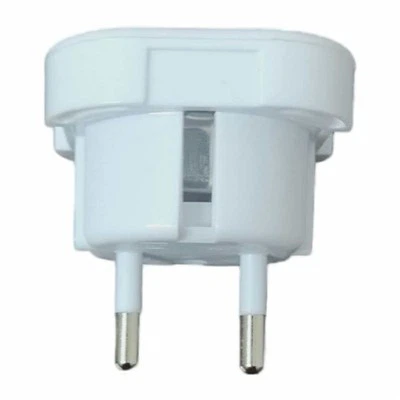
Travel Adapters If you’re in the market for high – quality sockets that can help you maintain stable connections, I’d love to have a chat with you. Whether you need sockets for a small project or a large – scale application, I can provide the right solutions for your needs. Don’t hesitate to reach out and start a conversation about your requirements.
References
- "Python Socket Programming HOWTO" by Gordon McMillan
- "TCP/IP Illustrated, Volume 1: The Protocols" by Richard A. Deal
Foshan Haosheng Technology Co., Ltd.
As one of the leading socket manufacturers and suppliers in China, we warmly welcome you to buy advanced socket made in China here and get pricelist from our factory. All customized products are with high quality and competitive price.
Address: No.4, Jinsha Liansha Shangliang Development Zone Avenue, Danzao Town, Nanhai District, Foshan City, Guangdong Province, China
E-mail: 13925140140@163.com
WebSite: https://www.hssocket.com/
