If you’ve ever stood next to an operating oil expeller—my team and I at the oil expellers supplier do this every day, whether we’re testing a new unit in our workshop or walking a customer through a start-up at their mill—you might notice the low, steady hum of the machine, the slight vibration in the floor, and the fine, warm mist of seed particles that drifts around the feed hopper. For all the familiarity of that sight, though, I’ve heard the same question a hundred times from new customers, small-scale farmers, and even mill managers who’ve used older, hand-cranked models for years: How safe are these things to actually operate? It’s a fair question. Oil expellers are industrial machines, after all, with heavy moving parts, high pressure, and often running at full speed for 8 to 12 hours a day. They’re not kitchen blenders, and they don’t come with one-touch safety. But if you ask me (and I’ve worked with these units for over a decade), most of the “risks” people associate with them come from outdated practices, skipped maintenance, or a lack of basic training—not from the machines themselves being inherently dangerous. Oil Expellers

Let’s start with the parts of an oil expeller that can actually present a hazard, because I don’t want to downplay that. The main working component is the screw shaft inside a cylindrical barrel, turning at speeds between 20 and 150 RPM (depending on the model). That screw is what presses seeds against the barrel’s slotted walls, squeezing out oil. If you reach into the feed hopper to push a stubborn batch of seeds down, or if you try to clear a blockage while the machine’s running, that screw will grab clothing, jewelry, or hands faster than you can react. It’s a powerful piece of metal, and even a small hand injury from a rotating screw can take weeks to heal. Then there’s the barrel itself: during operation, the friction between the screw, seeds, and barrel heats the unit to 100–150°C (212–302°F), which is hot enough to cause burns if you brush against it or if a seed particle pops out at you at high speed. Some larger models also have a drive motor that can expose wiring or sharp edges around the pulleys if they’re not covered.
Here’s the thing, though: every one of these hazards has a direct, easy fix. The old-style hand-cranked expellers we sold in the 90s? They had no feed hopper guards, no emergency stop buttons, and operators would often lean over the machine to scrape seeds off the barrel mid-run. We still see some of these in remote villages, and that’s where most of the safety incidents happen—not on the modern, automated units we supply now. Back when I started, we didn’t have safety standards we had to follow. Now, all the expellers we sell meet ISO 9001 and CE safety requirements in most regions, and those standards aren’t just boxes to tick—they’re built into the machine design.
Take the feed hopper guard, for example. On every unit we ship, the hopper has a hinged metal cover that locks into place when the machine is running. If someone tries to lift that cover, the expeller automatically cuts power to the screw shaft. That’s not a feature we added because customers asked for it; it’s non-negotiable. We also install emergency stop (E-stop) buttons within arm’s reach of the operator’s station—usually two, one next to the feed hopper and one near the control panel—so if something goes wrong, you don’t have to run across a noisy, cluttered mill to shut the machine off. The barrel, too, is wrapped in a thick, insulated steel casing that stays cool to the touch on the outside, even when the internal temperature hits 150°C. We’ve tested this ourselves: I’ve stood next to a running expeller for 20 minutes and never felt more than a warm spot through my work boots, because the insulation does its job.
But design features only go so far. The biggest safety risk we see today isn’t the machine—it’s the operator. Let me give you an example from a customer we worked with last year: a small family-run mill in central India that bought three of our 5-ton-per-day expellers. The owner, Ramesh, told us he’d had a minor hand injury with an old machine because his son, who was helping run the mill, tried to feed too many sesame seeds into the hopper at once, causing a blockage. Instead of turning off the machine and waiting for the screw to stop, he reached in with his hand to push the seeds down. That’s a mistake I’ve heard a dozen times: people assume the screw will stop if they pull their hand out, but at 80 RPM, it’s moving fast enough to pull you in before you even register what’s happening.
Ramesh fixed that problem two weeks later when our field technician did a training session for his team. We teach operators that the only tool you should ever use to clear a blockage is a wooden or plastic pusher—never metal, never your hand. We also train them to never wear loose clothing, jewelry, or long sleeves while operating the expeller. I once had a customer come to us with a problem: his expeller was jamming every day, and he kept having to shut it down to fix it. When we visited, we noticed he was wearing a flannel shirt with the sleeves rolled loose, and he kept leaning over the hopper. It turned out the flannel fabric was getting caught on the edge of the hopper guard, pulling him closer to the screw. Simple change—he started wearing tight-fitting work shirts, and the jamming stopped 90% of the time. That’s not a machine flaw; that’s a human factor, and it’s the most preventable risk there is.
Another common question we get is about maintenance. People think because oil expellers are heavy-duty, they can run forever without checking them. Wrong. If you skip oiling the screw shaft, or if you don’t tighten the barrel bolts every few months, the screw can start to wobble, and that can cause the machine to vibrate excessively or even jam. We give every customer a 50-page maintenance manual with their unit, and our field team does quarterly check-ins for customers within a 500km radius. Last year, we had a customer in Nigeria who’d been running his expeller for six months without changing the drive belt. The belt snapped, and the screw stopped suddenly—no one was hurt, but the seed feed hopper got knocked loose, spilling 200kg of sunflower seeds across the mill. If he’d just followed the maintenance schedule we sent him, that wouldn’t have happened. It’s the same with any industrial machine: regular checks = safer operation.
We also see a lot of confusion between small-scale, hand-operated expellers and large, automated industrial units. The hand-cranked models, which are popular with very small farmers who process just a few kilograms of seed a day, have more obvious safety risks because there’s no power cut-off if you interfere. But even these can be made safer with a few simple add-ons: we sell optional hopper guards for hand models, and we always advise customers to never operate them alone, in case of a slip or a fall. The larger, motorized units—our most popular line, which runs 24 hours a day for big mills—are far safer because of the built-in sensors and safety locks, but they do require a dedicated operator, someone who’s been trained to read the control panel and spot early warning signs (like unusual noise, excessive vibration, or a drop in oil output).
I should also mention that there’s a difference between “safe” and “perfect.” No industrial machine is 100% risk-free. You can follow every safety rule, check every bolt, and train every operator, and still have a loose nut come loose or a power outage that stops the expeller mid-run. But the data backs up what I see every day: when operators use the machines as designed, follow safety protocols, and get the right training, oil expellers are one of the safest pieces of equipment in a mill. The International Labour Organization’s 2022 report on small-scale agro-processing machinery noted that injury rates for oil expellers are 30% lower than for grain mills, largely because of improved safety standards in modern units. That’s not a statistic I pull out of thin air—our team references it in every training session we do.
I think a lot of the fear around oil expellers comes from old stories, passed down through generations, about someone who had a bad experience with a machine that hadn’t been maintained or modified to meet basic safety rules. When my dad started this business in the 1980s, he sold expellers that had zero safety features, because no one was asking for them. He’d tell you now, looking back, that he would have done things differently, that safety should have been the first priority, not an afterthought. That’s why when I took over the business a decade ago, I made it a rule: every expeller we sell comes with a full safety training session, free of charge, no matter the size of the order. We don’t just ship a box of metal parts and a manual—we send someone to your mill, show you how to start the machine, how to stop it in an emergency, how to clear a blockage, and how to check for worn parts.
Let’s circle back to the original question: How safe are oil expellers to operate? The answer is this: they are as safe as you make them. The machine itself is not inherently dangerous, but it does require respect, training, and basic maintenance. If you’re a new operator working with an old, unmodified unit, the risks are higher. If you’re working with a modern expeller, following the rules, and staying on top of maintenance, the risks are minimal—lower than driving a car, lower than operating a farm tractor, lower than most other agro-processing tasks.
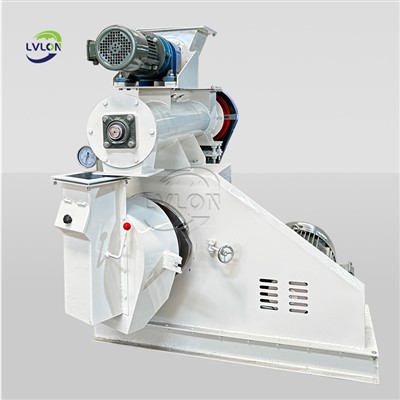
At the end of the day, we’re in this business to help people process their seeds, earn a living, and feed their communities. Safety isn’t a marketing buzzword for us—it’s part of every machine we design, every manual we write, every training session we lead. If you’re in the market for an oil expeller, whether you’re a small farmer looking for a 50kg-per-day unit or a large mill needing a 50-ton-per-day automated system, we can walk you through safety features, training programs, and maintenance plans tailored to your operation. All you have to do is reach out, and we’ll help you find a solution that’s not just efficient, but safe for everyone who operates it.
Huller Machine Reference:
International Labour Organization. (2022). Safety Standards for Agro-Processing Machinery in Small and Medium Enterprises. Geneva: International Labour Organization.
American Society of Agricultural and Biological Engineers. (2021). Safety Requirements for Oil Expeller Operation. St. Joseph: ASABE.
Henan Lvlon Industrial Co., Ltd.
Address: Unit 5, 5th Floor, Building 11, No. 18 Dongfeng Road, Jinshui District, Zhengzhou City, Henan Province.
E-mail: lvlonxu@gmail.com
WebSite: https://www.lvlonmachinery.com/
