Hey there, if you’re working with textile braid hydraulic hoses, you know how frustrating kinking can be. I’ve been in the hose supply game for over a decade, and kinking isn’t just a minor annoyance—it can tank your equipment’s efficiency, cause unexpected downtime, and even lead to dangerous failures out in the field. A lot of folks reach out to me confused, asking why their perfectly good hoses are twisting or folding when they’re routed incorrectly, connected wrong, or just plain misused. Today, I’m breaking down exactly how to prevent kinking, straight from the supplier who builds these hoses day in and day out. No jargon, no fancy fluff—just real stuff that works. Textile Braid Hydraulic Hose
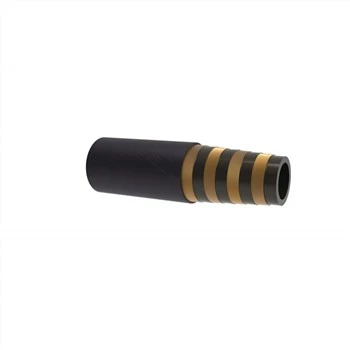
First off, let’s get on the same page about what a kink even is for our textile braid hoses. Textile braid hoses are different from spiral-wire or single-wire braid ones—they have a fabric (that’s the textile) layer wrapped around a synthetic rubber inner tube, right? The braid adds flexibility without a ton of stiffness, which is why they’re great for things like construction equipment, agricultural machinery, or small hydraulic tools. But that flexibility makes them prone to kinks if you don’t handle them right. A kink isn’t just a sharp bend; it’s a permanent twist that crushes the inner tube and the braid, cutting off flow. If you leave a kink, it’ll eventually cause the hose to burst or leak mid-job, and let’s be real—no one wants a worksite shutdown because of a avoidable issue.
Let’s start with the most common mistake I see: improper routing. A lot of installers just run the hose straight from the pump to the cylinder without thinking about how it will move. Hydraulic hoses aren’t rigid pipes—they need room to flex as the equipment works. If you pin a hose between two parts that pivot, like a boom arm on a excavator or a tractor’s lift arm, you’re setting it up to twist. I always tell customers to plan the path so the hose has at least a few inches of clearance on all sides. Don’t run it tight against sharp edges, either—those can wear through the outer cover, but also cause tension that leads to kinks. Another routing tip: avoid crossing hoses over each other. If you have two lines running parallel, they can get twisted as the machine moves, leading to a kink. If you have to cross them, use a hose clip or a tie that keeps them separated. That’s a small thing but makes a huge difference.
Next, hose selection. A lot of people grab whatever hose is closest, but that’s a mistake. Textile braid hoses come in different pressure ratings, sizes, and bend radii. Here’s the thing: every hydraulic hose has a minimum bend radius—if you bend it tighter than that, you’re going to kink it, period. I can’t tell you how many times someone brings back a hose that kinked because they tried to route it around a corner that was too sharp for that specific size. For example, a 1/2-inch textile braid hose has a minimum bend radius of about 6 inches, while a 3/4-inch one needs 9 inches. If you bend a 1/2-inch hose to 4 inches, you’re crushing the inner tube right there. When you’re picking a hose, always check the spec sheet (we include these with every order, fyi) for that minimum bend radius, and make sure your routing leaves enough space. If you have a really tight spot, maybe you need a smaller hose or a different type of braid? Wait, no—sticking to textile, but just matching the hose to the space you have. Oversizing the hose is another issue, actually. A hose that’s too big for the fitting will have extra slack, which can twist when you move it. Get the right size, and that slack is controlled.
Then there’s how you handle the hose when you’re installing it. I see folks dragging hoses across concrete or dropping them off trucks, and that’s bad. Textile braid hoses are durable, but if you yank them when they’re bent, that’s a surefire way to create a kink. Always pick hoses up by the ends, not the middle, when you’re moving them. Don’t step on them or run equipment over them before they’re installed—even a small fold when the hose is empty can become a permanent kink once you pressurize it. When you’re connecting the ends, make sure you’re not twisting the hose while you tighten the fittings. A common trick: hold the fitting with a wrench, and the hose’s outer cover with a pair of pliers (wrapped in tape so you don’t damage the braid) to keep the hose from spinning as you tighten. If you twist the hose during installation, that twist will lock in and become a kink the second you turn on the system. I’ve saved so many installations just by reminding installers to check that the hose is straight before they lock the fittings down.
Wait, what about when the system is under pressure? Even a correctly routed hose can kink if it’s fully pressurized and gets twisted. That’s called a “dynamic kink,” right? When the machine is moving, the hose is expanding and contracting a little, so extra slack is good here. If you have too little slack, the hose can’t flex with the equipment’s movement, so when the arm swings, it twists the hose. I usually recommend leaving about 5-10% slack in the hose length for dynamic applications. Let’s say you need a 10-foot hose between two points—buy a 10.5 or 11-foot one. That extra slack gives the hose room to move without being pulled tight. Also, for systems with a lot of movement, like mobile equipment, use hose guards or swivel joints at the ends. Swivel joints let the hose rotate with the equipment, so it doesn’t twist as it moves. I’ve seen clients switch to swivels and cut kink-related failures by 70%—that’s a game-changer.
Another thing people forget: storing hoses properly before installation. If you leave a textile braid hose coiled up super tight for months, it’ll set in that shape. That’s a memory kink. I’ve had customers open a brand new hose only to find it kinked because the storage rack at their shop had it coiled too small. When you store hoses, coil them loosely—at least the same minimum bend radius as the hose itself—and hang them up or lay them flat, not stacked on top of each other. Don’t leave them in direct sunlight for too long, either—UV rays can weaken the outer cover and make it more prone to kinking. If you have a hose that’s been stored for a while, uncoil it and let it sit straight for a few hours before installing it. That helps get rid of any memory kinks from storage.
What if you do get a kink already? Don’t just cut it off and replace it right away—try fixing it if it’s a small one, but only if you catch it early. First, depressurize the system completely. Never work on a pressurized hose, that’s a safety hazard. Then, straighten the hose out gently—don’t pull on it hard, that can damage the braid. If the kink is minor, you can work it out by hand, bending the hose opposite the kink slowly. If it’s a more serious kink, you might need to heat the area gently with a heat gun (set to low, not hot—you don’t want to melt the rubber) while you straighten it. The heat softens the inner tube and outer cover, making it easier to reshape. But if the kink is severe, where you can see the inner tube is crushed or the braid is broken, you have to replace that section. Trying to fix a bad kink will just lead to a leak or burst later, which is way more expensive than cutting and reconnecting.
Let me also share a few mistakes I see all the time from new customers. One: ignoring the manufacturer’s specs. Every textile braid hose is built to a standard, and the bend radius is non-negotiable. We print it right on the hose itself, actually—look for the line that says “min bend radius.” Two: using too many 90-degree elbows. Every elbow adds a point of tension, so if you can route the hose with a gentle curve instead of a sharp elbow, you’re way less likely to get a kink. Three: over-tightening fittings. If you crank the fittings too hard, you can deform the hose’s end, making it twist when the system runs. Just tighten until the fitting is snug, then add a quarter turn—no more. That’s enough to prevent leaks without damaging the hose.

At the end of the day, preventing kinking is all about planning, matching the hose to your application, and handling it right. It’s not rocket science, but it’s the small details that make the difference between a hose that lasts years and one that’s kinked within a week. If you’re not sure which textile braid hose is right for your setup, or you need tips on routing for a specific piece of equipment, I’m here to help. We’ve been supplying these hoses to construction, agriculture, and manufacturing teams for years, and we can walk you through every step—from selecting the right size to making sure your installation is kink-proof. If you’re looking to upgrade your hydraulic hoses or troubleshoot current kink issues, reach out to our team to talk through your needs. We’ll give you straight answers, no sales pressure, just advice that works for your job.
PVC Hose References:
- Hydraulic Hose Installation and Maintenance Guide, International Hydraulic Society, 2021
- Textile Braid Hydraulic Hose Performance Standards, ASTM International, 2022
- Mobile Equipment Hydraulic Hose Handling Best Practices, Equipment Manufacturers Association, 2020
Hebei Qianli Rubber Products Co., Ltd.
As one of the most professional textile braid hydraulic hose manufacturers and suppliers in China, we have world-leading production equipment and strong manufacturing capabilities. Please feel free to buy bulk durable textile braid hydraulic hose made in China here from our factory.
Address: West industrial Zone, Jing County, Hengshui City, Hebei Province, China.
E-mail: manager@hebeiqianli.com
WebSite: https://www.qianlirubber.com/
