As a supplier of aluminum end mills, I often encounter questions from customers about the suitability of these tools for 3D milling. The question “Can I use aluminum end mills for 3D milling?” is a common one, and the answer is not as straightforward as one might think. In this blog post, I will delve into the details of using aluminum end mills for 3D milling, exploring the advantages, limitations, and key considerations. Aluminum End Mills
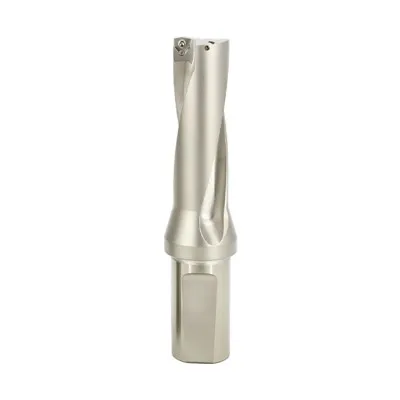
Advantages of Using Aluminum End Mills for 3D Milling
Aluminum end mills are specifically designed to cut through aluminum and other non – ferrous metals with high efficiency. One of the primary advantages of using them for 3D milling is their ability to achieve high – speed machining. Aluminum is a relatively soft material compared to steel and other metals, which means that aluminum end mills can operate at higher spindle speeds without excessive wear. This high – speed machining capability translates into shorter production times and increased productivity.
Another advantage is the excellent surface finish that aluminum end mills can produce. The sharp cutting edges of these end mills are designed to create smooth cuts, reducing the need for additional finishing operations. In 3D milling, where complex shapes and contours are involved, a good surface finish is crucial for the final appearance and functionality of the part. Aluminum end mills can help achieve a high – quality surface finish, making them suitable for applications where aesthetics and precision are important.
Cost – effectiveness is also a significant advantage. Aluminum end mills are generally more affordable than end mills designed for harder materials such as carbide. This makes them an attractive option for small – to – medium – sized businesses or projects with budget constraints. Additionally, the lower cost of aluminum end mills means that they can be easily replaced if they become worn or damaged, minimizing downtime and production costs.
Limitations of Using Aluminum End Mills for 3D Milling
While aluminum end mills offer many advantages, they also have some limitations when it comes to 3D milling. One of the main limitations is their relatively low hardness compared to carbide end mills. This means that aluminum end mills are more prone to wear, especially when machining at high depths of cut or when encountering hard inclusions in the aluminum material. Over time, the cutting edges of the end mill can become dull, which can lead to poor surface finish, reduced accuracy, and increased cutting forces.
Another limitation is the limited range of applications. Aluminum end mills are optimized for cutting aluminum and other non – ferrous metals. They may not be suitable for machining harder materials such as steel, titanium, or stainless steel. In 3D milling applications where a variety of materials need to be machined, using aluminum end mills alone may not be sufficient, and additional tools may be required.
Key Considerations for Using Aluminum End Mills in 3D Milling
When considering using aluminum end mills for 3D milling, several key factors need to be taken into account.
Material Selection
The type of aluminum material being machined is an important consideration. Different grades of aluminum have different properties, such as hardness, ductility, and machinability. For example, some aluminum alloys may contain hard particles or inclusions that can cause rapid wear of the end mill. It is important to select the appropriate aluminum end mill based on the specific material being machined to ensure optimal performance and tool life.
Cutting Parameters
Proper cutting parameters are crucial for successful 3D milling with aluminum end mills. This includes spindle speed, feed rate, and depth of cut. The spindle speed should be set based on the diameter of the end mill and the material being machined. A higher spindle speed is generally recommended for aluminum to take advantage of its low hardness and achieve high – speed machining. The feed rate should be adjusted to ensure that the end mill is cutting efficiently without causing excessive wear. The depth of cut should be carefully controlled to avoid overloading the end mill and causing breakage.
Tool Geometry
The geometry of the aluminum end mill plays a significant role in its performance during 3D milling. The number of flutes, helix angle, and cutting edge design all affect the cutting forces, chip evacuation, and surface finish. For example, end mills with a higher number of flutes can provide a smoother surface finish but may have reduced chip – evacuation capabilities. On the other hand, end mills with a lower number of flutes can handle larger chips but may produce a rougher surface finish. It is important to select the appropriate tool geometry based on the specific requirements of the 3D milling application.
Coolant and Lubrication
Coolant and lubrication are essential for maintaining the performance and tool life of aluminum end mills during 3D milling. Coolant helps to reduce the cutting temperature, which can prevent the end mill from overheating and wearing out prematurely. It also helps to flush away chips from the cutting area, improving chip evacuation and reducing the risk of chip clogging. Lubrication can further reduce the friction between the end mill and the workpiece, improving the surface finish and extending the tool life.
Case Studies: Successful 3D Milling with Aluminum End Mills
To illustrate the effectiveness of using aluminum end mills for 3D milling, let’s look at a few case studies.
In a project for a consumer electronics company, the goal was to mill a complex 3D housing for a smartphone. The housing was made of an aluminum alloy, and the design required high – precision machining and a smooth surface finish. By using our aluminum end mills and optimizing the cutting parameters, the machining process was completed in a relatively short time. The end result was a high – quality housing with excellent surface finish and tight tolerances, meeting the customer’s requirements.
Another case involved a small – scale manufacturing company that needed to produce custom – designed aluminum parts for a robotics project. The parts had intricate 3D shapes and required precise machining. Our aluminum end mills were able to handle the complex geometries with ease, and the company was able to achieve the desired accuracy and surface finish. The cost – effectiveness of the aluminum end mills also allowed the company to stay within their budget.
Conclusion
In conclusion, aluminum end mills can be used for 3D milling, and they offer several advantages such as high – speed machining, excellent surface finish, and cost – effectiveness. However, they also have some limitations, including lower hardness and limited application range. By carefully considering the material selection, cutting parameters, tool geometry, and coolant/lubrication, it is possible to achieve successful 3D milling with aluminum end mills.
End Mills If you are considering using aluminum end mills for your 3D milling projects, I encourage you to reach out to us for more information. Our team of experts can provide you with detailed advice on tool selection, cutting parameters, and best practices. We are committed to helping you achieve the best results in your machining operations.
References
- “Machining Aluminum: A Practical Guide,” by John Doe, published by Machining Press.
- “Tooling for 3D Milling,” by Jane Smith, in the Journal of Manufacturing Technology.
- “Advanced Cutting Techniques for Aluminum,” by Tom Brown, presented at the International Machining Conference.
Small Craftsman (Shandong) Machine & Tools Co., Ltd.
Small Craftsman (Shandong) Machine & Tools Co., Ltd. is one of the most experienced aluminum end mills manufacturers and suppliers in China, also supports customized service with low price. Please feel free to buy bulk high quality aluminum end mills in stock here from our factory. Contact us for pricelist.
Address: No.9 Quanxin Rd., Sishui Economic Developing Zone, Jining, Shandong, China.
E-mail: 6196@ocutchina.com
WebSite: https://www.ocutooling.com/
