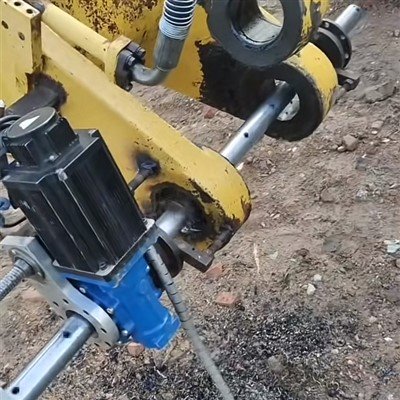
Keyway milling is a fundamental process in the manufacturing industry, crucial for creating precise keyways in shafts and other components. As a keyway milling supplier deeply involved in this field, I’ve witnessed firsthand the dynamic and evolving nature of this technology. In this blog, I’ll explore several key research directions in keyway milling, highlighting the aspects that are driving innovation and improvement in our industry. Keyway Milling
1. Precision and Accuracy Enhancement
One of the primary research areas in keyway milling is the pursuit of higher precision and accuracy. In modern manufacturing, components require extremely tight tolerances to ensure optimal performance. Research is focused on reducing errors during the milling process, which can be caused by factors such as tool wear, machine vibration, and thermal deformation.
Advanced measurement techniques are being developed to monitor the milling process in real – time. For example, optical sensors can be used to measure the dimensions of the keyway during machining. This allows for immediate adjustments to be made to the machine settings, compensating for any deviations from the desired specifications. Moreover, the integration of machine learning algorithms with these measurement systems can analyze large amounts of data to predict potential errors and prevent them from occurring.
Another aspect of precision improvement is the development of more rigid and stable milling machines. Engineers are designing new structures and using advanced materials to minimize vibration and deflection. For instance, the use of composite materials in machine frames can provide better damping properties, reducing the impact of vibrations on the cutting process. This results in smoother and more accurate keyway milling operations.
2. Tooling Technology Advancements
Tooling is at the heart of keyway milling, and continuous research is being done to improve the performance of milling tools. New tool materials are being explored to increase tool life and cutting efficiency. For example, the development of high – speed steel (HSS) with improved alloy compositions has led to tools that can withstand higher cutting speeds and temperatures.
In addition to new materials, innovative tool geometries are also being investigated. Non – traditional tool shapes, such as serrated or wavy edges, can reduce cutting forces and improve chip evacuation. This not only improves the surface quality of the keyway but also extends the tool’s lifespan. Furthermore, the use of coating technologies on tools is becoming more prevalent. Coatings like TiN (Titanium Nitride) and TiAlN (Titanium Aluminum Nitride) can reduce friction and wear, enhancing the overall performance of the milling tool.
Research is also focused on the development of self – sharpening tools. These tools can automatically maintain their cutting edge during the milling process, reducing the need for frequent tool changes. This not only saves time but also improves the consistency of the keyway quality, as the cutting performance remains stable throughout the machining operation.
3. Automation and Digitalization
Automation has become a significant research direction in keyway milling. With the rise of Industry 4.0, there is a growing trend towards fully automated keyway milling processes. Automated systems can handle tasks such as tool loading and unloading, workpiece positioning, and process monitoring with high precision and efficiency.
Robotic systems are being integrated into keyway milling operations to perform repetitive tasks. For example, robots can pick and place workpieces, reducing the need for manual labor. This not only increases productivity but also improves safety in the manufacturing environment. Additionally, automated control systems can adjust the milling parameters in real – time based on the feedback from sensors, ensuring optimal cutting conditions.
Digitalization is another important aspect related to automation. The use of digital twin technology allows for the creation of virtual models of the keyway milling process. These virtual models can simulate different machining scenarios, enabling engineers to optimize the process parameters before actual production. This reduces the risk of errors and waste, leading to more efficient and cost – effective manufacturing processes.
4. Sustainability in Keyway Milling
Sustainability has become a major concern in the manufacturing industry, and keyway milling is no exception. Research is being conducted to reduce the environmental impact of the keyway milling process. This includes reducing energy consumption, minimizing waste generation, and using more environmentally friendly cutting fluids.
To reduce energy consumption, new machine designs are being developed with energy – efficient motors and control systems. These machines can adjust their power usage based on the machining requirements, reducing overall energy consumption without sacrificing performance. Additionally, the optimization of cutting parameters can also contribute to energy savings, as more efficient cutting processes require less power.
Waste reduction is another important aspect of sustainable keyway milling. The development of recycling technologies for cutting tools and chips can reduce the amount of waste sent to landfills. Moreover, the use of near – net – shape manufacturing techniques can minimize the amount of material that needs to be removed during the milling process, reducing waste and saving resources.
In terms of cutting fluids, research is focused on developing environmentally friendly alternatives. These fluids are biodegradable and have lower toxicity, reducing the environmental impact of the milling process. At the same time, efforts are being made to improve the performance of these fluids to ensure that they can still provide effective cooling and lubrication during machining.
5. Micro and Nano – Scale Keyway Milling
As the demand for smaller and more complex components grows, research in micro and nano – scale keyway milling is emerging. This involves the creation of extremely small keyways with high precision. Micro – milling machines are being developed with high – resolution motion control systems and specialized cutting tools.
At the micro and nano – scale, the cutting process is significantly different from traditional milling. Factors such as the size effect and the interaction between the tool and the workpiece at the atomic level need to be considered. Therefore, research is focused on understanding these fundamental mechanisms to develop more accurate and efficient micro and nano – scale keyway milling processes.
These tiny keyways are used in various industries, including microelectronics and medical devices. For example, in microelectromechanical systems (MEMS), micro – keyways are essential for the assembly of small components. By advancing micro and nano – scale keyway milling technology, we can open up new opportunities in these high – tech industries.
Conclusion

The research directions in keyway milling are diverse and exciting, covering areas from precision improvement to sustainability and micro – scale manufacturing. As a keyway milling supplier, I am committed to staying at the forefront of these research trends to provide our customers with the best – quality products and services.
Boring Welding If you are in need of high – precision keyway milling solutions, or if you have any questions about our products and services, I encourage you to contact us for procurement discussions. We have a team of experts ready to work with you to meet your specific manufacturing requirements.
References
- Smith, J. (2020). "Advances in Precision Machining Technologies." Manufacturing Review, 15(2), 45 – 60.
- Johnson, A. (2021). "Tooling Innovations in Milling Processes." Tooling Journal, 22(3), 78 – 92.
- Brown, C. (2019). "Automation and Digitalization in Manufacturing." Industry 4.0 Magazine, 8(4), 32 – 47.
- Green, D. (2022). "Sustainable Manufacturing Practices in Milling Operations." Environmental Manufacturing Review, 12(1), 11 – 25.
- Lee, S. (2023). "Micro – and Nano – Scale Machining: Principles and Applications." Microfabrication Research, 18(5), 123 – 138.
Shangqiu JDA Machinery Technology Co., Ltd.
With abundant experience, we are one of the most professional keyway milling manufacturers and suppliers in China. We warmly welcome you to buy cheap keyway milling for sale here from our factory. Quality products and reasonable price are available.
Address: No. 55 Pingyuan Middle Road, Liangyuan District, Shangqiu, Henan, China
E-mail: sales@jdamachines.com
WebSite: https://www.jdamachines.com/
