If you’ve ever walked through a refinery, a chemical plant, even a municipal water treatment facility, chances are you’ve glanced at dozens of concentric reducers without even realizing it. As someone who’s spent the last 12 years as a pipe fitting reducer supplier, I get asked this question all the time: “What’s the most common job a concentric reducer actually does?” It’s easy to see reducers as just another pipe part—another piece of metal that connects two different-sized pipes. But the concentric version, specifically, isn’t just a generic coupling. It solves a problem that plagues every piping system designer, every plant operator, and every fitter who’s spent hours troubleshooting flow issues: how to transition between two pipe sizes without disrupting the smooth, consistent movement of fluid or gas. And when I say most common application, I’m not talking about a niche use case or a one-off project. I’m talking about the use you’ll find in nearly every pressurized piping system on the planet, from a small brewery to a 10,000-barrel-a-day oil refinery: transitioning main process piping sizes while maintaining uniform flow velocity. Pipe Fitting Reducer
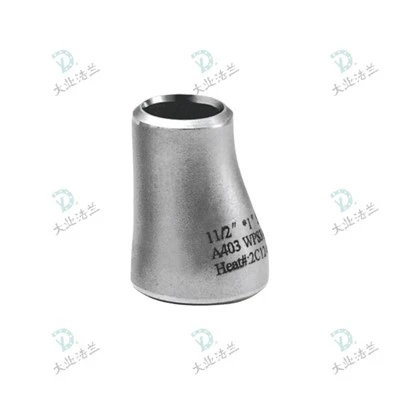
Let’s break that down a little. First, a quick refresher for anyone who might not know: a concentric reducer is a pipe fitting with two ends of different diameters, but their centerlines are perfectly aligned, like two circles stacked directly on top of each other. That’s different from an eccentric reducer, which offsets one end’s centerline to create a flat side, usually used for avoiding air pockets or sediment buildup. Eccentric reducers have their place, sure, but they’re the specialized tool. Concentric is the workhorse. Now, flow velocity—why does that matter? Every fluid or gas moving through a pipe has an ideal velocity range. Too slow, and you get sediment settling out, debris accumulating in the pipe walls, or even bacterial growth in water lines that can cause taste or safety issues. Too fast, and you risk pipe erosion, increased pressure drop, and even damaging pumps or other equipment downstream. For example, in a municipal water supply line, the ideal velocity for distribution mains is usually between 2 and 10 feet per second. If you’ve got a main feed that’s 12 inches in diameter carrying water at a steady 5 feet per second, but you need to connect it to a smaller, 8-inch pipe going to a treatment unit, you can’t just cut the 12-inch pipe down to 8-inch—you have to transition. If you use a fitting that changes the size too quickly, or in a way that disrupts the flow, you’ll get eddies, backflow, or uneven velocity that leads to those sediment buildup problems. That’s where the concentric reducer comes in. Its aligned centerline creates a smooth, gradual transition, so the fluid doesn’t have to veer off course as it moves from the larger to smaller pipe. No sudden changes, no turbulence, no spots where debris can catch.
But let’s talk about real-world examples, not just textbook definitions. Last year, I worked with a mid-sized craft brewery in Ohio that was expanding its fermentation capacity. Their existing process piping was 6-inch schedule 40 carbon steel, carrying wort from the mash tun to the fermenters at a rate of 30 gallons per minute. They needed to run that wort to a new set of 4-inch pipes feeding three additional fermenters. A few of their fitters initially tried to just weld a 4-inch coupler directly onto the 6-inch line, but within a month, they had a problem: the wort, which has solids from the malt, was settling at the connection point, clogging the line and forcing them to shut down production for 12 hours to clear it. They called me, and I recommended concentric reducers as the transition piece. We used a 6×4 inch schedule 40 concentric reducer, which has a wall thickness matching both pipe sizes, and the gradual taper meant the wort velocity stayed consistent at around 4.5 feet per second—right in the sweet spot for preventing sediment buildup. They installed it, and haven’t had a clog in that line since. That’s not a rare story; it’s something I hear from brewers, food and beverage processors, and even pharmaceutical plants every single quarter. In those industries, product contamination and downtime aren’t just inconveniences—they’re costly, sometimes costing tens of thousands of dollars per hour of shutdown. So the concentric reducer isn’t just a pipe part; it’s a tool that keeps production running smoothly.
Another common application that I see every week is connecting centrifugal pumps to piping systems. Centrifugal pumps are designed to operate at a specific inlet and outlet size, and deviating from that can drastically reduce their efficiency or even cause damage. A pump’s inlet is usually sized to handle a lower velocity to avoid cavitation—those tiny vapor bubbles that form in the pump, collapse, and erode the impeller over time. The outlet, by contrast, is often a smaller size to increase pressure, but you can’t just jump from a 10-inch inlet pipe to a 6-inch pump inlet without a proper transition. Using a concentric reducer here ensures that the flow coming into the pump is uniform, so there’s no uneven pressure that could cause cavitation. I had a customer in Texas who runs a water distribution utility, and their pump station was having to replace impellers every 18 months because of cavitation damage. They had been using a poorly fitted eccentric reducer, which was causing uneven flow into the pump. We swapped in concentric reducers for all six of their main pumps, and within two years, they hadn’t needed a single impeller replacement. That’s a huge win for them—impeller replacements cost over $5,000 each, so that saved them around $25,000 annually, not to mention the downtime from removing and reinstalling parts.
Now, you might be wondering: why not just use a spool piece that’s cut and fitted in-house? Why would a supplier like me sell concentric reducers instead? For one thing, concentric reducers are precision-manufactured to strict standards—whether that’s API, ASME, or ISO. That means their taper angle is consistent, their centerline alignment is perfect, and their wall thickness matches the pipe specifications, so there’s no weak point in the weld. A shop-made transition might work for a small project, but for large industrial systems, the consistency is non-negotiable. If you’ve got a 24-inch main process line in a refinery, even a slight misalignment in the reducer can cause turbulence that erodes the pipe over time, leading to leaks or failures. Also, concentric reducers are available in every material you could need: carbon steel, stainless steel, alloy steel, even plastic for water or chemical applications. That means whether you’re working with corrosive acids in a chemical plant, sanitary food-grade lines, or high-pressure oil and gas pipelines, there’s a concentric reducer designed to fit.
I’ve been in this business long enough to know that a lot of people overlook the importance of the right reducer. Last year, I had a customer who tried to save money by using a cheaper, non-standard concentric reducer on a 16-inch steam line in a power plant. The reducer had a steeper taper than standard, and within six months, the line was leaking at the weld. The plant had to shut down a third of their generating capacity to repair it, costing them millions in lost revenue. When I looked at the reducer, it was clear the taper was too steep, causing high turbulence and wear on the pipe. That’s why I always tell customers: don’t cut corners on the reducer. The most common application for a concentric reducer isn’t just “transitioning pipe sizes”—it’s protecting your equipment, preventing downtime, and keeping your system running efficiently.
Let’s address a common misconception too: some people think concentric reducers can’t handle vertical lines. That’s not true. They work perfectly on vertical piping, as long as the flow direction is considered. If fluid is flowing downward through a concentric reducer, the smooth centerline transition is still ideal for maintaining velocity, just like horizontal lines. The only time you’d switch to an eccentric reducer is if you need to keep the top or bottom of the pipe flat—usually for vertical lines with sediment or air pockets. But for the majority of applications, concentric is the go-to.
So when I say the most common application for a concentric reducer, it boils down to this: it’s the primary component used to transition between two different pipe sizes in pressurized piping systems where uniform flow velocity is critical. Whether that’s a pump inlet, a process line in a brewery, a water distribution main, or a chemical feed line, that smooth, aligned taper solves a problem that no other pipe fitting can. It’s not the flashiest part in a piping system, but it’s one of the most essential. Without it, you’d have turbulence, sediment buildup, equipment damage, and costly downtime—none of which any plant manager wants to deal with.
If you’re working on a project right now, whether it’s a small residential plumbing upgrade, a commercial facility build, or a large industrial process expansion, and you need the right concentric reducer to fit your needs, I’m here to help. We carry a full line of concentric reducers in all standard sizes, materials, and pressure ratings, and I can help you pick the right one for your specific application to avoid those common pitfalls I mentioned. Don’t let a bad reducer derail your project or cost you downtime—reach out to discuss your requirements today.
Other Pipe Fittings References
- ASME B16.9, Factory-Made Wrought Butt-Welding Fittings, American Society of Mechanical Engineers
- API 5L, Pipeline Transportation Systems for Petroleum and Natural Gas, American Petroleum Institute
- Pump Handbook, 5th Edition, McGraw-Hill Education
- Process Piping Design Handbook, 3rd Edition, ASME Press
Zhejiang Daye Flange Co., Ltd.
Zhejiang Daye Flange Co., Ltd. is one of the most experienced pipe fitting reducer manufacturers and suppliers in China. With a professional production team, we offer a wide range of flanges with superior quality and competitive price. Welcome to buy CE approved pipe fitting reducer in stock here and get pricelist from our factory. We also accept customized orders.
Address: Headquarter: 8, Gangqiang Road, Yongxing Street, Longwan District, Wenzhou City, Zhejiang Province, China
E-mail: sales@dayeflange.com
WebSite: https://www.daye-flange.com/
