Hey everyone, and welcome to my little corner of the blog – if you’re here, you’re probably either deep in the weeds of warehouse operations, new to managing a team of order pickers, or just someone who’s spent way too much time watching forklift videos (no judgment, I’ve been there too). Let’s cut to the chase because this is a question I get at least once a week from customers, new warehouse managers, even OSHA folks doing routine checks: Do order pickers have brakes? Short answer? Yeah, but not the same kind of brakes your car has, and there’s way more to this than just a yes or no. Order Pickers
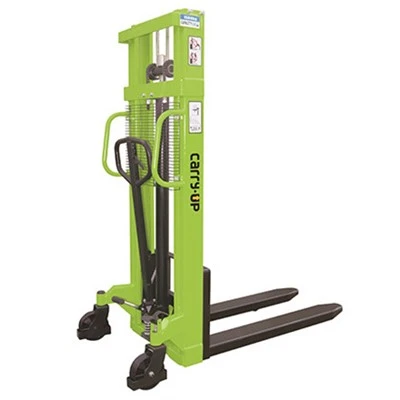
I’m gonna keep this real – I’ve been selling order pickers for like 12 years now, worked with everything from tiny 10-person mom-and-pop warehouses to huge Amazon fulfillment centers, and I’ve seen my share of close calls, happy upgrades, and “why didn’t anyone tell me this?” moments. So I’m not gonna ramble with textbook jargon, I’m gonna talk about what actually works, what doesn’t, and what you need to know because safety isn’t an afterthought – it’s the whole point here.
First, let’s get on the same page about what an order picker actually is, because a lot of people mix them up with forklifts, and that’s where the confusion starts. Order pickers (sometimes called cherry pickers, but wait – real cherry pickers are for construction, let’s get that straight) are those low-to-the-ground, compact vehicles that drive along warehouse aisles, and the operator lifts up a small platform to grab products from the upper shelves. They’re not the big sit-down forklifts that stack pallets 30 feet high, and their brakes are built specifically for that narrow, low-speed environment.
Now, the main brake system on just about every standard order picker out there – the one you’ll find on 90% of units we sell – is called a dynamic braking system. Wait, don’t zone out. Dynamic braking is basically the automatic brake that kicks in the second you let go of the control handle. Let me explain: when you’re driving an order picker, you don’t press a gas pedal and a separate brake pedal like a car. You’ve got a single, joystick-style control (or sometimes a tiller handle, for walk-behind models) that you push forward to go, pull back to slow down, and when you let go entirely? That’s when the brake engages. It’s like how on a mobility scooter, releasing the throttle stops it – except way more precise for warehouse use.
Why is that a big deal? Because in a tight warehouse aisle, if your foot slips, or you get distracted for half a second, you don’t have to fumble for a brake pedal – it stops immediately. I’ve seen so many accidents where a new operator tried to reach for a falling box, let go of the control handle, and the order picker would have kept going if it didn’t have that automatic brake. That’s the bread and butter of order picker brakes, no question.
But wait, that’s not all. All order pickers also have what’s called a parking brake, just like your car. These are manual – usually a big red lever you step on or pull – designed to keep the unit from rolling when it’s parked, even on a slight incline (hey, some warehouses have sloped floors for drainage, don’t sleep on that). I once had a customer who parked three order pickers overnight on a slight incline, forgot to set the parking brake, and by morning two had rolled into a stack of pallets, causing $15k in damage. That’s the kind of story that sticks with you, so the parking brake isn’t something to mess with.
Now, here’s where things get interesting: not all order pickers are the same, and the brakes change depending on what kind you need. Let’s break down the two most common types we supply, because that’s what our customers actually buy: walk-behind order pickers and rider order pickers.
Walk-behind models are the smaller ones, for narrow aisles where there’s barely enough room to turn around. Their brakes are even simpler – the dynamic brake is the main one, and the parking brake is super basic, just a spring-loaded lever. I used to sell a lot of these to small grocery warehouses, and the number one thing I’d tell operators was: don’t test how fast you can go and then let go of the handle to “feel” the brake. Yeah, it works, but it’s meant for emergency stops, not casual slowing down.
Rider order pickers are the bigger, sit-down models for higher-volume warehouses – think places that ship hundreds of orders a day. These have a bit more robust brake system. Some of the newer ones even have what’s called regenerative braking, which is a fancy term for the energy you use to slow down actually charges the battery. That’s a big win for operators because it means longer run times between charges, and less wear and tear on the physical brake parts. Last year we sold a fleet of these to a medical supply warehouse, and their maintenance team cut brake replacement costs by 30% in the first six months – that’s real savings, not just marketing hype.
Now, let’s get to the part no one talks about enough: the common issues with order picker brakes, and what you can do about them. Because brakes only work if they’re maintained, right? I’ve had customers call me panicking saying their order picker “loses brakes” and it’s almost always a simple fix. The biggest issue we see is worn-out contact pads on the dynamic brake. Those pads are like the brake shoes on a car, but they’re made of a softer material to stop smoothly without scraping the motor. After 1,500 to 2,000 hours of use (which is about 6 months of full-time work for most warehouses), those pads wear down, and the brake doesn’t engage as fast. Easy replacement, takes 20 minutes, way cheaper than a whole new brake system.
Another common one is dirty brakes. Warehouses get dust, cardboard fibers, oil spills, all that junk. If gunk gets on the brake pads or the motor’s braking surface, it makes the brake slip. I once had a customer who complained their order picker was rolling when they set the parking brake – turns out there was a layer of sawdust caked on the parking brake lever, so it didn’t engage all the way. A quick wipe down, and it was good as new. That’s the kind of thing that doesn’t show up on a spec sheet, but makes all the difference.
Wait, also: what about when you’re lifting the platform? Does that affect the brakes? Short answer: not usually, but if you’re lifting at full height and you hit a bump, the center of gravity shifts, and the braking distance gets a tiny bit longer. That’s why we always tell operators to slow down when they’re lifting heavy loads or at high shelf levels – extra caution isn’t optional, it’s just common sense.
Let me bust a myth real quick, because I hear this all the time: “If I press the emergency brake, is that the same as the regular brakes?” No, emergency stops on order pickers are for actual emergencies – like if someone walks in front of you, or a pallet falls. Most models have a big, bright red emergency stop button on the control handle, and when you press that, it cuts power entirely, which stops the unit. But if you use that for slow stops all the time, you’ll wear out the brake way faster, and it’s actually more stressful on the motor. Reserve the emergency stop for when you need it, not when you just want to slow down.
Now, for all the warehouse managers and ops directors reading this: here’s the practical stuff you can do to make sure your order picker brakes work when they need to. First, do a pre-shift check every day – it takes 2 minutes. Have operators test that the brake engages when they let go of the control, check that the parking brake locks, and make sure the emergency stop works. I know you’re busy, but a 2-minute check is way better than dealing with an accident that stops operations for days. Second, stick to a maintenance schedule – every 500 hours, have a tech check the brake pads, clean the braking surfaces, and make sure everything is tight. Third, train your operators properly. I’ve seen operators who were trained wrong think they have to press two pedals to brake, which is a recipe for disaster when they’re rushing to grab an order.
Let me wrap this up by answering the original question one more time, clear as day: Yes, order pickers do have brakes. They’re not like car brakes, they’re built for the specific needs of warehouse work – automatic dynamic brakes for when you let go of the control, manual parking brakes for when you’re parked, and emergency stops for crises. But their performance depends on you: maintaining them, training your team, and not cutting corners on upkeep.
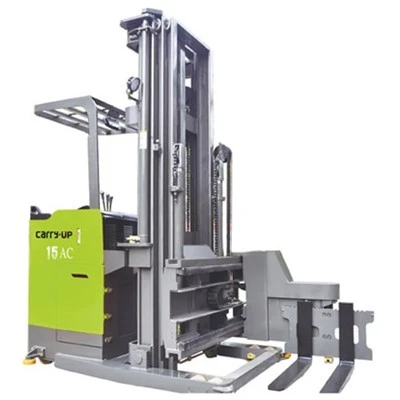
If you’re shopping for new order pickers, need replacement parts, or just have questions about brake safety for your fleet, I’m here. We supply a range of order pickers tailored to different warehouse sizes, from small walk-behind units to high-capacity rider models, all built with reliable brake systems that pass OSHA standards.
Electric Stackers References:
- Occupational Safety and Health Administration (OSHA). (2022). Powered Industrial Truck Operator Training. U.S. Department of Labor.
- Material Handling Industry (MHI). (2021). Order Picker Safety and Maintenance Guidelines. Material Handling Industry Association.
- Industrial Truck Association (ITA). (2020). Standard for Powered Industrial Trucks. Industrial Truck Association.
Hangzhou Carry Equipment Co., Ltd.
Hangzhou Carry Equipment Co., Ltd. is one of the most professional order pickers manufacturers and suppliers in China, also supports customized service. Please feel free to buy advanced order pickers for sale here and get quotation from our factory. For price consultation, contact us.
Address: No.360 Tongxiang Rd., Yinzhou Economic Development Zone, Yinzhou Dist., Ningbo, China
E-mail: Sales@carryupmhe.com
WebSite: https://www.carrymhe.com/
