If you’ve ever walked past a busy beach boardwalk, a suburban farmers’ market, or a downtown festival and spotted a vibrant outdoor kiosk selling ice cream, handmade crafts, or event tickets, you’ve probably wondered: how long does it actually take to build one of these? As a supplier that’s worked on hundreds of outdoor kiosk projects over the past 12 years, I get this question all the time—from small business owners launching their first side hustle to property managers outfitting a new public space. The short answer is, it depends. But let me break down the timeline, step by step, like I’d explain it to a client who’s just reached out for their first quote. Outdoor Kiosk

First, I need to set a baseline. Most of the outdoor kiosks we build fall into two categories: standard modular kiosks and custom-built units. Modular kiosks are pre-designed with fixed sizes (8×10 feet, 10×12 feet) and basic features like a counter, electrical outlet, and weather-resistant panels. These are the most popular for farmers’ markets, pop-up events, and short-term seasonal setups. Custom kiosks, on the other hand, are built from scratch to fit a specific space—say, a curved corner at a downtown transit hub, or a kiosk that needs to fit 10 feet of refrigeration space for a juice stand. For context, I’ll stick to timelines for both, starting with the earliest stage that most people overlook: pre-design planning.
Wait, let’s not skip that pre-design phase. A lot of clients think building a kiosk is just picking a design and assembling it, but that’s where delays happen. For modular kiosks, this phase usually takes 1 to 2 weeks. We start with a discovery call: I ask how they’ll use the kiosk (are they selling hot food that needs a 20-amp line, or handbags that just need a display shelf?), where it’s going to sit (a windy beach? a snowy downtown? that dictates material choice), and what their budget is. From there, we share 2 to 3 modular renderings that align with their needs. For example, a client looking for a beach kiosk won’t get a design with wooden panels that warp in salt air—we’ll recommend aluminum composite panels (ACP) with a marine-grade powder coat. If they’re a food vendor, we’ll add a grease gutter under the counter and a 120-volt outlet for a deep fryer. This phase also includes confirming local permit requirements. I can’t tell you how many times a client has skipped checking with their city or park district only to hit a 2- to 4-week permit delay mid-build. That’s the single biggest reason projects go over timeline. So even for standard units, we always build permit coordination into this pre-design phase, and we charge a small extra fee for our team to handle that legwork—most clients find it worth it to avoid headaches.
For custom kiosks, the pre-design phase stretches to 3 to 4 weeks. Because there’s no off-the-shelf blueprint, we work with an in-house industrial designer to create a 3D model that matches their exact space. Last year, we had a client who wanted a kiosk that fit into a 7-foot-wide alcove at a city library—so the designer had to account for the existing electrical line, a fire code clearance for the entrance, and a display case that didn’t block foot traffic for the library’s front doors. We also ran wind load tests for a client building a kiosk on a pier in Florida; if a structure isn’t rated for 100 mph winds, it’s a safety hazard, so that adds a few extra days to the pre-design process.
Once pre-design and permits are sorted, the build phase starts. This is where the difference between modular and custom becomes obvious. Modular kiosks have a pre-cut parts kit, so the actual build takes 1 to 2 weeks. Our team works out of a 10,000-square-foot fabrication shop, so we can build a standard 8×10 kiosk in 10 business days: we cut the ACP panels, assemble the aluminum frame, install the counter and shelves, wire the electrical, add the lockable doors, and test all features (we even test the locking mechanism to make sure a vendor can secure their inventory overnight). We also include a weatherproof seal around the base for ground placement, so that’s all part of the build timeline. For clients who need to ship the kiosk to a remote location, we add 1 to 2 weeks for crating and shipping, but if they’re local (within 50 miles of our shop), we can often deliver it ourselves.
Custom kiosks, though, take longer to build. On average, 4 to 6 weeks in the fabrication shop. The main holdups are custom parts: if a client wants a unique branded countertop with a 3D logo, that has to be ordered from a specialty fabricator, which can add 1 to 2 weeks. Last quarter, a coffee vendor wanted a kiosk with a built-in cold brew tap that matched their brand’s blue color; we had to have the tap custom anodized, which took an extra 10 days. For materials, if a client requests reclaimed wood for a rustic farm stand kiosk, that means sourcing the wood, sanding it, and sealing it with a UV-resistant finish to hold up to rain—another step that doesn’t exist in a modular build. We also do two rounds of quality checks for custom units: first, a structural check of the frame, then a functional check of all features (shelves, electrical, doors) before it leaves the shop. That adds a couple of extra days, but it’s worth it to avoid issues once the kiosk is on site.
Then comes the on-site installation, which many people underestimate. For modular kiosks, installation takes 1 to 2 days. We bring a small crew of two or three, uncrates the unit, level it on a concrete pad or gravel base, and hook up the electrical and water (if needed). If the client is plugging into an existing line, that’s just a quick wiring check, so the whole process is fast. But if the kiosk needs to go on a grassy area, we have to pour a small concrete pad, which adds 3 to 5 days of wait time for the concrete to cure—another common timeline delay. For custom kiosks, installation is a bit more involved, usually taking 2 to 3 days. Because custom units are often heavier (especially if they have built-in refrigeration), we might need a small crane to lift it into place, which requires scheduling with a local crane company—another step that can add a few days if the crane isn’t available on short notice. We also do a final check after installation to make sure the kiosk is stable, level, and meets all local safety codes, so that’s an extra half day.
Wait, let’s add a real example to make this concrete. Last spring, we worked with a small bakery in Portland that wanted a modular kiosk for the downtown farmers’ market. Here’s how the timeline broke down: Pre-design: 2 weeks (we sent 3 renderings, confirmed the market’s permit requirements, and locked in a 10×12 kiosk with a display case for pastries and a 15-amp line for a toaster oven). Permit approval: 1 week (the market management handles all event permits, so that was smooth). Build phase: 10 days (we assembled the kiosk, installed the display case, and ran a full safety check). Installation: 1 day (we delivered to the market, leveled it, and connected to the market’s existing electrical). Total timeline: 4 weeks from initial call to the kiosk being open for business. That’s a straightforward, on-time project.
Now, a custom example. Last summer, a client from Denver wanted a kiosk for a urban park that was a perfect match for their logo, with a built-in shaded seating area for customers and a space for a small water fountain for dog owners. Here’s the timeline: Pre-design: 4 weeks (we created a 3D model, did a site survey of the park, and got approval from the city’s parks department, which required a structural review). Custom parts: 2 weeks (we sourced the reclaimed cedar for the frame, had the custom logo cut into the counter, and ordered the dog fountain). Build phase: 5 weeks (we fabricated the frame, installed the seating area, wired the electrical for the fountain, and did two quality checks). Installation: 3 days (we used a small crane to place the kiosk on a concrete pad, connected the water line, and did a final safety inspection). Total timeline: 14 weeks. That’s a longer timeline, mostly because of the custom features and city permits.
So, what factors can speed up or slow down this timeline? Let’s list them clearly. First, permits: we always advise clients to check with their local governing body (park district, city hall, event organizer) before they reach out to a supplier. Some areas have fast-track permit programs for small businesses, which can cut the permit phase from 2 weeks to 3 days. Second, custom vs. modular: if flexibility is more important than a one-of-a-kind design, modular can cut 6 to 8 weeks off the timeline. Third, site prep: if the spot for the kiosk is already prepped (concrete pad, existing electrical line), installation is way faster. If the ground is uneven or needs a new foundation, add 1 to 2 weeks. Fourth, material choices: standard materials like aluminum and ACP are in stock, so they don’t add delays. Specialty materials (reclaimed wood, custom anodized metal, imported display cases) can add 1 to 3 weeks. Fifth, budget: not that money is everything, but a client who can prioritize their project and make quick decisions on design, materials, and permit approvals will have a much faster timeline than someone who takes 2 weeks to pick a counter color or delays permit applications.
I should also mention the difference between temporary and permanent outdoor kiosks. Most temporary kiosks for pop-up events last 3 to 6 months, and we build those using lighter, aluminum-framed modular units, with a timeline of 2 to 3 weeks total. Permanent kiosks, which are designed to last 10+ years, use heavier steel frames and marine-grade materials, so their timeline is a bit longer: 6 to 8 weeks for modular permanent units, and 10 to 16 weeks for custom permanent units. That’s an important distinction—if a client says they need a kiosk for a one-time festival, we don’t waste time building a heavy, expensive custom unit, which keeps costs and timelines low.
A lot of first-time kiosk buyers ask if they can build one themselves to save time, and while that’s possible, it usually adds 2 to 3 times the timeline. We’ve had clients who tried to build a kiosk in their garage, only to run into issues with electrical wiring (which can be a safety hazard for outdoor use) or weatherproofing (leading to a kiosk that leaks after the first rain). By the time they fix those issues, they’ve spent more time than if they’d worked with a supplier, and the final product isn’t as durable or code-compliant as one built professionally.
Now, let’s wrap this up with what this means for your project. If you’re a small business owner who needs a kiosk for a seasonal farmers’ market or a pop-up shop, a modular unit is the way to go: total timeline of 4 to 6 weeks, from initial call to launch. If you need a permanent kiosk for a downtown space, a custom build will take 10 to 16 weeks, but it will be tailored exactly to your needs and last for years. The key is to start the process early—even if you’re not sure on all the details, reaching out to a supplier 3 months before you want to launch will give you plenty of time to sort out permits, design, and build.
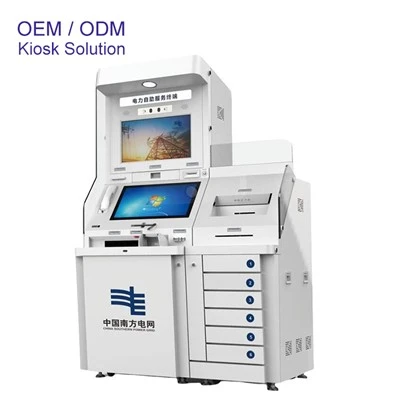
If you’re ready to move forward, our team is here to walk through your needs, answer any questions about timelines, and share tailored options for your space. Don’t let timeline worries hold you back from launching your business or upgrading your public space—we’ve worked with hundreds of clients to get their kiosks built on time and on budget, and we’re ready to do the same for you.
Cash Deposit Kiosk References:
- Outdoor Retailers Association. (2023). Guide to Commercial Outdoor Structure Construction Timelines.
- International Code Council. (2022). Permit and Safety Requirements for Outdoor Kiosks.
- National Association of Concessionaires. (2024). Modular vs. Custom Outdoor Kiosk Project Benchmarks.
- American Society of Civil Engineers. (2023). Wind and Weather Resilience Standards for Outdoor Structures.
Hangzhou Smart Future Technology Co., Ltd.
As one of the most professional outdoor kiosk manufacturers and suppliers in China, we’re featured by quality products and good service. Please rest assured to wholesale custom made outdoor kiosk from our factory. Also, OEM&ODM service is available.
Address: China
E-mail: kelvin.kiosk@smartkiosktech.com
WebSite: https://www.smartkiosktech.com/
