If you’re running a stationery production shop, you know cycle time is the make-or-break metric here. One late mold, a slow molding press, or a bottleneck in the line can throw your whole order schedule off, eat into profits, and leave clients waiting. I’ve spent years working with stationery makers—people who run injection molding machines (IMMs) for pens, highlighters, stapler housings, even custom ruler bases—and let’s cut to the chase: most of them waste 15-20% of their cycle time on avoidable small stuff. That’s thousands in lost revenue each month, no exaggeration. Today, I’m sharing the actionable, real-world tweaks that don’t require a total machine overhaul or a six-figure tech investment. Stationery Making Injection Molding Machine

First, let’s get clear on what we’re actually talking about here for stationery molding. Your cycle time is the total time from loading raw plastic into the IMM, to injecting and cooling the part, to opening the mold, ejecting it, and prepping for the next shot. For small, thin parts like pen barrels or clip tabs, this can be as low as 10 seconds, but for thicker eraser backs or bulky stapler bodies, it creeps up to 45 seconds. Even a 2-second cut per cycle adds up: if you run 10,000 cycles a day, that’s 20,000 saved seconds—over 5 hours of extra production time you can use to take on another small order or cut overtime.
A lot of producers fixate on super high-tech stuff like IoT sensors, but let’s start with the low-hanging fruit you can adjust right this minute with your existing IMM setup. Let’s talk mold prep: stationery molds have tiny details—text for brand names, snap-fit parts, small vents—that are easy to overlook, but clogs or worn surfaces here kill speed. Last year, I worked with a guy who made custom highlighters; his cycle time was stuck at 22 seconds, and he couldn’t figure out why. Turned out, his two-cavity mold (each cavity makes one highlighter barrel) had a tiny vent clogged with black plastic residue. That forced the machine to inject at a way slower speed to avoid burn marks, adding 7 whole seconds per cycle. We cleaned the vents with a non-abrasive mold cleaner (no sandpaper—scratching vents makes clogs worse later) and his cycle dropped to 15 seconds. That’s a 32% improvement just from a 10-minute mold clean.
Another mold hack: if you’re running the same part for months, don’t leave your mold cooling settings on default. Stationery parts are small, but their wall thickness varies. For example, a pen clip has a super thin wall (0.8mm) that cools in just 3 seconds, while a stapler base has a 3mm wall that needs 10 seconds. Too many operators set the mold cooling to one static temp—usually 15°C to 20°C—and leave it. But if you can adjust coolant flow per cavity, you can cut cooling time by 25% on thin parts. For that pen clip mold, we turned the coolant down to 10°C only for the thin-wall cavity; it cooled in 2.2 seconds instead of 3.5, and no warping. Warped parts mean rework, which is even slower, so this tweak kills two birds with one stone.
Next, let’s talk about the IMM itself, not just the mold. A lot of guys I work with run old IMMs because they’re reliable, but they’re running them in manual mode way too long. Automatic cycle modes aren’t just a fancy feature—they sync injection speed, cooling, and ejection perfectly, no waiting for the operator to tap a screen. For example, when you eject a pen barrel, the automatic mode can trigger the next shot load the second the part clears the mold, instead of having the operator manually start it 0.5 seconds later. That might seem tiny, but over 10k cycles, that’s almost 1.5 hours of time.
Wait, but I know what you’re thinking: “My old machine doesn’t have automatic syncing.” Fair. If you’re on a 10+ year-old IMM, there’s a cheap fix you can add before even thinking about a new machine: upgrade your injection pressure and speed settings for low-viscosity plastics. Most stationery is made with polypropylene (PP) or low-density polyethylene (LDPE)—these melt faster and flow easier than other plastics, but a lot of operators set injection pressure too high, “just to be safe.” High pressure means the machine has to work harder, and take longer to fill the mold. We worked with a small stapler maker who was using 800 bar of injection pressure for PP; we dropped it to 550 bar, and his cycle time went from 38 seconds to 29, with zero part defects. That’s a $2,000 upgrade vs. a $50k new IMM—way better ROI.
Now, let’s not forget the secondary operations—those are the hidden cycle killers no one talks about. A lot of stationery shops split their line: one machine molds the part, another trims flash, another assembles the pen clip. If these secondary steps aren’t synced to the molding cycle, you’re wasting time. For example, if your molding line spits out 12 parts per minute, but your trimmer only does 8 per minute, you’ve got 4 parts piling up every minute, waiting, and that means your total production lead time goes up. The fix here is simple: do a “cycle time audit” of every single step, not just molding. Last quarter, a client of mine who made pencil cases realized his trimming step was bottlenecking at 32 seconds vs. the molding cycle’s 25. He swapped to a smaller, faster trim head that cost $800, and his total cycle for the whole line dropped by 7 seconds.
Another thing: raw material handling. Stationery is all about small, consistent parts, so you’d think your plastic pellets are trivial—but they’re not. If your hopper has a filter that’s clogged with dust, the machine will feed plastic unevenly, leading to inconsistent shot sizes, which means you have to pause to adjust settings. We saw a case where a guy’s hopper filter was 60% blocked; his machine was running 10% slower to compensate, and he didn’t notice for 3 months. A $20 filter change fixed that. Also, if you’re using recycled plastic (which is smart for costs), make sure it’s dried properly. Wet plastic causes burn marks, which means extra cooling time or even scrapped parts. Drying recycled PP for 2-3 hours at 80°C before molding keeps your cycle consistent, no delays.
Let’s address the elephant in the room: when is it worth getting a new IMM vs. tweaking the old one? A lot of stationery makers ask me that. If you’re running parts that are 10+ years old, same molds, same materials, and your cycle time is stuck 15% higher than industry averages, a newer electric IMM (vs. old hydraulic ones) can cut cycle time by 20-25% because they’re faster at clamping and injection. But if you’re still figuring out your product lines, or you’re working with small runs, hold off. The tweaks I mentioned earlier—mold cleaning, coolant adjustment, mode changes, secondary sync—can cut your cycle time by 10-15% for $0 to a few thousand bucks, which is way more profitable than a new machine.
Wait, let’s give a real example to make this concrete. Let’s say you make ballpoint pen barrels, cycle time is 18 seconds per part, running 1,000 parts a day. That’s 18,000 seconds, or 5 hours of production. If you tweak your mold, lower injection pressure, and sync your secondary trimming step, you get that cycle time down to 15 seconds. That’s 15,000 seconds = 4 hours 10 minutes. You just gained 50 minutes a day. Multiply that by 22 workdays a month, that’s 18 hours of extra time. What can you do with 18 hours? You can run an extra 1,200 pens a month, take on a small custom order, or cut overtime for your team. That’s real cash, no fluff.
I should also mention a common mistake: chasing super thin walls to save plastic. Yeah, a thinner wall uses less material, but if it’s too thin, you have to slow down injection to avoid breaking the part, which kills cycle time. For stationery, the sweet spot for most parts is 0.8-1.2mm for PP. Last year, a client tried to make a pen clip with 0.6mm walls to save 2 cents per part, but his cycle time went up 6 seconds per part. The total plastic savings was $100 a month, but his lost production time cost him $1,200 a month. That’s a no-brainer—skip the ultra-thin walls unless your client specifically demands it.
Another pro tip: scheduled maintenance, not just reactive. A lot of operators only clean their mold or check their IMM when a part breaks, not every week. Set a 30-minute weekly check: clean mold vents, inspect hopper filters, check coolant lines for clogs, and test injection speed. This prevents those 5-minute, 10-minute, even 30-minute unplanned stops that add up to 2-3 hours a week of lost time. I worked with a shop that had 4 unplanned stops a week, all small—clogged vents, loose injection nozzles, dirty sensors. A weekly check cut those stops to 0.5 a week, and their cycle time went up 8% just from that.
Now, let’s circle back to why this matters for you, the stationery maker. Cycle time optimization isn’t just about making more parts faster—it’s about being more flexible. If you can turn around a custom order 2 days earlier than your competitor, you win the job. If you can cut your per-part production cost, you can underbid others and still make profit. All of this adds up, and it’s all within your control without a massive investment.
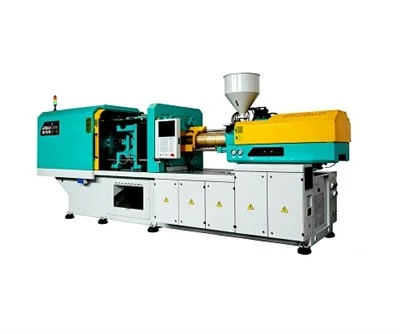
If you’re ready to stop guessing and start optimizing your stationery production cycle time, I’m here to help. I’ve got IMMs tailored for low-volume, high-mix stationery runs, and I can walk you through a free cycle time audit of your current setup—no pressure, no sales pitch, just figuring out what’s slowing you down. You don’t have to overhaul your whole line, just tweak the parts that are costing you time and money.
Specific Application Injection Molding Machines References:
- Injection Molding Magazine. (2021). Cycle Time Reduction Strategies for Consumer Goods Molding.
- Society of Plastics Engineers. (2022). Stationery Injection Molding: Best Practices for Low-Viscosity Thermoplastics.
- International Journal of Manufacturing Research. (2020). Cycle Time Optimization in Small-Scale Injection Molding Operations.
- Plastics Technology. (2021). Mold Maintenance Hacks for Stationery Production to Boost Throughput.
Ningbo Ruizhan Intelligent Equipment Co., Ltd.
With abundant experience, we are one of the most reliable stationery making injection molding machine manufacturers and suppliers in China. Please feel free to buy customized stationery making injection molding machine made in China here from our factory. Quality products and reasonable price are available.
Address: No.491, Meidisi Road, Xincheng Village, Wuxiang Town, Yinzhou District, Ningbo, China
E-mail: aimatemachine@gmail.com
WebSite: https://www.aimatemachine.com/
