If you’re a engineer, mechanic, or facility manager working with hydraulic, pneumatic, or fluid transfer systems, chances are you’ve relied on quick connect connectors to save time on assembly, maintenance, and emergency repairs. One of the most common questions I get from customers, both new and returning, is some version of: “What’s the maximum flow rate my quick connect can handle?” It’s a fair question—too low a flow rate and you’ll bottleneck your system, costing you in lost productivity or performance; too high and you risk pressure drops, seal damage, or even catastrophic connector failure. As someone who’s been in the quick connect connector supply industry for over a decade, I’ve answered this question hundreds of times, and the answer isn’t one-size-fits-all. Let’s break down what actually determines a quick connect’s maximum flow rate, how to calculate it correctly, and what mistakes to avoid. Quick Connect Connector
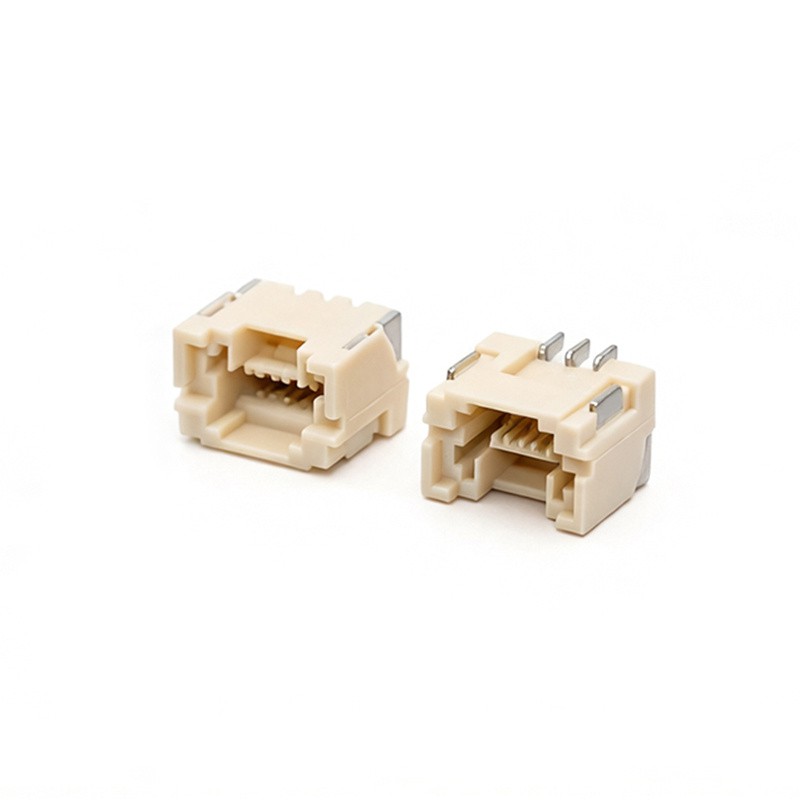
First, let’s get a clear definition: a quick connect connector (also called a quick disconnect or quick coupler) is a pair of mating fittings that allow for tool-free connection and disconnection of fluid lines without spilling or exposing the system to contamination. Unlike threaded or flanged fittings, their design adds a small amount of internal restriction that directly impacts flow. That restriction is the big reason maximum flow rate isn’t just the same as the pipe size you’re using. A ½-inch NPT pipe, for example, has a nominal inner diameter (ID) of roughly 0.62 inches, but a ½-inch quick connect connector might only have a bore diameter of 0.45 inches to fit the locking mechanism, seals, and valve components inside. That smaller bore is the single biggest factor limiting flow—let alone other variables.
I’ve seen too many customers walk in expecting a 1-inch quick connect to move the same volume as a 1-inch full-flow pipe, only to be frustrated when their system is 30% less efficient than advertised. The confusion comes from how manufacturers rate flow. Some will post a “maximum flow rate” based on ideal conditions: clean, non-viscous fluid (like water), a specific inlet pressure, and a maximum allowable pressure drop (usually 1 psi). But real-world conditions change everything. For example, if you’re moving hydraulic oil with a viscosity of 32 cSt at 100°F, the maximum flow rate will be lower than the same connector moving water. If your system has a 5 psi maximum pressure drop (common in high-volume industrial pumps), that’s a different number than a 1 psi drop. That’s why I always tell customers to look beyond the printed flow number and understand how their own setup affects it.
Let’s get into the science a bit, because it matters more than you might think. Flow rate is measured in gallons per minute (GPM) for liquids and standard cubic feet per minute (SCFM) for gases, and it’s directly tied to the cross-sectional area of the bore, the velocity of the fluid, and the pressure drop across the connector. For most industrial fluid systems, the recommended fluid velocity is between 5 and 10 feet per second (ft/s) for hydraulic lines, and 30 to 50 ft/s for pneumatic lines. Exceeding those velocities causes extra pressure drop, turbulence, and even accelerated wear on seals and components. The formula to calculate maximum flow rate for a given connector is:
Flow Rate (GPM) = 0.32 * (Bore Diameter in inches)² * Fluid Velocity (ft/s)
Let’s test this with a common ½-inch industrial quick connect. Suppose it has a bore diameter of 0.45 inches, and we’re working with water (low viscosity, so we can use the 10 ft/s upper end of the recommended velocity for liquids). Plugging in the numbers: 0.32 * (0.45)² * 10 = 0.32 * 0.2025 * 10 = ~0.65 GPM? Wait, no—wait, that’s a mistake I see a lot of people make with the formula. Wait, no, actually, the standard formula for water is GPM = (0.408 * Q) * d², where Q is velocity in ft/s. Wait, let me correct that. The right formula for liquid flow is: Q (GPM) = 0.408 * v * d², where v is velocity, d is inner diameter. So if d is 0.45 inches, v is 10 ft/s, that’s 0.408 * 10 * 0.2025 = ~0.826 GPM. But wait, that seems low—no, because that’s for a bore of 0.45 inches. If you have a larger bore, say 0.6 inches, you get 0.408 * 10 * 0.36 = ~1.47 GPM. That makes more sense. For pneumatic systems, the formula is similar but adjusted for gas density, so a ½-inch quick connect might max out around 50 SCFM at 100 psi, depending on the design.
But here’s the catch: that’s the ideal maximum flow rate without considering the quick connect’s internal valves. Most quick connects have a poppet valve in each half to prevent spillage when disconnected. These valves add another point of restriction. A “valve-less” quick connect (sometimes called a “no-spill straight-through coupler”) will have a higher flow rate than a standard valve-equipped one, because there’s no extra component blocking the bore when connected. Last year, a customer from a food processing plant came to me because their ¾-inch standard quick connect was limiting their washdown system to 12 GPM, when they needed 18 GPM. We swapped them to a ¾-inch valve-less quick connect, and they hit 19 GPM exactly—no other changes needed. That’s the kind of practical flow difference that comes from design choices most customers don’t know about.
Other factors that affect maximum flow rate: pressure. Higher inlet pressure can push more fluid through a given bore, but only up to a point. If you go above the connector’s rated pressure, you risk seal failure or warping of the body, which would change the bore size and alter flow unexpectedly. Viscosity is a huge one. Viscous fluids (like hydraulic oil, grease, or heavy lubricants) don’t flow as easily as water. A quick connect rated for 15 GPM with water might only handle 8 GPM with 46 cSt hydraulic oil—about half. I had a farmer client who was using quick connects for his tractor’s hydraulic lines; he was using a standard quick connect rated for 20 GPM for water, but with his cold-weather hydraulic oil (which is more viscous), he only got 11 GPM, which wasn’t enough to run his front-end loader at full power. We recommended a quick connect with a larger bore, and he’s since been able to run all his attachments without issues.
Temperature also plays a role. Higher temperatures thin fluids, so you can get a higher flow rate with hot water or oil than cold. But high temperatures can also soften seals or plastic components, which might expand and reduce the effective bore size, or cause leaks. For extreme high-temperature applications, we supply quick connects with metal seals and bodies rated for 500°F, which have slightly lower flow rates than standard designs but can handle the heat without failing.
Now, let’s talk about common mistakes customers make when trying to determine maximum flow rate. The first is assuming that the quick connect’s flow rate matches the pipe’s flow rate. As I mentioned earlier, a 1-inch pipe has a much larger ID than a 1-inch quick connect, so their flow rates won’t be the same. Another mistake is using a generic flow rate for all fluids. If you’re moving gas instead of liquid, the flow calculation is totally different—gases are compressible, so flow rate depends on pressure, temperature, and the type of gas, not just bore size. For example, a quick connect rated for 50 SCFM for compressed air might only handle 30 SCFM for nitrogen, which is denser.
Another big mistake is ignoring pressure drop. I’ve seen customers push a quick connect beyond its maximum flow rate to get more fluid, and the result is a pressure drop so high that their pump has to work harder to make up the difference, wasting energy and shortening the pump’s lifespan. The right way is to work backwards: determine your system’s required flow rate, calculate what pressure drop you can afford (most systems can handle 1-5 psi for quick connects), then pick a connector with a maximum flow rate that’s 15-20% higher than your requirement. That buffer ensures you have enough flow without overloading the connector.
What about the different types of quick connectors? I’ve worked with everything from automotive quick connects to industrial hydraulic couplers to pneumatic quick disconnects, and each type has its own flow characteristics. Automotive quick connects for fuel lines, for example, are designed for lower flow rates (usually 5-15 GPM for gasoline), while heavy-duty hydraulic quick connects for construction equipment can handle up to 100 GPM or more. Pneumatic quick connects for tools usually max out around 100 SCFM, matching the needs of most air-powered wrenches and nail guns.
I often get asked if there’s a way to increase flow rate without switching to a larger connector. The short answer is: sometimes, but not always. You can clean the connector internally—over time, dirt and debris can build up on the valve or bore, reducing flow. Last month, a manufacturing plant called me saying their 2-year-old quick connects were running 25% lower than their rated flow. We sent a technician to inspect, and he found fine metal shavings clogging the poppet valves; after cleaning them, the flow went back to 98% of the original rating, no replacement needed. You can also use a valve-less coupler if your application allows (no need for shutoff when disconnecting) to gain 10-15% extra flow. But if you’re already at the manufacturer’s maximum for your connector size, or your fluid is too viscous, switching to a larger bore is the only reliable fix.
As a supplier, my job isn’t just to sell quick connectors—it’s to help customers find the right one for their needs. That means walking through all the variables: what fluid are you moving? What’s its viscosity and temperature? What pressure drop can your system handle? What’s the maximum flow rate you need? I always tell customers that the numbers on a spec sheet are a starting point, not a final answer. For example, a ½-inch hydraulic quick connect might be rated for 20 GPM with water, but if you’re using it for 32 cSt hydraulic oil, the actual maximum is 14 GPM. If you’re using it in a cold climate where the oil is 46 cSt, it drops to 11 GPM. That’s the kind of detail that makes a difference between a system that runs smoothly and one that’s constantly causing downtime.
I’ve seen firsthand what happens when you pick the wrong quick connect for flow. A few years ago, a logistics company installed cheap ¾-inch quick connects on their trailer brake lines. The flow rate was too low for their heavy-duty trucks, and during a routine brake test, the pressure drop was so high that one trailer’s brakes didn’t engage properly, leading to a $10,000 accident and a week of downtime. If they’d come to me first, we would have matched their 100 SCFM required flow to a ¾-inch heavy-duty quick connect designed for pneumatic brake systems, avoiding that problem entirely.
At the end of the day, the maximum flow rate for a quick connect connector isn’t a static number—it’s a function of design, fluid properties, pressure, and the needs of your system. That’s why generic answers almost never work. Whether you’re a small workshop needing quick connects for air tools, or a large industrial facility managing hydraulic lines for heavy equipment, taking the time to calculate your required flow and account for all variables will save you money on repairs, downtime, and inefficient operations.

If you’re not sure what maximum flow rate your application needs, or you’re looking for a quick connect that’s sized correctly for your system, I’m here to help. We work with a wide range of industries, from automotive and agriculture to food processing and manufacturing, and we can guide you through choosing the right connector for your specific setup. Don’t guess when it comes to quick connects—get in touch to discuss your requirements, and we’ll help you find a solution that fits your flow needs perfectly.
Quick Connect Connector References:
- Fluid Power Distribution Council. (2021). Quick Coupler Selection Guide for Hydraulic and Pneumatic Systems. National Fluid Power Association.
- ASME B106.18M-1995. Performance Standard for Fluid Power Quick Disconnect Couplings. American Society of Mechanical Engineers.
- Visitation, M. (2020). Flow Rate Calculations for Quick Connect Fittings. Journal of Industrial Fluid Systems, 12(3), 45-52.
- Food and Drug Administration. (2019). Sanitary Quick Connect Connectors for Food Processing Applications. FDA Food Safety Modernization Act Technical Bulletins.
Wenzhou JKUN Connector Co., Ltd.
As one of the most professional quick connect connector manufacturers and suppliers in China, we’re featured by quality products and low price. Please rest assured to wholesale bulk customized quick connect connector from our factory. For quotation and free sample, contact us now.
Address: No.2667, Ningkang East Road, Yueqing City, Zhejiang Province, China
E-mail: sales@cnjkun.com
WebSite: https://www.jkunjcj.com/
