If you’re a buyer looking to source EPS (Expanded Polystyrene) and EPP (Expanded Polypropylene) molds in China, chances are you’ve already discovered this market is packed with options—but not all suppliers can deliver the precision, consistency, and reliability your production line needs. As someone who’s been designing and manufacturing these molds for 18 years, I’ve walked the fine line between chasing low quotes and ending up with molds that waste your time, money, and raw material. Today, I’m breaking down how to cut through the noise and find a supplier that actually works for your specific needs, no AI-generated generic tips—just real-world lessons I’ve learned working with clients from consumer packaging to automotive parts. EPS EPP Mold
Start With What You Actually Need (Don’t Chase “Cheap” First)
I see so many buyers reach out to me first asking for the “lowest price EPS EPP mold,” and that’s the biggest mistake you can make. EPS and EPP molds aren’t one-size-fits-all. A mold for a lightweight disposable coffee cup insert is way different than a mold for a reinforced automotive bumper core, right? The latter needs to hold tight dimensional tolerances, withstand thousands of injection cycles, and resist the high heat and pressure that EPP processes require, while disposable packaging molds can get away with looser specs.
Before you even start searching, sit down and map out three non-negotiables for your project. First, the material you’ll be using: EPP has a higher melting point and requires more robust core and cavity steel than EPS, so a supplier that only does EPS molds might not have the expertise to make EPP tools that don’t warp mid-production. Second, your production volume: if you need 5,000 parts a year, a low-cost mold made with cheaper steel might work, but if you need 500,000 parts annually, you need a mold built for long runs. Third, your tolerance requirements: consumer packaging might be fine with ±0.5mm, but medical or aerospace components often need ±0.1mm or tighter, and only experienced mold makers can hold that consistently.
Last year, a small startup came to me after working with a “cheap” mold maker in southern China for their custom EPP bike helmet liners. The mold they received had core shifts, leading to uneven liner thickness, and failed after only 2,000 cycles. They’d chosen the lowest quote, not realizing their tolerance needs and production volume required a supplier with specific EPP mold expertise. Don’t let that be you.
Dig Into Credentials: Don’t Trust Their Website Alone
Every mold supplier’s website will say they “specialize in EPS EPP molds” and have “10+ years of experience.” To cut through the marketing fluff, look for three concrete credentials that actually matter.
First, ask for their EPP mold track record specifically. Don’t just ask for a portfolio of EPS molds—ask to see EPP projects that are similar to yours. If you make food packaging, ask to see molds for food-grade EPS or EPP trays. If you work in automotive, ask for EPP bumper molds. I’ve had buyers ask me for a mold sample, and I always send a test plaque we made for a similar component, not just a generic part. If a supplier hesitates or can’t provide recent, relevant references, that’s a red flag.
Second, check their in-house capabilities. A lot of small mold shops in China outsource the critical parts of mold making, like CNC machining of core and cavities or quality testing, to third parties. When that happens, you lose control over lead times and quality. A reputable EPS EPP mold supplier should have in-house CNC mills (5-axis is a big plus for complex EPP molds with undercuts), EDM machines for tight holes, and a dedicated quality control team that does dimensional checks with coordinate measuring machines (CMMs) on every mold before it ships. At my shop, we run every mold through 10 test cycles with actual EPP material before it leaves, not just a dry run with air, to make sure it works as intended. That’s not something an outsourced shop will do.
Third, verify their quality certifications. For molds that will be used in industries like medical, automotive, or food packaging, ISO 9001 is a baseline, but you should also check for industry-specific certifications. For example, automotive clients often require IATF 16949, which ensures strict quality management for automotive parts. Food-grade applications might need compliance with FDA or EU food contact standards. If a supplier can’t provide proof of these certifications, walk away. Last quarter, a client from the EU told me their previous mold supplier’s “FDA-compliant” stamp was just a self-made document, which almost got their entire batch of packaging rejected by customs.
Ask the Right Questions (Not Just “What’s Your Price?”)
When you start reaching out to potential suppliers, the questions you ask will tell you way more about their expertise than any sales pitch. Here are the ones I always encourage buyers to ask, based on common mistakes I see:
-
How do you handle design for manufacturability (DFM) reviews for EPS/EPP? EPS and EPP have unique shrinkage rates—EPP shrinks about 1.5-2% after molding, while EPS can vary based on density. A good supplier won’t just take your CAD file and build the mold; they’ll do a DFM review to adjust the mold dimensions to account for shrinkage, suggest gate locations to avoid warping, and make sure undercuts can be removed without damaging the part. For example, last year I worked on a custom EPP cooler mold where the buyer’s initial design had three gates, which would have left visible marks on the cooler’s surface. Our DFM team suggested a single gate with a sub-cavity that eliminated the need for extra gates, saving the buyer on finishing costs. If a supplier just says “your design is fine” and doesn’t offer any adjustments, they’re not invested in your success—they’re just looking to close the sale.
-
What is your typical lead time for a custom EPS/EPP mold? Custom molds take time: usually 4-6 weeks for a simple EPS mold, 6-8 weeks for a more complex EPP mold, and up to 10 weeks for high-tolerance or multi-cavity molds. I’ve had buyers ask for a mold in 2 weeks, and while some small shops might promise that, they’ll cut corners on material or testing to make it happen. If a supplier quotes you way faster than the industry average, that’s a sign they’re using pre-made standard molds (not custom) or skipping critical quality checks. At my shop, we always provide a realistic lead time, and we never rush a mold—last year we turned down a project for a large appliance manufacturer who wanted the mold in 3 weeks; we knew rushing would lead to defects, so we suggested a timeline that would deliver a mold that worked on the first try, even if it meant taking a little longer.
-
Do you provide mold after-sales support? Molds aren’t a “set it and forget it” purchase. You’ll need spare parts over time, maintenance services, and maybe modifications if your part design changes. A reputable supplier should provide at least 1 year of free maintenance and spare parts for defects in workmanship, and be available to answer questions about mold operation long after delivery. I once had a client in Texas who called me at 8 PM our time because their new EPP mold wasn’t injecting evenly. I walked their operator through adjusting the air pressure settings over the phone, and by the next shift, their parts were back to normal. If a supplier only communicates with you before you pay, and goes radio silent after, you’ll be stuck if you have a problem on the production floor.
Avoid Common Pitfalls That Waste Time and Money
After 18 years in this industry, I’ve seen buyers make the same mistakes over and over when sourcing EPS EPP molds in China. Here are the ones to watch out for:
First, don’t rely only on Alibaba or Made-in-China. Those platforms are great for finding suppliers, but they’re full of trading companies that don’t actually manufacture molds—they just source from small shops and mark up the price. I’ve had clients come to me after working with a trading company that promised them a mold for $5,000, but the actual mold from the factory only cost $3,500. The trading company added $1,500 in markup, and when the mold had defects, the trading company passed the blame to the factory instead of taking responsibility. To avoid this, ask the supplier if they’re the direct manufacturer, and request a visit to their workshop if you can. If you can’t visit in person, ask for a video tour of their machining and mold testing areas—any legitimate supplier will be happy to show you around.
Second, don’t ignore communication. Time zone differences can be tricky, but if a supplier takes 2 days to answer your basic questions, that’s a sign of poor organization. At my shop, we have a team of English-speaking engineers and customer service reps who are available during your working hours (we overlap with most North American and European time zones for at least 6 hours a day) to answer questions, share updates, and resolve issues quickly. If a supplier only communicates via WeChat (and only during their own workday) or sends generic, one-sentence replies, you’ll run into delays and miscommunications down the line.
Third, don’t skip a prototype test. I always recommend that buyers ask for a test mold or a small prototype run of their part before committing to a full production mold. This lets you check the part’s dimensions, surface finish, and consistency before you invest in a full tool set. Last year, a client from a medical device company ordered a full EPP mold for their custom cushion, but when we ran a prototype, we found that the part’s edge was too sharp, which would have failed safety testing. We adjusted the mold’s core design and delivered a revised prototype that passed, saving them from a $20,000 mistake. A good supplier will offer to do a low-cost prototype run as part of the process, because they know it’s better for both of you to catch issues early.
Final Tips to Build a Long-Term Partnership
Once you find a supplier that checks all these boxes, don’t just do a one-off project. EPS EPP molds are a long-term investment, and having a reliable partner in China will save you time and money for years. At my shop, most of our clients have been working with us for 5+ years, because we don’t just sell a mold—we provide ongoing support, help with design adjustments, and make spare parts quickly. When you share your production goals with your supplier, they can help you optimize your mold for lower cycle times, less material waste, and higher part quality, which ultimately helps your bottom line.
If you’re ready to start your search for an EPS EPP mold supplier in China, take the time to verify their expertise, ask the hard questions, and prioritize quality over short-term cost. I’ve seen too many buyers cut corners and end up with molds that are unusable, leading to costly downtime and delays. By following these steps, you’ll find a supplier that delivers molds that meet your needs, on time, and at a fair price.
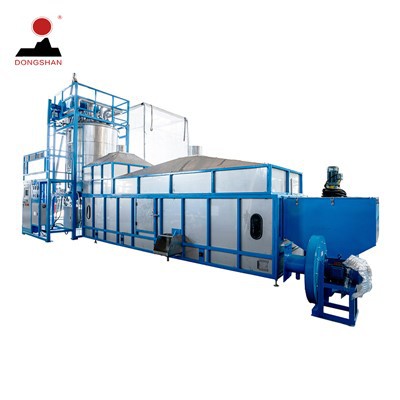
EPS Pre-expander If you’re looking for a partner to design, manufacture, and test your next EPS or EPP mold, feel free to reach out for a consultation and DFM review. We work with clients across industries, from small startups to large multinational corporations, and our team has the expertise to deliver molds that meet your exact specifications.
References
- Global Mold Manufacturers Association. Guide to Sourcing Plastic Molds in Asia. 2022.
- International Organization for Standardization. ISO 9001:2015 Quality Management Systems Requirements. 2015.
- American Society of Mechanical Engineers. Design for Manufacturability Guide for Molded Polymers. 2021.
- China Plastics Processing Industry Association. EPS and EPP Mold Manufacturing Best Practices. 2023.
Hangzhou Fuyang Dongshan Plastic Machinery Co., Ltd.
Hangzhou Fuyang Dongshan Plastic Machinery Co., Ltd. is one of the most professional EPS EPP mold manufacturers and suppliers in China, featured by quality products and low price. Please feel free to wholesale advanced EPS EPP mold made in China here and get quotation from our factory. Customized orders are welcome.
Address: 101 Guanting, Baiqian Villige, Luzhu Town, Fuyang District, Hangzhou City, Zhejiang Province, China
E-mail: xu@dong-shan.cn
WebSite: https://www.epseppmachinery.com/
