If you’ve ever walked through a softgel manufacturing facility, watched the glossy, capsule-shaped gels roll smoothly through drying tunnels or get sorted for packaging, you’ve probably seen one of the most critical yet often overlooked control knobs: the belt speed adjustment on a softgel machine. As a softgel machine supplier with over 15 years of working side-by-side with biotech, nutraceutical, and pharmaceutical production teams worldwide, I’ve seen firsthand how a misadjusted belt can turn a perfect production run into a pile of defective, unusable softgels—or even halt an entire shift. Today, I want to break down exactly what belt speed adjustment is, why it matters, how it works, and what to keep in mind to get it right. Most importantly, I’ll share real lessons I’ve learned from clients who’ve struggled with this setting, because I don’t just sell machines—I help teams run them efficiently. Softgel Machine
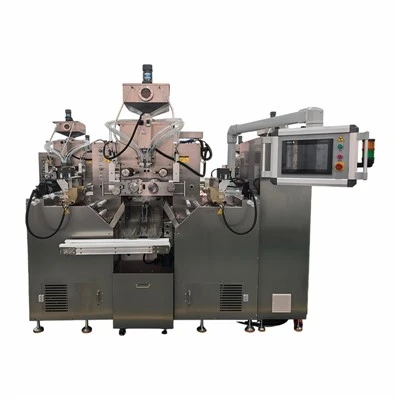
First, let’s ground this in what a softgel machine actually does at its core. Softgel manufacturing relies on the rotary die process: two gelatin ribbons are fed into the machine, a pump pushes liquid or semi-solid formulation (like omega-3 fish oil, CBD, or even pharmaceutical oral liquids) into a cavity between the ribbons, and rotating dies stamp individual softgels, cutting them from the excess gelatin and sealing the edge all in one step. Right after this stamping happens, the softgels are still soft, sticky, and malleable—they need to transfer through the rest of the machine’s process line at a precise rate to set properly, without sticking to each other or the conveyor belt, and without jamming mid-flow. That’s where the belt speed adjustment comes in. Simply put, it’s the ability to tweak the speed of the conveyor belt that carries newly formed softgels from the die station through the drying tunnels, dusting stations, and inspection units. It’s not a one-size-fits-all setting; it’s a dynamic parameter tied directly to your formulation, die size, and downstream equipment.
Let’s start with the most common misconception I hear from new clients: “Faster belt speed means higher production volume, so I’ll crank it all the way up.” I can’t tell you how many times I’ve walked onto a production floor and seen teams do exactly that, only to come back an hour later to a line full of broken softgels stuck to the belt. Here’s why that logic is flawed. When softgels exit the rotary die at, say, 30,000 capsules per hour, each individual capsule is still in the “green” (unset) state—they have a gelatin shell that’s not fully cross-linked, and the interior is either liquid or paste. If the belt moves too fast, two things go wrong. First, the softgels don’t have time to separate from the excess gelatin trim that’s cut off during stamping. That trim (often called “web scrap”) is sticky right after stamping, so if the belt is moving too quickly, it can pull the trim along with the softgels, yanking them off their intended path or leaving leftover gelatin strands stuck to the new capsules, which will make them fail a visual inspection. Second, and even more critical, the softgels need time to “dry set” on the conveyor before entering the drying tunnels. Most softgel formulations require between 15 and 30 minutes of initial surface setting at room temperature after stamping, as the gelatin begins to firm up. If you move them too fast, their surfaces don’t have time to harden, so they merge with adjacent softgels. I remember a nutraceutical client in Portland who tried to boost production for a big holiday order by increasing belt speed by 20%; by the time the line hit the inspection station, 35% of the softgels were defective because they’d stuck together mid-transfer. We had to run the entire batch a second time, delaying their order and costing them thousands in expediting fees. That’s the kind of mistake that makes experienced production leads treat belt speed adjustments with respect, not recklessness.
On the flip side, slowing the belt down too much isn’t the solution either. For one, it cuts into production volume, which is every manufacturer’s bottom line. More importantly, it can cause its own set of problems. If the belt moves too slowly, softgels will sit in the same spot on the conveyor for too long before entering the drying tunnels. This leads to uneven drying: the part of the softgel touching the belt will dry faster than the outer surface, causing the capsule to warp or develop “dimples” that make it unmarketable. In high-humidity facilities, slow belt speed can even make softgels absorb excess moisture from the air before they reach the drying process, leading to shell softness and potential leakage of the internal formulation. A pharmaceutical client in Europe once adjusted their belt speed too low to avoid sticking, and ended up with 18% of their softgels having leaking shells because the slow transfer let the thin gelatin shell absorb too much humidity. That’s a costly error for regulated pharma production, where every defective unit has to be discarded.
So what’s the sweet spot? To get belt speed right, you have to align it with three key variables: your die size, your formulation, and your downstream process parameters. Let’s break each down, using examples from my time working with clients. First, die size. Softgel dies come in all sizes, from tiny 5mm capsules (used for omega-3 supplements) to large 20mm capsules (used for certain pain relief medications). A die that produces larger capsules will have a lower output per minute than a smaller die—so the belt speed has to adjust to match the spacing between the softgels on the conveyor. For example, a 5mm die might produce 500 capsules per minute, with 1cm of space between each capsule on the belt; a 20mm die might produce 200 capsules per minute, with 3cm of space between each. If you use the same belt speed for both, the smaller die will have capsules overlapping, and the larger die will have empty space that wastes conveyor capacity. My team works with all our clients to create a die-specific speed chart for their machine, which we adjust based on their exact die dimensions and stamping rate.
Next, formulation is the biggest variable of all, and this is where I see the most custom adjustment needed. Gelatin type, shell thickness, internal formulation viscosity, and even the humidity of your production environment all change how fast softgels set. For example, a softgel made with bovine gelatin for a vitamin supplement will set faster than one made with porcine gelatin for a CBD product, because bovine gelatin cross-links quicker at room temperature. If you’re working with a high-viscosity internal formulation (like thick herbal extracts), the pressure from the pump during stamping is higher, which makes the softgel shell more pliable right after production—so you’ll need a slightly slower belt speed to prevent deformation. If you’re working with a low-viscosity formulation (like omega-3 fish oil), the shell is thinner and more fragile, so belt speed has to be adjusted to avoid stretching or breaking the shell during transfer. I always tell new clients to run a small test batch first, adjusting belt speed in 5-meter-per-minute increments until they find the sweet spot: softgels are evenly spaced, no sticking to the belt or adjacent capsules, and the shell has a firm surface before entering the drying tunnel. One client in Australia that makes marine collagen softgels told me they tried to use a generic belt speed from a competitor, but it took us three test runs to adjust it to their specific collagen formulation, which has a different gelatin melting point than standard bovine gelatin. Once we nailed the setting, their defect rate dropped from 12% to less than 1%, and their production volume increased by 18% without any additional equipment.
Finally, downstream process parameters matter. The belt speed on your softgel machine has to line up with the speed of your drying tunnels, inspection systems, and sorting equipment. If your drying tunnel runs at a fixed speed, the belt on the softgel machine has to be adjusted so that the softgels are entering the tunnel at the right stage of setting. For example, if your drying tunnel requires 2 meters of conveyor length for the softgels to dry properly, and the tunnel runs at 10 meters per minute, the softgel machine’s belt has to move at a speed that gets them to the tunnel exactly when they’re ready to enter. If you have an automated vision inspection system that sorts defective softgels, the belt speed has to match the inspection system’s scanning rate—too fast, and the camera can’t capture clear images of each capsule; too slow, and the line is underutilized. A nutraceutical client in Canada had a brand new automated inspection system installed, but it was misaligned with their belt speed, so the system was rejecting 10% of good softgels because it couldn’t process the images fast enough. We adjusted the belt speed by 10 meters per minute, and the inspection accuracy jumped to 99.8%.
Now, let’s talk about how belt speed adjustment works in practice, because it’s not just turning a dial on the side of the machine (though some older machines do have manual dials). Most modern softgel machines now have digital control panels that let you adjust belt speed with a touch of a button, with real-time feedback from sensors on the conveyor that detect capsule spacing and deformation. Some high-end models even have automated belt speed adjustment that uses data from your formulation, die size, and downstream equipment to set the optimal speed automatically, which is a game-changer for large-scale production runs. But even with digital controls, it’s still important for operators to understand the “why” behind the setting, not just follow a number from a manual. That’s why my team offers hands-on training for all clients that buy our machines, including a module on belt speed adjustment, tailored to their specific product and facility.
I also want to share a few best practices that I’ve picked up over the years, to help you avoid the mistakes I’ve seen so many clients make. First, always test belt speed with a small batch before running a full production run. Don’t just set the speed that worked for a similar product—formulations vary, and even small changes in gelatin source can change setting time. Second, track defect rates at different belt speeds over time. As humidity in your facility changes (higher in summer, lower in winter), belt speed might need a small adjustment to account for how the environment affects gelatin setting. Third, don’t be afraid to adjust mid-run if you notice a problem. If you see softgels sticking to the belt, slow the belt by a small increment; if you see uneven drying, speed it up a bit. Most modern machines let you make these adjustments without stopping the line, which saves valuable production time. Fourth, work with a supplier that offers custom adjustments for your specific product. A lot of softgel machine providers sell a one-size-fits-all setting, but the best suppliers (like my team) will work with you to adjust the machine to your unique formulation and production needs.
At the end of the day, belt speed adjustment isn’t just a technical setting—it’s a balance between production efficiency and product quality. For small batch producers, getting it right means avoiding costly reworks and meeting customer deadlines. For large-scale pharmaceutical and nutraceutical manufacturers, it means staying compliant with regulatory standards (like FDA guidelines for softgel quality) and keeping production costs low. I’ve seen teams struggle with this setting for years, and I’ve also seen teams that master it, cutting their defect rates by more than half and increasing their production capacity without adding new equipment.
If you’re currently dealing with softgel production issues related to belt speed, or you’re in the market for a new softgel machine and want to make sure it’s tailored to your product, I’m here to help. Our team has decades of experience working with softgel producers of all sizes, and we can walk you through every step of setting up, adjusting, and maintaining your belt speed settings to get the best possible results for your production. Whether you’re a small startup making CBD softgels or a large pharma company producing prescription medications, we can provide the expertise and equipment you need to run your line efficiently. Reach out to our team to start a conversation about your softgel manufacturing needs, and we’ll help you find the right solutions for your operation.
Bottle Filling Machine References:
- Smith, J. (2021). Softgel Manufacturing Technology and Process Control. Journal of Pharmaceutical Engineering, 42(3), 18–25.
- Lee, S., & Patel, R. (2020). Optimization of Rotary Die Softgel Production Parameters for Minimizing Defect Rates. Journal of Nutrition and Food Sciences, 10(6), 1–7.
- International Society for Pharmaceutical Engineering (ISPE). (2019). Softgel Manufacturing Guidelines for Regulatory Compliance. ISPE Press.
- Chen, L., et al. (2022). Effect of Conveyor Belt Speed on Softgel Shell Drying and Quality. Journal of Manufacturing and Materials Processing, 6(2), 45.
Wenzhou Vitol Machinery Co., Ltd.
As one of the most professional softgel machine manufacturers and suppliers in China, we have world-leading production equipment and strong manufacturing capabilities. Please rest assured to buy customized softgel machine made in China here from our factory. Also, quotation is available.
Address: #16 Yongen Road, Longwan Area, WenZhou, Zhejiang, China
E-mail: leapeng01@gmail.com
WebSite: https://www.vitolsoftgel.com/
