Hey there, I’m Jake, and for the last 12 years, I’ve been in the thick of the fence semi trailer game—literally, I’ve shipped these things all over North America, sat in on a million post-delivery check-ins, and heard every horror story you can think of: loads blowing off at 70 mph in a rainstorm, trailers tipping on sharp turns, brakes giving out mid-highway run. If you’re a fleet owner or someone who’s just buying their first set of these bad boys, let me tell you—safety isn’t some afterthought sticker we slap on to make the trailer look good. It’s the only thing standing between you, your driver, and a total disaster on the road. Today, I’m breaking down exactly what safety features a fence semi trailer actually needs, not the fluff marketing guys push. Fence Semi Trailer
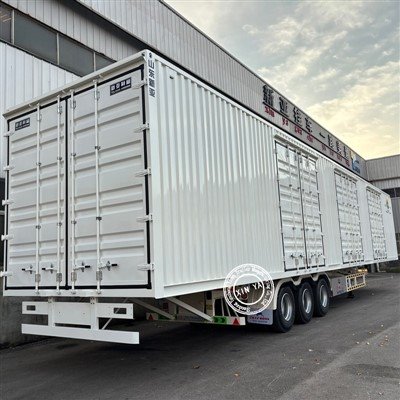
First up, let’s talk about load security—because that’s why you bought a fence trailer in the first place, right? You’re moving bulk stuff: lumber, farm equipment, construction supplies, maybe even steel piping. A flimsy fence that’s 10 years old isn’t gonna hold that 12-foot stack of treated lumber when you hit a pothole or swerve to miss a deer. We’ve been running our fence panels on 3-inch high-tensile steel posts lately, not the cheap 2-inch stuff everyone else uses. Why? High-tensile steel doesn’t bend or snap when there’s heavy weight behind it. And the crossbars? We weld them on every 18 inches, not every 2 feet. That might sound like overkill, but when a load shifts, those crossbars are the only thing keeping the fence from folding like a lawn chair. Also, don’t sleep on the tensioners for the side rails. We use spring-loaded tensioners, not the clunky bolt-down kind. Drivers can adjust them in 10 seconds flat if a rail shifts, no tools needed. Last month, a guy bought two of our trailers for his logging route, and he texted me saying he didn’t lose a single load in three months—something he did twice a month with his old trailers. That’s the win we care about.
Next, braking systems. This isn’t the part you brag about at a truck show, but it’s the reason your driver gets home at night. A lot of cheap fence trailers still use basic drum brakes. I get it—they’re cheaper upfront, but once you’re hauling 40,000 pounds of concrete blocks, drum brakes overheat on long downhill runs, and suddenly you’ve got no way to stop. We spec all our trailers with air disc brakes now, and let me tell you, the difference is night and day. They stop smoother, they don’t fade, and they last twice as long as drum brakes. Also, don’t skip the anti-lock braking system (ABS)—it’s not optional in most states, but even if it was, it’s a lifesaver on wet or icy roads. I once saw a driver in Ohio hit a black ice patch going down a mountain. His old drum brake trailer skidded into a ditch, but the guy with our trailer? He pumped the brakes once, the ABS kicked in, and he pulled over safely. Small feature, huge payoff.
Then there’s lighting and visibility. You wouldn’t believe how many fence trailers have broken marker lights or faded reflectors. At night, if another driver can’t see you, they’ll crash into you before they even realize you’re there. We use LED lighting across the board—they’re brighter, last way longer than incandescents, and don’t blow out half as easily. Also, we add extra clearance lights on the top of the fence posts, not just on the front and back. For tall loads, those are the only thing letting drivers on the interstate know there’s an overheight trailer ahead. And reflectors? We use 3M’s diamond-grade reflectors, not the cheap adhesive ones that peel off after one rainstorm. They reflect light from 500 feet away, compared to the 200 feet you get with regular reflectors. A buddy of mine who’s a DOT inspector told me he clocks half the fence trailers on the road for bad lighting—so this is an easy win to avoid tickets or worse.
Wait, what about the landing gear? That’s the thing that props up the front of the trailer when it’s not hooked to a truck. Cheap landing gear can tip over if you’re not careful, especially on uneven ground. We use heavy-duty cast-iron landing gears, not the stamped steel ones. And we add a safety lock pin that clicks into place when you lower it, so you don’t accidentally retract it while there’s a truck hooked up. Last year, a new driver hired by a construction company forgot to lock the landing gear, and the trailer fell off the kingpin. No one got hurt, but it cost the company $15,000 in repairs and a day of downtime. That’s the kind of preventable stuff we build our trailers to stop.
Also, we can’t forget about stability and suspension. Fence trailers are often top-heavy, right? Hauling farm equipment or tall stacks of pipe means the center of gravity is higher than a dry van. If the suspension isn’t set up right, you’re at high risk of tipping. We use leaf spring suspensions rated for 50,000 pounds, but we also adjust the ride height to keep the center of gravity as low as possible. And we add sway bars—most cheap fence trailers don’t have these, but they stop the trailer from wobbling when you hit a crosswind or pass a big rig on the highway. A few months ago, I was driving next to a trailer without a sway bar on I-95, and when a semi passed it, the fence trailer swerved so bad it almost flipped. Total nightmare. Our trailers? We’ve had zero rollover incidents in 5 years of building them—proof that sway bars work.
One more thing: corrosion resistance. If you’re hauling stuff in wet, snowy, or salty conditions (farm guys, I’m looking at you), rust will eat through a trailer faster than anything. We hot-dip galvanize the entire frame, not just paint it. Hot-dip galvanizing coats every part, even the tiny welds, so there’s no spots where rust can start. And the fence panels get a powder coat finish that’s way tougher than regular paint. I had a customer in Minnesota who runs his trailers through snow and salt all winter. His first set of our trailers is 8 years old, and the frame is still spotless—no rust, no pitting. Compare that to his old trailer, which had to be replaced in 3 years because of rust holes. That saves you money in the long run, too.
Now, let’s cut the B.S. here. A lot of suppliers will try to sell you a “basic” fence trailer for less, but when you factor in downtime, repairs, and potential accidents, that cheap trailer is way more expensive than ours. We don’t cut corners on safety, because we want our customers to come back—we’re not here for one-off sales. If you’re in the market for new or used fence semi trailers, whether you’re a small farm or a big construction fleet, drop us a line to chat about what exactly you’re hauling, where you’re running, and what safety features matter most for your needs. We’ll hook you up with a setup that fits, not some generic trailer off the lot.
Before I wrap this up, let’s make sure I didn’t miss anything. Oh, right—emergency equipment! We include a heavy-duty safety chain that’s rated for 80,000 pounds, so if the trailer ever disconnects from the truck, it doesn’t swing into the road. We also add reflective triangles and a fire extinguisher mounted under the trailer, easy to get to in case of a brake fire. Little stuff, but it’s the difference between a minor issue and a total road hazard.
Look, I’ve been doing this long enough to know that when it comes to your business, every dollar counts, but safety should never be the thing you skimp on. The trailers we build aren’t just metal and steel—they’re what let your drivers go home to their families at the end of the day, and what keep your loads intact so you don’t lose money on replacements. If you’re ready to talk through your options, shoot over a message to get the ball rolling. No sales pitch, no pressure—just straight talk from someone who’s actually been on the road with these trailers.
References
Flatbed Semi Trailer National Highway Traffic Safety Administration. (2022). Commercial Vehicle Brake Safety Guidelines. U.S. Department of Transportation.
American Trucking Associations. (2021). Fleet Safety Best Practices for Heavy-Duty Trailers. ATA Foundation.
Society of Automotive Engineers. (2020). Performance Standards for High-Tensile Steel Fence Trailers. SAE International.
Shandong Yuncheng Xinya Trailer Manufacturing Co., Ltd.
Shandong Yuncheng Xinya Trailer Manufacturing Co., Ltd. is one of the most experienced fence semi trailer manufacturers and suppliers in China, featured by quality products and good service. Please rest assured to buy CE approved fence semi trailer from our factory. Contact us for customized service and OEM service.
Address: No. 008, Hexie Road, Yangzhuangji Town, Yuncheng County, Heze City, Shandong Province
E-mail: fiona@xinyatrailer.com
WebSite: https://www.china-truckfactory.com/
