If you’ve ever walked through a manufacturing plant, stood in an offshore wind farm’s turbine base at high tide, or watched a robotic arm weld car parts in a temperature-controlled workshop, you’ve probably glanced past a small, unassuming component that keeps the entire operation running: industrial connectors. For most of us, a connector is just a way to plug one wire into another, but for the teams that build and run critical infrastructure, it’s the difference between a smooth shift and a catastrophic unplanned downtime. And when that environment is harsh—think salt spray, corrosive chemicals, extreme temperature swings, or constant moisture—corrosion becomes the silent enemy that turns even the sturdiest connector into a failure waiting to happen. That’s where corrosion-resistant industrial connectors come in, and as a supplier that’s worked with manufacturers, energy producers, and automation teams for over a decade, I’ve seen first-hand how the right choice here can save you hundreds of thousands of dollars in lost output, repair costs, and safety risks. Industrial Connectors

Let’s start with the basics: why do standard connectors corrode, anyway? Most off-the-shelf connectors use common metals like brass or steel for their contact pins and housings, plated with thin layers of tin or zinc to ward off light rust. But put that brass connector in a chemical processing plant where you’re exposed to sulfuric acid fumes, or dip it in salt water (like a connector on an offshore subsea cable), and those thin plating layers break down fast. Under humidity, salt, or chemical vapors, galvanic corrosion kicks in—an electrochemical reaction where two different metals in contact with each other (like brass pins and a steel housing) create a small battery that eats away at the material over time. Even the plastic housings of standard connectors aren’t made to stand up to UV radiation from outdoor solar farms or constant exposure to hydraulic fluids, leading to cracks that let corrosive agents seep in and eat away at internal parts.
Corrosion doesn’t just sound like a minor hassle. For a food and beverage plant, it can contaminate batches of product if a corroded connector leaks into processing lines. For a mining operation, a corroded connector in a conveyor system can halt production for hours, as teams have to shut down deep underground to replace a failed part. For wind energy companies, a corroded connector on a turbine’s power cable means climbing 300 feet in high wind to make a repair, at a cost of thousands of dollars per trip. We’ve had a customer in the chemical industry come to us last year—they’d been using generic connectors for their acid transfer pumps, and within 18 months, 40% of their connectors had corroded so badly that signals between the pump and control room cut out mid-shift. The resulting downtime cost them $120,000 in lost production, plus emergency replacement fees that were three times the cost of upgrading to corrosion-resistant connectors. That’s the kind of hit that makes you stop and take this component seriously.
Now, what makes a connector corrosion-resistant? It’s not just one material or feature—it’s a combination of carefully chosen metals, protective coatings, and design elements tailored to the specific corrosive environment. Let’s break down the core components that set these connectors apart.
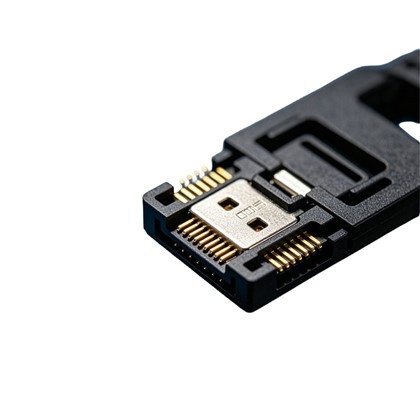
First, contact pins and sockets, the part that actually carries the electrical signal, are where corrosion starts if they’re not protected. Standard connectors use tin-plated brass, but corrosion-resistant options almost always use materials like gold-plated copper alloy, silver-plated nickel alloy, or even solid precious metals for the most extreme environments. Wait, gold might sound fancy, but it’s actually ideal here: gold is inert, meaning it doesn’t react with salt, acids, or humidity, so it never forms rust or oxide layers that block electrical flow. For industrial applications that need to carry high current, silver is a better choice because it has higher conductivity, and we plate it with a thin layer of nickel to prevent it from tarnishing when exposed to sulfur compounds—common in paper mills or oil refineries. We also use copper alloy blends with added chromium or zirconium, which add extra hardness while making the metal more resistant to pitting corrosion, a type that eats small holes through pins over time.
Next, the housing of the connector, which is the first line of defense against external corrosive agents. Standard housings are often made of nylon or regular plastic, but corrosion-resistant connectors use materials like fiberglass-reinforced polyester, thermoplastic elastomers (TPE) formulated for chemical resistance, or die-cast aluminum or stainless steel. For outdoor or marine applications, we use 316 grade stainless steel—this is the stainless steel you see on hospital equipment and marine hardware, because it has 2-3% molybdenum added, which makes it far more resistant to salt corrosion than standard 304 stainless. For food and beverage plants, we use food-grade TPE housings that stand up to constant washdowns with harsh cleaning chemicals, plus they’re non-toxic, so there’s no risk of contamination if a small piece wears off. One customer in a seafood processing plant told us they used to have to replace their connectors every 6 months because of salt spray from the processing tanks; switching to 316 stainless housings cut that replacement time to every 5 years, saving them over $20,000 a year in parts and labor.
Then there’s the sealing system, which is often overlooked but critical. Even the best metals and housings are useless if water, chemicals, or dust get inside. Corrosion-resistant connectors use IP (Ingress Protection) ratings that mean something—IP67, IP68, even IP69K. IP67 means they’re completely dust-tight and can be submerged in up to 1 meter of water for 30 minutes, perfect for off-road equipment that gets covered in mud, or pumps that get splashed. IP68 is for connectors that are permanently submerged, like the ones we supply to subsea cable operators for offshore wind farms. IP69K is the highest for high-temperature, high-pressure washdowns, which is exactly what food and beverage plants use to sanitize equipment. The sealing usually comes from Buna-N rubber or silicone gaskets, which are designed not to break down when exposed to hydraulic fluids, acids, or extreme cold, so they keep out contaminants year after year.
Wait, it’s not just materials—design also plays a big role. Corrosion-resistant connectors often have things like rounded edges, which prevent water or chemicals from pooling in crevices, and self-draining designs for outdoor use. Some also use “bayonet locking” instead of screw-on connections, which creates a tighter, more consistent seal every time, so there’s no gap for contaminants to sneak in. We also see a lot of customizations for specific industries: for solar farms in desert environments, we add UV-stabilizing additives to the plastic housings so they don’t crack from years of sun exposure; for mining equipment, we make connectors with extra-tough pins that can stand up to vibration and dust without letting in moisture.
Let’s talk about real-world applications, because that’s where this matters most. I can tell you about materials all day, but seeing how they work in the field makes it clear. Take the offshore wind industry, which is one of the fastest-growing users of corrosion-resistant connectors. Turbines are out in the middle of the ocean, exposed to 24/7 salt spray, high winds, and extreme temperature swings from -20°C to 40°C. A failed connector here means shutting down a turbine, which produces thousands of dollars in lost power every day. A few years ago, we supplied connectors to a wind farm off the coast of Scotland that was having major issues with standard connectors corroding in just two years. We switched them to 316 stainless steel housings, gold-plated copper pins, and IP68 sealing. Now, three years later, not a single one of those connectors has shown signs of corrosion, and the wind farm estimates they’ve saved over $800,000 in unplanned repairs and lost energy production.
Another example is the chemical processing industry, where corrosion is part of the daily job. One customer that produces industrial cleaning chemicals was using connectors made of standard brass, which would corrode within a year when exposed to fumes from their cleaning agents. We switched them to nickel-alloy pins and chemical-resistant TPE housings, and they’ve gone four years without a single connector failure related to corrosion. That’s not just good for their bottom line—it’s also improved safety, because they don’t have to send workers into hazardous areas to replace failed connectors mid-shift.
Even the automotive industry, which uses a lot of connectors, is moving towards corrosion-resistant options. Electric vehicles (EVs) have hundreds of connectors, and the high-voltage ones that carry power to the battery need to be completely corrosion-resistant—because a failure there could be a safety issue. We supply connectors to several EV manufacturers that use gold-plated contact pins and corrosion-resistant housings to stand up to road salt, rain, and under-hood heat, ensuring that the power flows safely and reliably every time.
Now, if you’re wondering how to choose the right corrosion-resistant connector for your operation, there are a few key questions to ask yourself. First: what’s the environment your connector will be in? Is it indoor and dry, or outdoor with salt spray? Is it near chemicals, or getting hosed down regularly? Once you know that, you can match the right materials: 316 stainless for marine, nickel alloys for chemicals, food-grade TPE for washdowns. Second: what’s the electrical load? If it’s a low-voltage sensor, a tin or gold-plated pin works; if it’s a high-current power connector for a conveyor or wind turbine, you need silver-plated alloy for better conductivity and corrosion resistance. Third: what’s your maintenance schedule? Do you want to replace connectors every year, or go 5+ years without replacement? Corrosion-resistant connectors cost a bit more upfront, but the long-term savings from less downtime, fewer replacements, and lower labor costs almost always make them the better investment.
As someone who’s been in this industry for over a decade, I’ll be honest: a lot of customers come to us thinking, “Why pay more for a connector when the cheap one works fine?” Until it doesn’t. I’ve seen plants shut down for days waiting for a replacement connector that’s corroded, costing them way more than the difference between a standard and corrosion-resistant connector. The right industrial connector isn’t just a component—it’s a part of your system’s reliability, safety, and profitability.
If you’re dealing with frequent connector failures due to corrosion, or you want to future-proof your operations against harsh environments, we’re here to help. We work with all kinds of industries, from energy and manufacturing to food and automotive, to design and supply corrosion-resistant connectors tailored to your specific needs. We don’t do one-size-fits-all—we take the time to understand your environment, your load requirements, and your goals, so you get a connector that works as hard as you do. If you’re ready to stop dealing with corrosion-related downtime and start getting reliable, long-lasting connectors, reach out to our team to discuss your project. We’re here to provide expert advice, competitive pricing, and products that you can count on, no matter what environment you’re working in.
Industrial Connectors References
- Corrosion Resistance of Industrial Connectors: Material Selection and Application Guidelines. International Electrotechnical Commission (IEC) Standard 60512-11-1.
- Offshore Renewable Energy Connector Reliability Report. Global Wind Energy Council (GWEC), 2022.
- Food and Beverage Industrial Connectivity: Sanitation and Corrosion Compliance. National Sanitation Foundation (NSF) International, 2021.
- Galvanic Corrosion in Industrial Electrical Systems. NACE International Publication 501, 2020.
Modelon Precision Industry (Suzhou) Co., Ltd.
With abundant experience, we are one of the most professional industrial connectors manufacturers and suppliers in China. Welcome to buy customized industrial connectors at competitive price from our factory. If you have any enquiry about pricelist, please feel free to email us.
Address: 1st Floor, Building 22, No. 2628 North Gate Road, Kunshan City, Jiangsu Province, P.R.China
E-mail: jessica_huang2025@163.com
WebSite: https://www.modeloncn.com/
