If you work in manufacturing, you’ve probably heard the terms “drilling” and “tapping” thrown around when talking about hole operations—but the tapping cycle on a drilling and tapping center isn’t just one step. It’s a tightly coordinated sequence of movements and commands that turns a simple drilled hole into a usable threaded feature, and it’s one of the core functions that makes our drilling and tapping centers stand out from generic mill-turn machines. Let’s break down what a tapping cycle is, how it works, and why it matters for your production line. Drilling and tapping center
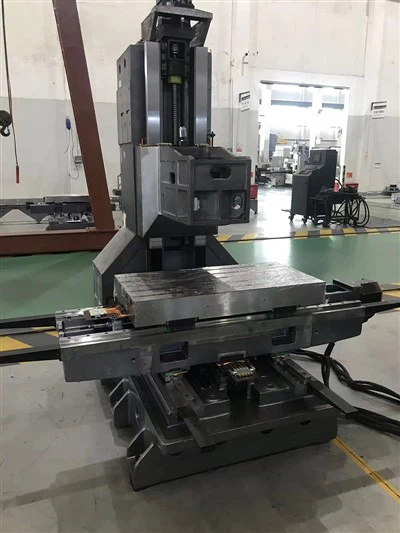
First, let’s set the basics: a drilling and tapping center is a CNC machine designed specifically for two main operations—drilling (creating a round hole in a workpiece) and tapping (cutting internal threads into that hole so a bolt or screw can fasten it). The tapping cycle is the automated, repeatable CNC routine that controls the tapping process, eliminating manual guesswork and reducing errors that come with hand tapping. Unlike on a manual drill press, where you have to reverse the tap by hand to back it out of the hole, the tapping cycle does that seamlessly and consistently, even at high production speeds.
To understand the tapping cycle, let’s walk through its typical step-by-step sequence. Most CNC control systems (like Fanuc, Siemens, or Haas, which our drilling and tapping centers are compatible with) use a standardized G-code for tapping cycles, usually G84 for right-hand threads (the most common type) and G84 P for left-hand threads. Here’s what each part of the cycle does:
- Positioning: First, the machine’s spindle moves to the exact X and Y coordinates where the hole needs to be tapped. Our centers have high-precision linear guides, so this positioning is accurate down to 0.001mm, which is critical for aligning taps with existing drilled holes—no misalignment that would snap a tap mid-operation.
- Rapid Traverse: The spindle moves quickly down toward the workpiece until it reaches the preset Z level just above the hole’s surface, a clearance point that prevents the tap from hitting the material too fast and causing burrs.
- Approach: The spindle slows to a controlled feed rate, matching the pitch of the tap. Taps are labeled with a pitch—for example, a 10mm M10 tap has a 1.5mm pitch, meaning the thread advances 1.5mm for every full rotation. The feed rate for tapping is calculated as feed = spindle speed × pitch, so the machine ensures the tap rotates exactly one full turn for every 1.5mm it moves down, cutting clean threads without stripping. On our drilling and tapping centers, we program this automatically based on the tap size, so operators don’t have to manually input feed values that could lead to mistakes.
- Tapping Depth: The spindle advances downward until it reaches the programmed tap depth. This depth is set to be slightly longer than the fastener’s required engagement depth (usually 1.5 to 2 times the tap’s nominal diameter) to ensure the thread runs the full length needed for a secure fit. Our centers have built-in depth sensors that stop the spindle if it encounters an unexpected resistance, like a hard spot in the workpiece, which saves expensive taps and workpieces from damage.
- Reverse Routine: Once the tap reaches the bottom of the hole, the tapping cycle automatically reverses the spindle direction and retracts the tap back up. This is the key difference between tapping and drilling cycles: a drilling cycle only reverses for clearance, but a tapping cycle reverses at a precise speed that matches the original feed rate, so the tap doesn’t back out too fast and strip the threads. Our drilling and tapping centers use synchronized tapping, which means the spindle’s rotation and the Z-axis movement are perfectly aligned—no lag between rotation and movement, which is essential for consistent thread quality, especially in high-volume runs.
- Retraction: The spindle moves back up at rapid speed until it reaches the initial clearance point above the workpiece, ready to move to the next hole.
Now, why does the tapping cycle matter more than just doing each step manually? For small to medium manufacturers, hand tapping is slow, inconsistent, and prone to errors like cross-threading or stripped taps that waste time and material. For example, if you’re producing 10,000 automotive brackets each with 4 tapped holes, hand tapping would take hours per batch, but our drilling and tapping centers can complete the full tapping cycle in seconds per hole, with 99.9% thread accuracy.
Another common question is: what happens if the tapping cycle is set incorrectly? Let’s say you input a spindle speed that’s too high for a small tap. The tap will spin too fast, and the feed rate won’t match the pitch, leading to “over-pulling” the tap, which strips the threads. If the speed is too low, the tap can bind in the hole, causing it to snap. Our drilling and tapping centers have a built-in feature called tapping torque monitoring, which alerts the operator if the torque exceeds safe limits for the tap size. For example, a M3 tap for aluminum has a lower maximum torque than a M10 tap for steel, and our system will stop the cycle if torque gets too high, preventing tap breakage.
It’s also important to distinguish between rigid tapping and floating tapping cycles—something that’s a common point of confusion for new operators. Floating tapping uses a tension/compression holder that absorbs small errors between the spindle’s rotation and the Z-axis movement, making it a good option for older machines or larger taps. Rigid tapping, which our drilling and tapping centers are equipped for, uses the CNC control’s synchronized axis drive instead of a floating holder, resulting in faster cycle times and more precise thread quality. Rigid tapping is ideal for high-volume production, where consistency and speed matter most.
Let’s put this into a real-world example to make it tangible. A customer of ours, a aerospace component manufacturer, was using a 3-axis mill with a separate tapping attachment, and they were experiencing a 5% tap breakage rate and a 10-second cycle time per tapped hole. They upgraded to our drilling and tapping centers, which feature rigid tapping and synchronized axis control, and their tap breakage rate dropped to less than 0.5%, and the cycle time was cut to 3 seconds per hole. Over a year, that saved them over $120,000 in scrap material and labor costs, just from the improved tapping cycle efficiency.
Another key feature of our drilling and tapping centers is that the tapping cycle can be customized for different materials. Tapping aluminum requires a faster speed and a different feed ratio than tapping stainless steel, because stainless is a harder material that generates more heat. Our system allows operators to save multiple tapping cycle parameters in the CNC control, so they can switch between materials in minutes instead of re-calculating feed and speed values every time. For example, if you’re tapping a magnesium workpiece one day and a steel bracket the next, you just select the pre-programmed cycle for that material, and the machine adjusts the spindle speed and feed rate automatically.
Common mistakes that manufacturers make with tapping cycles include not accounting for hole preparation before tapping. A good drilling and tapping center’s tapping cycle works best when the hole created by the drilling cycle is clean, with no burrs or misalignment. Our machines use a peck drilling cycle as a precursor to tapping, which drills the hole in small, incremental steps to clear chips and keep the hole straight. If you skip peck drilling, chips can get trapped in the hole and cause the tap to bind, leading to thread damage. That’s why our drilling and tapping centers integrate drilling and tapping cycles into one seamless process, instead of treating them as separate operations.
For small job shops, the tapping cycle is also a big advantage because it allows for quick setup. Many job shops run small batches of custom parts, so they need a machine that can switch between different tap sizes in minutes. Our drilling and tapping centers have a tool changer that can hold up to 16 tools, so you can switch from a drill bit to a M6 tap to a countersink tool without manual tool changes. The CNC control saves the tapping cycle G-code for each tool, so operators don’t have to re-program the cycle every time they change a tool.
Let’s talk about quality control, which is another benefit of a precise tapping cycle. Threads that are cut with a consistent tapping cycle will have uniform pitch and depth, which means the fastener will seat correctly without coming loose due to vibration. For industries like automotive or aerospace, where fastener failure can have serious consequences, the consistency of the tapping cycle is non-negotiable. Our drilling and tapping centers undergo rigorous testing before delivery, including 10,000 consecutive tapping cycles to ensure no deviation in performance, so you can count on the same quality every run.
If you’re still running manual tapping or a separate tapping unit paired with a mill, you’re likely dealing with slower cycle times, higher scrap rates, and more labor costs. The tapping cycle on a dedicated drilling and tapping center isn’t just a feature—it’s the core of your production efficiency, turning raw holes into functional threads quickly and accurately.
At our facility, we’ve designed our drilling and tapping centers with input from hundreds of manufacturers, from job shops to large-scale production lines, because we know that the tapping cycle is what makes or breaks a part’s final quality. We don’t just sell machines—we provide solutions that streamline your hole operations, reduce downtime, and cut costs.
If you’re looking to upgrade your tapping process and see how a drilling and tapping center with a precision tapping cycle can transform your production, don’t hesitate to reach out. Our team can walk you through custom configurations, test run samples of your parts on our machines, and help you find the model that fits your production needs. We’re here to answer your questions, address your challenges, and make sure you get the most out of your investment.
Box Way Turning Machine Center References
- Modern CNC Machining: Fundamentals of Drilling and Tapping, Society of Manufacturing Engineers, 2021
- Rigid Tapping vs. Floating Tapping: Performance Guidelines, Machining Science and Technology, Vol. 15, No. 3, 2011
- Tap Breakage Prevention in High-Volume Production, Journal of Manufacturing Processes, Vol. 22, 2016
- CNC Programming for Tapping Cycles, Fanuc Corporation, 2020
Smartech Machinery & Equipment Co., Ltd.
As one of the most professional tapping center machine manufacturers and suppliers in China, we also support customized service. Please rest assured to buy bulk tapping center machine made in China here from our factory. Contact us for more details.
Address: Room 2832, Changping Commercial Mansion, Shihua Road, Futian Free Trade Zone, Shenzhen, China
E-mail: smartech@smartechcnc.cn
WebSite: https://www.smartech-cnc.com/
