Hey everyone, it’s [Your Name] here, and today I’m diving into a question I get every week as a micro gear motor supplier: Can Arduino control a micro gear motor? Let’s cut to the chase first—yes, 99% of the time it can, and it’s way easier than you might think. But before we get into the how, let’s make sure we’re on the same page about what we’re working with. I sell tiny micro gear motors—think the ones that go in small robots, vending machine dispensers, drone camera gimbals, even those DIY coffee cup stirrers people make for projects. These aren’t big, heavy industrial motors; they’re compact, low-power, usually 3V to 12V, with gearboxes that slow their speed down (hence “micro gear motor”) for torque to spin small loads. Micro Gear Motor

First, let’s talk about why this question matters for hobbyists, engineers, and small-scale project builders. If you’re working on a DIY robot that needs to turn a small wheel, or a prototype for a medical device that needs precise motion, you don’t want to overcomplicate things with a fancy motor controller. Arduino is a go-to for most people starting out—it’s cheap, has a massive online community, and there’s a library or tutorial for almost anything. But here’s the thing: Arduino itself can’t just plug directly into a micro gear motor. Why? Because Arduino’s digital pins only put out 5V (for most Uno models) or 3.3V (for Nano ESP32, etc.) and can’t supply enough current to spin even the tiniest 6mm micro gear motor. Most of my motors draw between 100mA and 500mA when running, and an Arduino pin max is like 40mA—so you’d either fry the pin or the motor just wouldn’t turn. That’s where people get stuck, and that’s where I usually hop in to help with tailored solutions.
Let’s break down the setup step by step, because this is where it gets practical. First, you’ve got your micro gear motor—let’s say a 6V DC micro gear motor I stock, which is super popular for small projects. Next, you need two core components: a motor driver module, and a power supply. The motor driver is the middleman between Arduino and the motor. It takes the low-power signal from Arduino (which tells the motor to go forward, backward, or stop) and amplifies that to the current the motor needs. The most common, cheap drivers for beginners are L298N or L293D, but I’ll be honest—for micro gear motors, a smaller, more efficient module like the DRV8833 or even the inexpensive TB6612FNG is better. They’re compact, use less power, and work great for low-voltage tiny motors.
Wait, why does the power supply matter so much? If you hook a motor up to Arduino’s USB power, which is usually 5V at up to 1A total, you might get lucky with one tiny motor, but if you’re running two or more, the Arduino will lag or reset. For my 6V micro gear motors, I almost always recommend a 4xAA battery pack (6V total) or a small lithium-ion battery (3.7V, but boosted to 5V if the motor is rated for 5V) because it’s portable and reliable. Never run a motor off Arduino’s 5V pin alone—trust me, I’ve seen too many beginners burn out their Arduinos that way, which is a way bigger headache than grabbing a $5 battery pack.
Now, the actual coding part—let’s keep this super simple, no fancy jargon. If you’re using the Arduino IDE, the code just needs to send signals to the motor driver’s input pins. For example, if your DRV8833 module has pins named IN1, IN2, and PWM, here’s what the code would do: set IN1 high, IN2 low, and set the PWM value between 0 and 255 to control speed. Higher PWM = faster motor, lower = slower (perfect for precision stuff like gimbals). If you want to reverse, just swap IN1 and IN2. It’s that basic. I’ve had customers build a custom pet feeder prototype using this exact setup—they used two of my 3V micro gear motors, an Arduino Nano, and a DRV8833, and it works flawlessly for dispensing small amounts of food on schedule.
But wait, what if your micro gear motor is a stepper type? Not all micro gear motors are DC—some are stepper motors, which are great for super precise, step-by-step motion. Can Arduino control those too? Absolutely, but you need a stepper driver module, like the A4988 or DRV8825. These drivers let you set microstepping, which means the motor can move in smaller increments, way better for things like 3D printer extruders (another common use for my micro gear motors). The code changes a little—instead of just setting PWM, you tell the Arduino to send a certain number of steps to the driver, so the motor moves exactly how much you want. I had a customer last year working on a small solar tracker prototype, and they used a 12V micro gear stepper motor, Arduino Uno, and A4988 driver to adjust the panel’s angle by 1 degree at a time—no drift, no issues.
Now, let’s address common mistakes I see people make, because these are the things that stop projects dead. First, mismatched voltage. If your micro gear motor is rated for 12V, don’t hook it up to a 5V supply—you’ll get half the torque, and it’ll run slow. I always list exact voltage and current specs for every micro gear motor I sell, so people don’t guess. Second, skipping the motor driver. I can’t tell you how many times someone emails me saying “my Arduino won’t make my motor turn” and when I ask, they say they just plugged the motor wires straight into the Arduino pins. That’s a no-go—always use a driver. Third, not considering load. If your micro gear motor is supposed to spin a small gear, that’s one thing, but if you’re adding a small camera mount on top, you need a motor with enough torque. I stock different torque ratings, so it’s easy to pick the right one—just tell me what your project is, and I’ll point you to the right model.
Here’s a quick pro tip from someone who’s sold hundreds of micro gear motors: if you’re new to this, grab a test kit. A lot of suppliers (including me, wink) sell bundles that have a small Arduino-compatible board, a micro gear motor, a cheap driver, and batteries—perfect for testing without buying individual parts. You can mess around with code, adjust speed, test forward/reverse, and get a feel for how it all works before scaling up for your project.
Now, let’s talk about use cases, because this ties back to why this matters for you as a builder. My micro gear motors are used in everything from educational STEM projects (kids learning about robotics) to industrial prototypes (small conveyor belts for packaging) to consumer electronics (adjustable phone stands). Every single one of these projects uses Arduino paired with a motor driver to control the motor. It’s not just possible—it’s the standard setup for low-power, precise motion control with tiny motors.
Wait, what about more complex stuff, like multiple motors? Can Arduino control two or three micro gear motors at once? Yeah, you just need a driver that can handle multiple channels, or a separate driver for each motor. The Arduino can send separate signals to each driver, so you can run two robots wheels at different speeds, or dispense from two different compartments in a vending machine. I had a customer building a prototype for a small medication dispenser, and they used three of my 6V micro gear motors, each with its own DRV8833, and an Arduino Mega to handle all the signals—worked like a charm.
Now, let’s wrap this up: can Arduino control a micro gear motor? Short answer: yes, as long as you pair it with a proper motor driver, use the right power supply, and match the motor specs to your project. If you’re still stuck, or you’re not sure which micro gear motor is right for your setup, feel free to reach out. I’m here to help—whether you’re a hobbyist building your first robot, an engineer prototyping a new device, or someone just testing a fun DIY project, I can point you to the right motor and the easiest setup to make it work. Don’t guess, don’t waste money on parts that won’t fit—just get in touch, and we can work out the details.
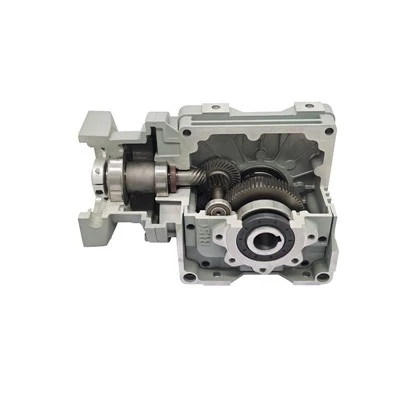
If you’re ready to source micro gear motors for your Arduino project, let’s connect to discuss your exact needs, torque requirements, voltage specs, and any customizations you might need. I’m here to make sure you get the right parts for your project, no hassle, no overcomplicating things.
Parallel Shaft Gearboxes References:
- Arduino Official Documentation. "Motor Control Basics." Retrieved from Arduino.cc educational resources, 2024.
- Pololu Corporation. "Micro Gear Motor Specs and Driver Compatibility." Pololu Application Notes, 2023.
- SparkFun Electronics. "L298N and DRV8833 Driver Comparison for Small Motors." SparkFun Tutorials, 2022.
- Robotics Today. "DIY Robot Motion Control: Arduino and Micro Gear Motor Setups." Robotics Industry Blog, 2024.
GuangDong Ruisico Transmission Technology Co., Ltd.
Guangdong Ruisico Transmission Technology Co., Ltd. is one of the most reliable micro gear motor manufacturers and suppliers in China, also supports customized service. Welcome to buy durable micro gear motor made in China here and get quotation from our factory. For price consultation, contact us.
Address: No. 70, Anjing Road, Shengfeng Community, Xiaolan Town, Zhongshan City
E-mail: info@risc-drive.com
WebSite: https://www.risc-motor.com/
