Hey there, if you’ve ever spent time shopping for globe valves, you’ve probably stumbled on a bunch of numbers—pressure ratings, minimums, maximums, all that tech jargon—and thought, “Wait, what’s the actual minimum pressure I need here?” As a globe valve supplier, I get this question all the time from folks in manufacturing, plumbing, HVAC, and even small-scale chemical processing jobs. A lot of people mix up minimum pressure with max pressure, or assume every globe valve has the same baseline. Let’s break this down like we’re geeking out over a project over coffee, no stuffy textbooks required. Globe Valves
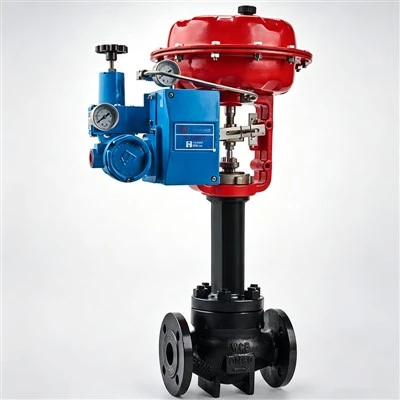
First, let’s start with the basics: globe valves are those little workhorses that use a movable disc (or plug) against a stationary seat to control flow, right? They’re super common for throttling, not just on/off, which is why pressure requirements matter so much more here than with, say, a ball valve. Now, the minimum pressure—this isn’t just a random number we pull from thin air. It’s the lowest pressure the valve needs to work reliably, not leak, and not damage itself when it’s open or partially open.
Let’s get into the real-world numbers first, because that’s what everyone cares about. For standard, off-the-shelf globe valves (the ones we ship most of the time—carbon steel for water, brass for plumbing, that stuff), the minimum working pressure is usually around 15 to 20 PSI. Wait, hold on—why not lower? Let’s test that logic. If you have a 5 PSI water line and a globe valve here, what happens? The disc doesn’t seat properly when you close it, or it chatters when you’re trying to throttle flow. That chatter is a big deal—it’s that vibration you feel when the disc is bouncing on the seat, and over time, it wears out the seat and disc way faster than normal. We’ve had customers tell us they put a cheap globe valve on a 10 PSI line, and it was leaking within 6 months because of that chatter. That’s the kind of headache we want to help you avoid.
But wait—this isn’t a one-size-fits-all number. The minimum pressure changes depending on what the valve is made of, what it’s handling, and even the size of the valve. Let’s dive into those variables because this is where most people go wrong. First, material: brass globe valves, which are super popular for residential plumbing and low-pressure HVAC, actually have a bit lower minimum—usually 10 PSI. Brass is softer, so it doesn’t take as much pressure to seat the disc tight, which makes sense for smaller, lighter systems. But if you’re dealing with a carbon steel globe valve for a 2-inch industrial water line, that 10 PSI? Too low. Steel parts are stiffer, so you need that extra 5 PSI to push the disc firmly against the seat and stop that chatter. Then there’s stainless steel globe valves for chemical processing—those can be a bit higher, around 20 to 25 PSI, because the disc is tighter and needs more pressure to seal against corrosive fluids that might try to creep past small gaps.
Next, what’s the valve handling? If it’s plain water, that baseline 15-20 PSI works. But if you’re moving a viscous fluid—like oil, or even thick coolant in a machine—you need a higher minimum pressure. Viscous fluids don’t flow as easily, so they don’t push the disc as hard against the seat. I had a customer last year who had a globe valve on a 3-inch line pumping hydraulic oil at 12 PSI; the valve kept leaking through the seat because the oil was too thick to apply enough force. We swapped it for a slightly sturdier model (same size, just a beefier disc) and adjusted the spec to a 25 PSI minimum, and that fixed it instantly. On the flip side—wait, is there a case where you can go lower? Yeah, if it’s a gas? No, wait, gas is trickier. Wait, no—for gases, the minimum pressure is actually a bit higher, like 20 PSI, because gases are more likely to leak past small seat gaps when pressure is low. That’s a key point—fluid type isn’t just “what’s it made of” but phase (liquid vs gas) and viscosity.
Valve size is another big one. A ½-inch globe valve for a sink faucet doesn’t need 15 PSI—your standard household line is 40 PSI, so that’s way above, but if you had a tiny ¼-inch globe valve for a small instrument line? I’d still suggest a minimum of 12 PSI, because small valves have smaller seats, so even a tiny pressure drop can cause that disc chatter. On the flip side, a 10-inch industrial globe valve for a pipeline? Its minimum pressure is around 18 PSI, which is lower than a 4-inch valve of the same material, because the larger line has more flow force that pushes the disc tighter. That’s a counterintuitive point—bigger size doesn’t always mean higher minimum pressure, it’s all about the force balance between the fluid pushing on the disc and the weight of the disc itself.
Wait, let’s talk about a common exception: what if you have to use a globe valve on a line with lower pressure than that minimum? I get this all the time—small businesses, DIYers, people retrofitting old systems where you can’t bump up line pressure. Is there a workaround? Yeah, actually. We sell something called a “low-pressure globe valve trim”—it’s a modified disc and seat that’s smoother, so it seats tighter with less pressure, and it’s balanced to reduce chatter at lower pressures. Those can work down to 5 PSI, no problem. But I always warn customers—don’t just grab a standard valve and force it on a low-pressure line, because you’ll end up with leaks and premature failure. That trim is a cheap upgrade that saves you way more money in the long run.
Also, let’s clear up a myth: minimum pressure isn’t the same as the pressure rating. The pressure rating (like 150 PSI, 300 PSI stamped on the valve) is the max pressure the valve can handle. Minimum is the floor, not the ceiling. A lot of new buyers mix these up, thinking “a 150 PSI valve works for any pressure up to 150, so minimum is 0.” No way—you’d be that person with the leaking valve we talked about earlier.
Now, let’s tie this back to what you need as someone buying globe valves. First, don’t just ask for “a globe valve”—tell us: what’s the line fluid (water, oil, gas, chemical)? What’s the line size? What’s the operating pressure range of that line? If it’s consistently 8 PSI, we’ll hook you up with the low-pressure trim. If it’s 20 PSI and plain water, standard brass works. If it’s 30 PSI and hydraulic oil, go for carbon steel. We don’t do one-size-fits-all here, which is why our job is to ask you those questions instead of just shipping a random valve.
I’ve been in this game for 8 years, and the number one mistake I see is people undercalculating minimum pressure. Last year, a food processing plant ordered 10 6-inch carbon steel globe valves for their water lines, operating at 12 PSI. They skipped talking to us, went with a cheap online supplier that sent standard valves, and within 3 months, half the valves had seat leaks from chatter. They ended up paying twice to replace them, plus downtime, which is way worse than just picking the right valve the first time. That’s why we’re not just a supplier—we’re the guys who’ll help you get the spec right so you don’t have to deal with that headache.
So to recap the key takeaways, no tech jargon:
- Standard off-the-shelf globe valves need a minimum of 10-20 PSI, depending on material and size.
- Viscous fluids, gases, and larger valves might need a bit more.
- If your line is below that, ask about low-pressure trim—works great for most applications.
- Never assume “minimum pressure is 0”—that’s a quick way to end up with leaks and broken valves.
If you’re working on a project right now, whether it’s a residential bathroom redo, an industrial factory line, or a small HVAC system, and you’re not sure what minimum pressure you need for your globe valve, hit us up. We can walk through your specs, send you the right valve, and even answer any random questions you have—no sales pitch spam, just straight talk. Don’t waste money on the wrong valve; get it right the first time.
Special Valve REFERENCES
- Valve Manufacturers Association. (2021). General Specification for Globe Valves for Industrial Service. VMA-100-2021.
- American Society of Mechanical Engineers. (2019). B16.34: Valves – Flanged, Threaded, and Welded End. ASME International.
- Hydraulic Institute. (2020). Flow Control Valves: Selection, Installation, and Maintenance Guidelines. HI 2.1-2020.
Shandong Yuhong Valve Co., Ltd.
Address: Intersection of Chuangye Avenue and Huanghe Road, Zhangdian District, Zibo City, Shandong Province
E-mail: info@yuhong-valve.com
WebSite: https://www.yh-controlvalve.com/
