Alright, let’s break down what actually goes into pricing a 1 MVA substation transformer—straight from the guys who sell these things every day. I’m Jake, been running the side of our company that handles medium-power transformers for about 8 years, and I get this question at least twice a week: “How much is a 1 MVA substation transformer?” Substation Transformer
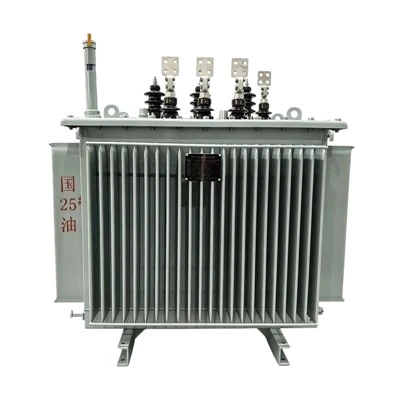
First off, there’s no one-number answer. I wish there was—would make my job way easier—but these things aren’t off-the-shelf blenders you grab at Walmart. A 1 MVA unit’s price depends on a ton of factors that change based on where it’s going, what it’s powering, and the rules it has to follow. Let’s start with the basics, no engineering jargon that’ll make your eyes glaze over.
First, let’s talk about core and windings—those are the heart of the transformer. The core is made of electrical steel, right? Not just any steel, but grain-oriented silicon steel that’s cut super precise to reduce energy waste when the transformer’s running. For a 1 MVA unit, you’re looking at around 1.5 to 2 tons of that steel, depending on the voltage class. Then the windings—copper, almost always, because it conducts electricity better than aluminum, even though it’s pricier. Wait, some guys go aluminum to cut costs, but we don’t push that for substations—copper lasts longer, handles surges better, and our customers hate having to replace a transformer 5 years early because of aluminum corrosion. Copper for a 1 MVA is about 500 to 700 kg, so that’s a big chunk of the material cost. Material costs right now? They’re nuts—steel and copper went up 20 to 30% post-pandemic, and they haven’t fully come back down. That’s a huge reason prices have shifted the past couple years.
Next, voltage rating. This is non-negotiable for substations. A 1 MVA transformer that’s stepping down from 33 kV (that’s 33,000 volts) to 415V (standard for commercial/industrial sites) is way different than one stepping down from 11 kV to 240V. Higher input voltage means thicker insulation on the windings, heavier bushings (the ceramic things on the sides that connect the power lines), and a bigger tank to hold all that extra insulation oil. We’ve seen prices jump 10 to 15% just for a 33 kV vs. an 11 kV 1 MVA unit. And if you need a specific vector group? Like Dyn1 instead of Yyn0? That changes the winding connections, which adds a little to the labor time, so another 5% maybe.
Then there’s the cooling method. Most 1 MVA substation transformers are either ONAN (Oil Natural Air Natural) or ONAF (Oil Natural Air Forced). ONAN is the basic one—oil circulates on its own, air cools the tank. That’s the workhorse, used for most small substations, like for a shopping center or a medium factory. ONAF adds fans to blow air over the tank, so it can handle more load without overheating. If you need ONAF, that’s more fans, extra wiring, and a slightly bigger tank—adds about 8 to 12% to the cost. For most customers, ONAN is enough, but if they’re running a 24/7 facility or in a super hot climate, ONAF makes sense, and we price accordingly.
Climate and environmental requirements are another big one. If you’re in a place like Arizona, where summer temps hit 115°F, the transformer has to be built to handle high ambient temperatures—thicker insulation, better cooling, no cheap parts that’ll melt. That adds 7 to 10%. If you’re in a coastal area, near saltwater, you need a corrosion-resistant tank, maybe stainless steel parts instead of regular steel, and sealed bushings that don’t rust. That’s another 5 to 8%. And oh, if you need a unit that’s fire-resistant—like near a hospital or a residential neighborhood where oil leaks are a big risk—we use ester fluid instead of mineral oil, which is non-flammable. Ester fluid is way more expensive, so that tacks on 20 to 25% right there. I had a customer last year in Florida who needed ester because his substation was 50 feet from a trailer park—he didn’t want to risk a fire, so we quoted him $18k more than a standard mineral oil unit. That’s a big jump, but worth it for him.
Then there’s certification and compliance. Every country has its own rules, but most of our customers in North America, EU, or Asia need IEC or ANSI certification. That means we have to test the transformer thoroughly—dielectric tests, load loss tests, temperature rise tests, all that stuff. Testing alone can take a week or two, and adds to the cost because we have to use specialized lab equipment and skilled testers. If you need a custom certification for a specific project, like for a renewable energy site (solar or wind), that adds another 5 to 7%. We did a job last year for a solar farm in Texas that needed a 1 MVA transformer with grid code compliance—had to adjust the tap changers so it could handle fluctuating solar output, that added $3k to the base price.
Labor and logistics are the hidden costs people forget. Building a transformer isn’t like putting together a bike—we have to wind the coils by hand (almost), press them, insulate every layer, weld the tank perfectly so there’s no leaks, fill it with oil and degas it for days to get rid of air bubbles. That takes skilled technicians, and those guys don’t work cheap. Labor makes up about 25 to 30% of the total cost. Then logistics—shipping a 1 MVA transformer isn’t just a box on a truck. It’s a heavy, fragile unit (all that copper and steel, plus oil) so you need a flatbed truck, sometimes a crane to load/unload, and you have to follow regulations for transporting electrical equipment, even across state lines or borders. If you’re in a remote area, like a mine in the middle of Wyoming, shipping costs double or triple. Last month we quoted a 1 MVA unit to a mine in northern Canada—base price was $12,000, shipping alone was $8,500. That’s not nothing.
Now, let’s get to actual numbers, but remember these are 2024 prices, and they’re ballparks. A standard, off-the-shelf 1 MVA substation transformer: 11 kV input, 415V output, ONAN cooling, mineral oil, IEC/ANSI certified, for a mild climate—base price is between $12,000 and $18,000. That’s the entry-level unit, works for most small commercial substations, like a grocery store or a 10,000 sq ft office park.
But if you start adding the stuff we talked about, the price goes up. Let’s say you need 33 kV input (for a bigger substation, like a mall or a factory with a lot of equipment), ONAF cooling, high-temperature rating (115°F ambient), coastal corrosion protection—now we’re looking at $18,000 to $25,000. If you need ester fluid for fire safety, or grid compliance for solar, that jumps to $25,000 to $35,000. And if it’s custom, like a 1 MVA unit with a tap changer that lets you adjust the output voltage, or a specific enclosure design to fit a tight space, that can go even higher—we did a custom job last year for a data center that needed a 1 MVA unit with a stainless steel enclosure, tap changer, and ester fluid, came out to $38,000.
Wait, also, don’t forget about warranty. We offer a 5-year warranty on all our 1 MVA transformers, but some customers want extended warranties, up to 10 years. That adds 10 to 15% to the price, because we have to use even better parts and follow stricter maintenance guidelines. A lot of our customers skip the extended warranty, but for industrial sites that can’t afford downtime, it’s worth it. I had a customer once who skipped the warranty, his transformer went out after 3 years, he had to pay $15k for a new one plus lost revenue from being down for a week—way more than the warranty would’ve cost.
Now, let’s address the stuff people ask that I hate—like, “Can I get a cheaper one from Alibaba?” Yeah, you can. But that’s a no-name unit, no certification, maybe aluminum windings, cheap steel, no testing. It’ll be $5,000 cheaper, but it’ll last half as long, maybe catch fire, or not meet local code. I had a customer 2 years ago who bought a cheap 1 MVA transformer online, installed it in a housing subdivision, it overheated and melted a year later, caused a blackout for 2 hours, and the local utility fined him $20k. Way more than he saved on the transformer. You get what you pay for, especially with substation equipment that powers people’s homes or businesses.
So what should you do if you need a 1 MVA substation transformer? Don’t just ask “how much does it cost.” Give us details: voltage input and output, cooling needed, climate, location, any special requirements (fire safety, grid compliance, etc.). We’ll give you a real quote, not a ballpark. We don’t do hidden fees—our quotes are transparent, we break down the cost of materials, labor, testing, shipping, so you know exactly what you’re paying for.
At the end of the day, a 1 MVA substation transformer is a critical piece of equipment. It’s what keeps the lights on, the machines running, the AC working. So cutting corners on price almost always leads to bigger problems down the line. We’ve been doing this for years, we know the ins and outs of every part that goes into these transformers, we test every unit before it leaves our shop, and we stand behind our work.
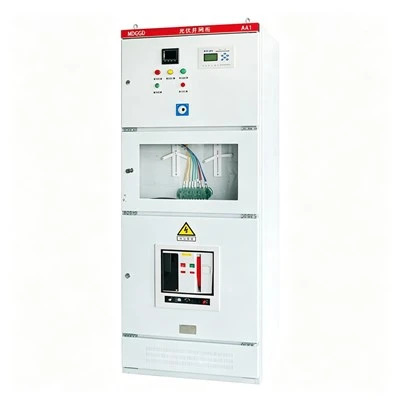
If you’re in the market for a 1 MVA substation transformer, or any other size, reach out to us. We’ll listen to your needs, give you a fair price, and make sure you get a unit that fits your project perfectly, no surprises. Don’t waste time with cheap knockoffs—invest in a transformer that’ll last, keep your site powered, and save you money in the long run.
Distribution Transformer References
- IEEE Std C57.12.00, “Standard General Requirements for Liquid-Immersed Distribution, Power, and Regulating Transformers”
- International Electrotechnical Commission (IEC) 60076, “Power transformers”
- U.S. Energy Information Administration (EIA), “Mineral and Metal Price Trends for Electrical Equipment Manufacturing”
- National Fire Protection Association (NFPA) 70, “National Electrical Code”
Zhejiang Tianrun Electric Co., Ltd.
Zhejiang Tianrun Electric Co., Ltd. is one of the most professional substation transformer manufacturers and suppliers in China, featured by quality products and good price. Please feel free to buy CE approved substation transformer made in China here and get quotation from our factory. We also accept customized orders.
Address: No.788 Wenyi Road, Bihu Industrial Park, Liandu District, Lishui City, Zhejiang Province, P.R. China
E-mail: luna@trne-electric.com
WebSite: https://www.trne-electric.com/
