If you’ve been running a plating operation that relies on barrel plating for small, high-volume parts—think fasteners, connectors, or tiny stamped metal components—you’ve probably spent a lot of time tweaking anode materials to hit your quality, cost, and efficiency targets. For years, most barrel platers have reached for traditional anode options like lead or even stainless steel, but lately, I’ve been fielding questions from shop owners, plating foremen, and quality managers alike: Can I use titanium anodes for barrel electroplating? As someone who’s worked with titanium anodes in the plating industry for over a decade, first as an application engineer testing materials for shop floors and now as part of a supplier that specializes in custom titanium anode builds for plating operations, I’m here to break this down for real. This isn’t just a “yes or no” answer—there’s nuance here, and it ties directly to your specific barrel plating setup, the chemistries you use, and the long-term payoff you’re chasing. Electroplating Titanium Anode
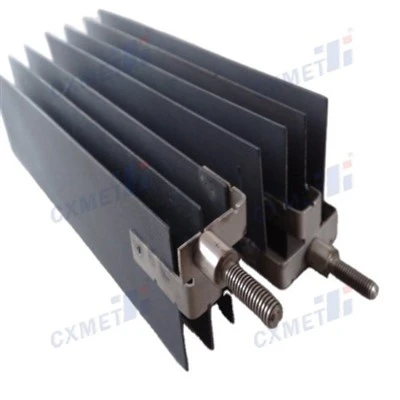
First, let’s ground this in how barrel plating works, because that’s where a lot of the confusion comes from. Barrel plating is a continuous, low-cost process where small parts are loaded into a perforated, rotating barrel that’s partially submerged in plating solution. The barrel rotates to tumble parts, ensuring every surface gets coated evenly, while anodes are usually positioned either inside the barrel (for smaller parts) or along the tank walls outside the barrel (for larger barrel setups). The anode’s job is to supply metal ions to the plating solution, replacing those that get deposited on the cathodic parts (the workpieces) during the reaction. That means anodes can’t just be conductive—they need to be chemically stable, because they’re sitting in direct contact with often harsh plating solutions (acidic or alkaline, high concentrations of metal salts, sometimes with brighteners or other additives).
Traditional anodes like lead have long been the go-to here because they’re cheap and readily available, but they come with major downsides. Lead anodes erode over time, leaching heavy metals into your plating solution. That’s not just a problem for environmental compliance (many regions have strict limits on lead discharge from plating shops) — it ruins part quality. Even tiny amounts of lead contamination can cause discoloration, poor adhesion, or uneven plating, especially for delicate parts like electronics connectors. Stainless steel anodes, while more corrosion-resistant than lead, aren’t ideal either for many barrel applications. They can passivate in acidic solutions, which means they stop conducting electricity properly, leading to inconsistent current density across the barrel and uneven coating thickness on your parts. They also tend to degrade faster than titanium in high-chloride or acidic plating chemistries, so you’re replacing them every few months, which adds up in labor and material costs over time.
Now, can titanium anodes work in barrel plating? The short answer is: absolutely, but only if you pair the right titanium anode design with your specific barrel setup and chemistry. Let’s get into the details here, because not all titanium anodes are created equal, especially for barrel work. Pure titanium is naturally corrosion-resistant, thanks to a thin, self-healing oxide layer that forms when it’s exposed to oxygen. That’s a big step up from lead or stainless steel, but pure titanium is also a valve metal, meaning it can’t be used directly as an anode in most plating reactions—if you do, it will form a non-conductive oxide layer when the current is applied, stopping the reaction dead. That’s where coated titanium anodes come in, and this is where a lot of platers go wrong: they use generic, off-the-shelf coated titanium anodes meant for tank plating and try to jam them into a barrel, and that’s where they run into problems.
For barrel plating, the most common and effective coated titanium anodes are mixed metal oxide (MMO) coated. The MMO coating—usually a mix of ruthenium, iridium, and other precious metals—stays conductive even when current is applied, while the titanium base provides the structural strength and corrosion resistance to withstand the constant movement and exposure in a rotating barrel. But the design of the anode itself matters more than the material, here. Barrels are small, enclosed spaces, so the anode needs to fit without causing a short circuit against the parts or the barrel walls. It also needs to be flexible enough to handle the constant rotation and tumbling, because a rigid anode that bangs against the barrel or parts will scratch finished coatings or even break, leading to downtime.
I’ve worked with a customer who runs a barrel plating line for 10,000 steel fasteners a week, using a 3-cubic-foot barrel. For years, they were using lead anodes, but they were dealing with recurring lead contamination issues that were rejecting 2-3% of parts per batch, plus they were replacing lead anodes every 6 weeks due to erosion. They switched to custom-shaped MMO titanium anodes that we built specifically for their barrel—thin, curved titanium strips coated with MMO, sized to fit along the inner walls of their barrel without touching the tumbling parts. The results were immediate: contamination dropped to less than 0.5% of parts, their anode lifespan jumped to over 18 months, and their current efficiency improved by 12%, meaning they used less electricity per batch. That’s the kind of real-world win you get when titanium anodes are designed for barrel plating, not just lifted from tank plating applications.
But it’s not all upside—there are scenarios where titanium anodes might not be the best fit for your barrel plating line. Let’s be honest, because I’d never steer a customer toward a solution that doesn’t make sense for their operation. First, if you’re running a very small batch size—less than 50 pounds of parts per run—your set-up costs for custom titanium anodes might not be worth it. Titanium anodes have a higher upfront cost than lead, so if you’re only running tiny batches and replacing anodes infrequently anyway, the cost savings over time won’t offset the initial investment. Second, if you’re using a plating chemistry that’s not compatible with MMO coatings. For example, some specialty acidic plating baths for decorative chrome use high concentrations of certain fluorides, which can break down the MMO coating over time. In those cases, you’d need a different coating—like platinum, which is more resistant to fluorides—but that’s a more expensive option, so it only makes sense for specific applications. Third, if your barrel is very old and has uneven inner walls that could cause a titanium anode to short circuit every few rotations. We’ve seen this happen a few times, and it’s easy to fix by either trimming the anode or upgrading the barrel, but it’s a consideration before you make the switch.
Another big point that comes up all the time: maintenance. Titanium anodes for barrel plating require very little maintenance, which is a huge plus for busy plating shops that don’t have extra time to fiddle with anode replacements. With lead anodes, you have to scrape off the accumulated sludge that builds up as they erode every few runs, or polish them to keep the current consistent. With MMO titanium anodes, there’s almost no sludge buildup, because the coating doesn’t erode like lead. You do need to check the connection points every month or so, since the constant rotation in the barrel can loosen electrical connections, but that’s a 10-minute task, not a full day of replacing anodes. I also tell customers that when you do need to replace a titanium anode, it’s a simple process—no special tools, no hazardous disposal like you have with lead anodes. You just remove the old anode, snap or bolt the new one in, and you’re back up and running. That cuts down on downtime, which is one of the biggest expenses for high-volume barrel plating operations.
Wait, let’s also talk about current density, because that’s the make-or-break factor for plating quality. In barrel plating, the current has to be consistent across all parts in the barrel—too much current on some parts leads to burning, too little leads to thin or uneven coating. Lead anodes tend to have uneven current distribution as they erode, because their surface area changes over time. MMO titanium anodes have a consistent surface area for their entire lifespan, so current density stays steady, batch after batch. I’ve measured this for customers: with lead anodes, current density can vary by as much as 15% across the barrel after a few weeks, while titanium anodes keep that variation below 3%. That’s why you get more consistent parts, less rework, and higher yield.
I also want to address a common misconception among platers: that titanium anodes will cause hydrogen embrittlement in steel parts. Hydrogen embrittlement is a big risk for high-strength steel fasteners, bolts, and springs, because hydrogen from the plating solution can get trapped in the metal and cause it to crack or break under stress. Some platers think certain anode materials contribute to this, but from everything we’ve tested and seen in the field, there’s no direct link between titanium anodes and hydrogen embrittlement. Hydrogen embrittlement is mostly related to the plating chemistry (especially acidic baths) and post-plating baking processes, not the anode material. We’ve worked with multiple aerospace plating customers that use titanium anodes for barrel plating high-strength steel fasteners, and they follow the standard baking processes to prevent embrittlement—exactly like they did with lead anodes, and they haven’t had any issues. That’s a myth that’s been around for years, and it’s worth debunking because it’s stopped a lot of platers from testing titanium anodes.
Now, if you’re a shop owner or foreman reading this and thinking “this sounds good, but is it worth the upfront cost?” let’s do a quick cost comparison to make it real. Let’s take a standard 5-cubic-foot barrel, running 200 batches a year (about 4 batches a week, plus some downtime for maintenance). A set of lead anodes for that barrel costs roughly $150, and needs to be replaced every 6 weeks, so that’s 8 replacements a year, or $1,200 in material costs, plus about 4 hours a month of labor to remove old anodes, clean, and install new ones—at $25 an hour, that’s $1,200 a year in labor. Total annual cost for lead anodes: around $2,400. For titanium anodes, a custom set for that same barrel costs about $800 upfront, and lasts 18 months—so that’s about $533 a year in material costs. Plus, the maintenance labor is cut by 90%: you’re only spending an hour a month checking connections, not 4 hours replacing anodes. That’s $300 a year in labor, for a total annual cost of $833. That’s a difference of over $1,500 a year, plus you’re reducing rework and downtime from contamination. For a lot of shops, that pays for the initial investment in just a few months.
Of course, every operation is different. If you’re running a specialty barrel plating line for jewelry with gold plating, or for medical parts that require ultra-high purity, titanium anodes are even more of a no-brainer. The purity of titanium means you don’t have to worry about any leached metals ruining the coating, which is critical for medical components or electronic parts that go into phones or computers. We worked with a medical device plating shop last year that was using stainless steel anodes for barrel plating small titanium surgical screws. They were getting some iron contamination that was making the screws fail biocompatibility tests, and switching to MMO titanium anodes fixed that immediately, cutting their failure rate by 90% and allowing them to pass their audits without any issues.

So, to circle back to the original question: Can I use titanium anodes for barrel electroplating? The answer is yes, but only if you choose the right design for your specific setup. Generic titanium anodes won’t work, but custom, MMO-coated titanium anodes built to fit your barrel, paired with your chemistry, can give you better part quality, lower costs, less downtime, and compliance with environmental regulations. If you’re still on the fence, the best thing to do is talk to a supplier that has actual experience with barrel plating applications, not just tank plating. We’ve helped dozens of shops test small prototype titanium anodes in their barrel lines before they commit to a full order, so you can see the results for yourself without a big upfront risk.
Titanium Anodes If you’re tired of replacing anodes every few months, dealing with contamination and rework, and fighting to keep up with compliance rules, it might be time to make the switch. Don’t let old myths about titanium anodes or generic one-size-fits-all anode advice hold you back. Reach out to our team to discuss your specific barrel plating setup, chemistry, and production needs—we can help you design a titanium anode solution that works for your operation and delivers real, measurable results.
References
- Plating and Surface Finishing, "Titanium Anodes for Modern Plating Processes," Vol. 105, No. 6, 2018, pp. 32-37.
- ASTM B367, "Standard Specification for Titanium and Titanium Alloy Castings," ASTM International, 2020.
- Oberle, S., "Barrel Plating Anode Materials: Selection, Maintenance, and Long-Term Performance," Industrial Plating and Surface Treatment Handbook, 5th Ed., Elsevier, 2021, pp. 112-128.
- International Organization for Standardization, ISO 14801:2016, "Metallic Materials for Surgical Implants – Fatigue Testing of Implants for Osteosynthesis," ISO, 2016.
Shannxi CXMET Technology Co., Ltd.
As one of the most professional electroplating titanium anode manufacturers and suppliers in China, we also support customized service. Please feel free to buy high-grade electroplating titanium anode for sale here from our factory. Good service and quality products are available.
Address: 191 Integer Rd, 2nd StrLA 08219, P.R China.
E-mail: sales@cxmet.com
WebSite: https://www.cxmetanode.com/
