Let me start with a quick question: if you’ve ever sat down to debug an embedded project at 2 a.m., only to have your microcontroller lock up out of nowhere because it overheated, you’ve already felt the silent, invisible problem heat sinks were built to solve. Over the last 12 years, I’ve worked hands-on with embedded systems suppliers, design engineers, and production teams across North America and Europe—first as an embedded systems design intern, then as an applications engineer, and now as a lead technical support specialist at an electronics heat sinks supplier that focuses exclusively on custom and standard parts for embedded applications. Most people in the industry will tell you heat sinks are just “metal fins,” but after talking to thousands of engineers, I know that’s a dangerous oversimplification. For embedded systems in particular, where space is tight, performance never sleeps, and reliability is non-negotiable, a heat sink isn’t just an accessory—it’s a core component that can make or break a product’s lifecycle, warranty, and reputation. Electronics Heat Sinks
First, let’s ground this in basic physics you might remember from high school, but that’s actually make-or-break for embedded hardware. Every electronic component—from a tiny 8-pin microcontroller on a sensor node to a power management IC in a gateway that connects 500 IoT devices—generates heat when it’s in use. That heat comes from two main sources: joule heating (when electricity flows through a resistance in the component’s semiconductor material) and switching losses (when the component toggles between on and off states, which is constant for nearly all digital embedded systems). For most of these small components, this heat isn’t a big deal at low power, but when you stack multiple components in a 10x10mm board, or run the system 24/7, that heat builds up exponentially. Semiconductors have an upper limit for junction temperature, usually between 85°C and 125°C for most industrial-grade parts, and every 10°C rise above that rated limit cuts the component’s lifespan in half, per Arrhenius’ law of chemical kinetics. I’ve seen this play out firsthand: a client sent me a batch of 1000 outdoor temperature sensors that failed after 18 months, just because they skipped a heat sink and their microcontroller ran 25°C over its rated limit. Replacing those heat sinks at the prototype stage would have cost $120 total, but replacing the failed units cost them $45,000 in returns and brand damage. That’s the kind of math that makes embedded engineers stop and think about heat, and that’s exactly where a heat sink comes in.
A heat sink is a passive thermal management device—meaning it has no moving parts, runs on no power—designed to pull heat away from a component’s surface and dissipate it into the surrounding environment. Unlike active solutions like fans, heat sinks are ideal for embedded systems for one huge reason: space and power constraints. Most embedded systems are for IoT, industrial control, automotive telematics, or medical devices, where you can’t add a fan without increasing size, noise, or failure points. A good heat sink fits right on the component, doesn’t require extra power, and can keep junction temperatures within safe limits for years. But here’s the thing: not all heat sinks are created equal, especially for embedded systems. I’ve had engineers come to me with heat sinks they bought from a general electronics distributor, only to tell me they’re too thick, too tall, or have a mounting base that doesn’t line up with their component’s pinout. For embedded applications, the design of the heat sink has to align with the unique constraints of the end product.
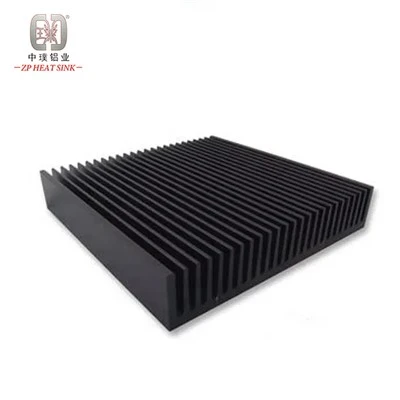
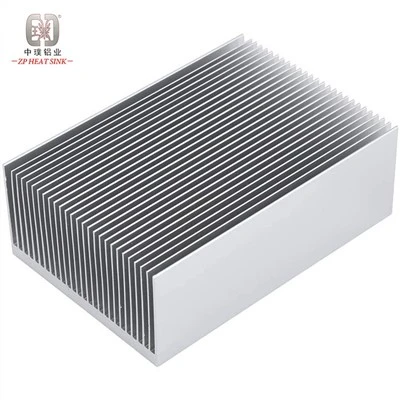
Let’s break down the key parts of an embedded-specific heat sink, because each one impacts performance. First, the base: that’s the flat part that sits directly on the component. Its job is to create a tight, uniform thermal contact with the component’s surface—no gaps, no air bubbles, because air is an insulator. For embedded systems, base thickness is critical: a 0.5mm thick aluminum base works great for low-power microcontrollers, but a 1mm thick base is better for a power IC that dissipates 10W, because it spreads the heat out more evenly before it moves to the fins. Next, the fins: the part that actually does the dissipating. Fins maximize surface area without taking up too much space, which is why they’re designed as thin, parallel ridges. For embedded systems with limited vertical space, we use “low-profile” fins that are only 2mm tall, versus standard fins that might be 10mm for high-power applications. We also customize fin spacing: if the embedded system is in a dusty industrial plant, we make fins wider so dust doesn’t clog the gaps, reducing airflow. If it’s in a sealed medical device with forced convection only from the system’s internal air movement, we make fins thinner and denser to trap more heat in a smaller footprint.
Then there’s the mounting interface, which is the part most engineers overlook but that’s the biggest cause of poor heat transfer from a heat sink to a component. For embedded systems, mounting can’t be too bulky, can’t risk shorting out adjacent pins, and has to stay secure through vibration—think of a sensor that’s bolted to a construction site, or a car’s infotainment unit that hits potholes every day. Common mounting options for embedded heat sinks include pressure-sensitive adhesive, thermal tape, and tiny screws or clips. I always advise against adhesive for anything higher than 2W of heat dissipation, because adhesives break down over time at high temperatures, creating gaps. For low-power microcontrollers, though, a high-temperature acrylic adhesive is perfect—it adds zero height and takes 5 seconds to apply, no extra assembly steps. For power components, we use stainless steel clips that exert a consistent, even pressure across the base, so there’s no uneven contact that would cause hot spots.
Now, let’s talk about the factors that go into choosing the right heat sink for an embedded system, because this is where a lot of trial and error happens before engineers get it right. First and foremost is power dissipation: how much heat is the component generating. A tiny 32-bit microcontroller for a wearable will dissipate less than 0.5W, while a motor driver in an industrial controller might dissipate 15W. Next is thermal resistance: that’s the measure of how well a heat sink moves heat from the component to the air, measured in °C/W. The lower the number, the better the heat sink. For low-power embedded parts, we target thermal resistance of 10°C/W or less, while high-power parts need 2°C/W or lower. Then there’s the form factor of the embedded system itself. If it’s a compact IoT node that fits in a pipe, you can’t have a heat stick sticking out 15mm—so we design heat sinks that mount flush with the board, or even embed them into the PCB itself (we call these “PCB-embedded heat sinks,” which are perfect for space-constrained applications). We also consider the operating environment: a heat sink for a marine sensor has to be made of corrosion-resistant aluminum, not standard aluminum, and sometimes coated with a clear passivation layer to prevent salt damage. A heat sink for a medical device has to be compliant with RoHS and FDA standards, meaning no lead or harmful coatings that could leach into the device.
I can’t tell you how many times I’ve had a client come to me frustrated because their first heat sink didn’t work, so let’s go through a real example that happened last year. A startup was building a smart agricultural sensor node that monitors soil moisture and sends data to a cloud server. The design team used a standard 8-bit microcontroller that runs at 5V, dissipating around 0.8W. They bought a generic heat sink online, slapped it on, and when they tested it in a climate chamber at 60°C ambient, the microcontroller hit 132°C and shut down. They tried a bigger heat sink, but it was too tall—their node was supposed to fit inside a 10mm diameter pipe, and the extra height would make it too big to install. They came to me on a Wednesday, and by Friday we had a custom low-profile heat sink: a 0.6mm thick aluminum base, 3 parallel fins only 2.5mm tall, and a high-temperature thermal tape adhesive that stayed secure up to 150°C. We tested it, and the microcontroller ran at 98°C in 60°C ambient, well within its rated limit. The best part? The total added height of the heat sink was 0.1mm, so their node fit perfectly in the pipe. That’s the kind of custom, embedded-specific solution you can’t get from a one-size-fits-all heat sink supplier.
Another common mistake I see is ignoring thermal interface materials (TIMs). Even the best heat sink in the world will underperform if the contact between the component and the heat sink is bad. Air gaps between the component and the base can increase thermal resistance by 50% or more. That’s why we always recommend using a thin TIM—usually a thermal pad, thermal grease, or thermal tape—between the heat sink base and the component. For embedded systems, we prefer thermal pads because they’re easy to apply, don’t run or degrade like grease, and are thin enough to not add much thickness. The right TIM is as important as the right heat sink—another lesson we learned from that agricultural sensor: when the client first tried our heat sink, they used the adhesive that came with the generic part, and thermal resistance jumped from 8°C/W to 12°C/W. Swapping it for a 0.2mm thick thermal pad brought it back down to 7.8°C/W, which is exactly what we needed.
Now, let’s address a question I get all the time: do I really need a heat sink for my embedded system? The short answer is: if your component’s junction temperature is within its rated limit at your operating environment, maybe not. But if your system is going to run 24/7, operate in a hot environment, or have a warranty of more than a year, the answer is almost always yes. I’ve seen embedded systems that ran perfectly for 6 months without a heat sink, then failed en masse when summer hit and ambient temperatures spiked. A heat sink is a small, low-cost investment that prevents huge problems down the line. For example, a standard custom aluminum heat sink for a low-power microcontroller costs less than $0.75 in bulk quantities, and for a 10,000-unit production run, that’s $7,500 total. The alternative is a recall that could cost hundreds of thousands, or a hit to your brand that’s even harder to recover from.
As someone who’s spent 12 years working with electronics heat sinks for embedded systems, I can tell you that the industry is evolving fast, and so are the demands on embedded systems. We’re seeing more devices that run at higher power, fit in smaller spaces, and operate in harsher environments than ever before. That means heat sinks have to keep up too: we’re now working with copper heat sinks for high-power automotive components, graphite heat sinks for ultra-thin wearables, and even 3D-printed heat sinks that are custom-machined to fit the exact shape of a component, eliminating every possible gap. The key takeaway here is that a heat sink isn’t a generic part—it’s a solution tailored to your specific embedded system. You can’t buy a heat sink off the shelf and expect it to work for every application, and skipping it entirely can lead to avoidable failures.
If you’re an embedded engineer, product designer, or procurement manager working on a project that’s facing overheating issues, or if you want to make sure your design is built for long-term reliability, don’t guess at your heat sink solution. My team and I specialize in designing and manufacturing custom and standard heat sinks exclusively for embedded systems, and we’ve worked with startups, Fortune 500 companies, and everything in between to solve thermal problems before they become costly mistakes. We don’t just sell metal parts—we provide technical support, free thermal analysis for prototypes, and custom solutions that fit your exact space, power, and environment constraints. To discuss your project or get a quote, reach out to our team at your earliest convenience. We’re here to help you build embedded systems that run cool, run reliable, and stand the test of time.
Aluminum Heat Sinks References
- Incropera, F. P., DeWitt, D. P., Bergman, T. L., & Lavine, A. S. (2007). Fundamentals of Heat and Mass Transfer. John Wiley & Sons.
- Electronic Industries Alliance. (2018). Standard for Temperature Ratings for Semiconductor Devices. EIA/JEDEC JESD22-A101.
- American National Standards Institute. (2020). Thermal Management for Embedded Electronic Systems. ANSI/ISA-77.42.01.
- Arrhenius, S. (1889). On the reaction rate of the inversion of cane-sugar. Zeitschrift für Physikalische Chemie, 4U, 226-248.
ZP Aluminum Co., Ltd.
As one of the most experienced electronics heat sinks manufacturers and suppliers in China, we also support customized service. We warmly welcome you to wholesale advanced electronics heat sinks at competitive price from our factory. If you have any enquiry about free sample, please feel free to email us.
Address: Leping Industrial Zone, Sanshui District, Foshan, Guangdong, China
E-mail: op-wei@zp-aluminum.com
WebSite: https://www.zp-heatsinks.com/
