If you’ve ever worked in construction, tunneling, mining, or even large-scale underground repair projects, you’ve probably heard the term “shotcrete” thrown around—but if you’re new to the industry, you might be wondering what exactly a handheld shotcrete machine is and why it’s such a game-changer for small-to-medium sized jobs that need precision and portability. As a supplier who’s spent the last decade helping teams across North America source reliable, durable shotcrete equipment, I’ve talked to hundreds of operators who started out guessing at how these small machines work, only to realize they’re the missing piece that turns tricky shotcrete applications into smooth, on-schedule tasks. Let’s break this down simply, no overly technical jargon, just what you actually need to know. Shotcrete Machine
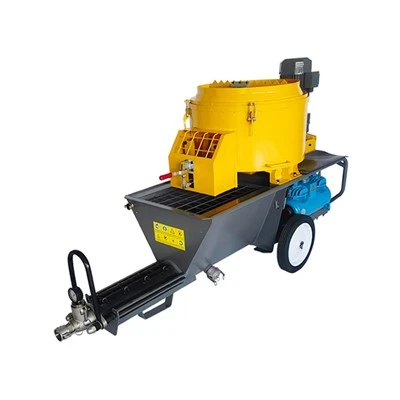
First, let’s start with the basics: what is shotcrete, anyway? Unlike traditional concrete that’s poured into forms and left to cure, shotcrete (also called “gunite” in some regions) is a mixture of cement, aggregates, water, and sometimes admixtures that’s pneumatically projected at high velocity onto a surface. That force is what makes it adhere tightly, even to vertical or overhead surfaces that regular concrete can’t stick to without heavy shoring or formwork. Handheld shotcrete machines are the compact, portable versions of the larger, truck-mounted or skid-mounted shotcrete systems you might see on major highway projects. They’re built for one-person operation (or two, for larger jobs) and weigh anywhere from 50 to 200 pounds, depending on the model—light enough to carry up a staircase, into a narrow tunnel access point, or around a confined worksite where big equipment can’t fit.
A lot of people mix up handheld shotcrete machines with the hand-applied shotcrete methods that were used decades ago, where operators shoveled dry mix into a hose and sprayed water manually. Those old methods were slow, inconsistent, and left operators exposed to huge amounts of silica dust, which is a major health hazard. Modern handheld shotcrete machines eliminate most of those flaws by automating the mixing and projection process, while still keeping the portability that small jobs demand. Let’s walk through how one works, step by step, to make it real.
Most handheld shotcrete machines have four core parts: the power unit, the material feeding chamber, the hose and nozzle assembly, and the control panel. The power unit is usually an electric motor or small gas engine—electric models are perfect for indoor, confined, or noise-sensitive jobs (like basement underpinning or indoor pool construction) because they’re quiet and don’t emit exhaust fumes, while gas-powered models are better for remote worksites with no access to electricity, like remote mining tunnels or mountain-side retaining wall projects.
The feeding chamber is where the magic happens. For dry-mix shotcrete (the most common type for handheld machines), you load the pre-blended dry mix (cement, sand, small aggregate) into this chamber, either manually or with a small conveyor feed. Compressed air from the power unit then pushes the dry mix through the 1.5 to 2-inch thick hose all the way to the nozzle. At the nozzle, a metered amount of water is added directly to the dry mix, and the high-velocity air sprays the wet, concrete mix onto your target surface at 60 to 100 miles per hour. The control panel lets you adjust air pressure, water flow, and material feed rate on the fly—so an operator can tweak the mix consistency to match the job, whether that’s a thin layer for a pool liner or a thicker layer for a tunnel rock support.
Wet-mix handheld machines are less common but growing in popularity for jobs that need ultra-consistent concrete. With these, the wet shotcrete mix (already blended with water and admixtures) is loaded into the feeding chamber, so there’s no dry mix to handle at all. That cuts down on silica dust even more, and the mix is more uniform, which reduces cracking and improves strength. The tradeoff is that wet mixes need to be used within a certain time frame (usually 45 to 90 minutes) before they start to set, so they’re better for jobs where you can have a dedicated team mixing on-site or where material supply is reliable.
Now, who actually uses handheld shotcrete machines? Let’s name the jobs where these little workhorses shine, because that’s when you’ll understand why they matter. The number one use is underground support: small tunneling projects, mine drift repair, or utility tunnel lining, where you can’t fit a big truck-mounted shotcrete rig through a 3-foot diameter access shaft. A single operator can carry a handheld machine down the shaft, set it up in a small alcove, and spray shotcrete directly onto the tunnel walls to stabilize loose rock and prevent cave-ins. That’s not just convenient—it’s a safety thing, because being able to stabilize a tunnel wall quickly reduces the risk of accidents from falling rock.
Next, construction for residential and small commercial projects. Think basement underpinning, pool deck repairs, retaining wall repair, or small-scale foundation waterproofing. Pouring concrete for a small foundation repair often requires building formwork, which adds time and cost. With a handheld shotcrete machine, you can spray the concrete directly onto the existing wall or footing in hours, no forms needed. Operators I work with often tell me that for a 50-foot retaining wall repair, a handheld shotcrete job takes a third of the time a traditional concrete pour would, and the bond is stronger because of the high-velocity projection.
Then there’s infrastructure repair: small bridge abutment patching, historic structure restoration (where you can’t use heavy equipment that would damage the surrounding architecture), and sports field slope stabilization. For example, if a historic 100-year-old bridge has a small crack in its abutment that needs patching, a handheld shotcrete machine lets you apply the repair material exactly where you need it, without knocking debris off the bridge onto the area below, which would be a risk with larger equipment.
But here’s the thing: not all handheld shotcrete machines are created equal. Over the years, I’ve seen operators waste money on cheap, imported models that break down after 50 hours of use, produce inconsistent spray, and have poor dust control. A good handheld shotcrete machine needs to balance three key things: portability, durability, and operator safety. Let’s talk about those because they’re non-negotiable for anyone investing in one.
Portability isn’t just about weight—it’s about balance. A machine that’s too top-heavy is hard to maneuver around a worksite, especially on uneven ground or up ladders. The best models I sell are designed with low center of gravity, so an operator can carry it with one hand while holding the hose with the other, which is critical for overhead spraying (like tunnel ceilings or the bottom of a pool).
Durability matters because shotcrete is abrasive. The mix has sand and small aggregate that wear down internal parts of the machine over time. Cheap machines use plastic or thin metal parts that crack or wear out in a few months; high-quality models use hardened steel chambers and abrasion-resistant liners that last for thousands of yards of material. I always tell customers to ask about the liner life when shopping—if a machine’s liner only lasts 200 yards, that means you’re paying $500 every time you need to replace it, which adds up fast.
Safety is probably the most important of the three. Handheld shotcrete generates a lot of silica dust, which is linked to silicosis, a permanent lung disease that can be fatal. A good machine will have built-in dust extraction systems that pull dust away from the operator’s breathing zone, as well as air filtration systems that reduce airborne dust levels below OSHA limits. Cheap models have little to no dust control, so operators have to wear heavy, uncomfortable respirators that don’t fit well, leading to compliance issues and reduced productivity.
Another common question I get: how much does a handheld shotcrete machine cost? The short answer is, it depends on the size, power source, and features. Entry-level dry-mix handheld machines start around $3,000 to $5,000, which is a steal when you compare it to the $50,000+ price tag for a full-sized truck-mounted rig. But like I said earlier, those entry-level models often lack durability and dust control, so they’re only good for occasional use. Mid-range models, which are built for regular use (10 to 20 hours a week), run $7,000 to $12,000, and heavy-duty models for high-volume jobs or industrial use go up to $18,000 or more. When calculating cost, you also have to factor in parts, maintenance, and safety compliance—so buying a reliable machine that lasts 5+ years is almost always cheaper in the long run than replacing a cheap one every year.
I also get asked a lot: do I need special training to use a handheld shotcrete machine? The short answer is yes, but it’s simple training, not the months of training needed for full-sized shotcrete rigs. Most operators can learn the basics of setting up the machine, adjusting the mix, and spraying a consistent layer in a day or two. The trick is learning how to move the nozzle at the right speed (usually sweeping in a circular motion) to get an even 2 to 3-inch layer per pass, without over-spraying or causing the mix to sag. I always recommend that new operators practice on a scrap surface before starting a real job, to get a feel for how the machine works and how the mix adheres to different materials (concrete, rock, steel, etc.).
Let me share a quick real-world example to make this tangible. Last year, I worked with a small contracting company in Colorado that specialized in rural mine reclamation jobs. They had a $200,000 contract to stabilize 5 miles of small, abandoned mine tunnels, each with 3-foot diameter access shafts. Before they found our handheld shotcrete machines, they were renting a large, skid-mounted shotcrete system for $1,500 a week, and paying a crew of three to move it around the site, set it up each day, and carry it up and down shafts. The job was projected to take 12 weeks and cost over $180,000 in equipment and labor. After switching to two mid-range handheld shotcrete machines, the job was done in 8 weeks, with a crew of just two operators, and total equipment cost was less than $15,000. They saved over $60,000 on the project, and the shotcrete application was more consistent, so they had 10% less surface rework than they’d had with the larger machine. That’s the kind of ROI that makes handheld shotcrete machines worth every penny.
Of course, like any piece of equipment, handheld shotcrete machines have limitations. They’re not designed for large-scale jobs—if you’re doing a 10,000 square foot foundation pour, you’ll still want a larger rig that can move more material per hour. They also have limits on hose length: most handheld machines can only push material through 100 to 150 feet of hose, so if your worksite is longer than that, you’ll need a booster pump. And wet-mix handheld machines require careful management of mix time, so they’re not ideal for worksites with poor material supply chains. But for the jobs they’re designed for, they’re unmatched in their combination of portability, precision, and cost-effectiveness.
If you’re in the market for a handheld shotcrete machine, or you’re just looking to learn more about how these machines can help your worksite save time and money, the best first step is to assess your specific needs. Ask yourself: what size jobs am I working on? Do I need electric or gas power? How much portability do I need to get through access points or up ladders? What safety standards do I need to meet in my area? A good supplier will walk you through these questions, help you match the right machine to your jobs, and offer training and support to make sure you get the most out of your equipment.
At the end of the day, a handheld shotcrete machine isn’t just another piece of construction equipment—it’s a tool that empowers small and medium-sized contracting teams to take on jobs they couldn’t handle with larger, more unwieldy systems, while improving safety, reducing costs, and delivering higher-quality results. For anyone working in shotcrete applications, from tunneling to restoration, it’s worth taking the time to understand what these machines can do, because they might just be the solution to your biggest worksite challenges.
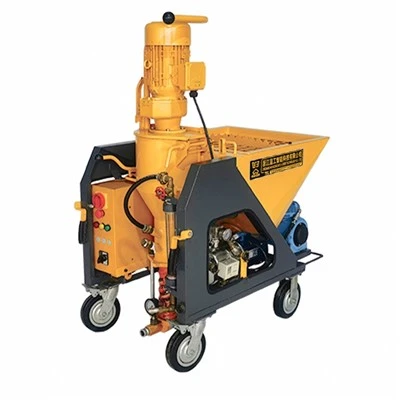
If you’re ready to discuss which handheld shotcrete machine is right for your projects, or you have questions about maintenance, safety, or pricing, please reach out to our team to arrange a consultation and demo.
Shotcrete Machine References
ACI 506R-16, Guide to Shotcrete. American Concrete Institute, 2016.
OSHA Silica Dust Exposure Limits for Construction. Occupational Safety and Health Administration, 2022.
Handheld Shotcrete Equipment Specifications for Confined Space Applications. Construction Equipment Association, 2021.
Zhejiang Wengong Intelligent Technology Co., Ltd.
Zhejiang Wengong Intelligent Technology Co., Ltd. is one of the most professional shotcrete machine manufacturers and suppliers in China. With abundant experience, we warmly welcome you to buy durable shotcrete machine made in China here and get quotation from our factory. Quality products and reasonable price are available.
Address: No.111 Huakang Road, Liuao Village, Qiaoxia Town, Yongjia County, Wenzhou City, Zhejiang Province, China
E-mail: sales007@cngcjx.com
WebSite: https://www.wallgoe.com/
