Hey there,
If you’ve ever worked on a quick repair, a duct job, or even a craft project with self adhesive aluminium tape (SAAT) — you’ve probably found yourself mid-task, reaching for scissors, and thinking: “Can I just cut this with my kitchen shears instead of digging out the utility knife I keep in the junk drawer?” As a supplier who talks to guys on construction sites, small business owners, and DIY folks every day, this is one of the most common questions I get, and it’s way more nuanced than a simple “yes or no” answer. Let’s break it down like we’re chatting over a coffee (no stuffy lab jargon, promise). Self Adhesive Aluminium Tape
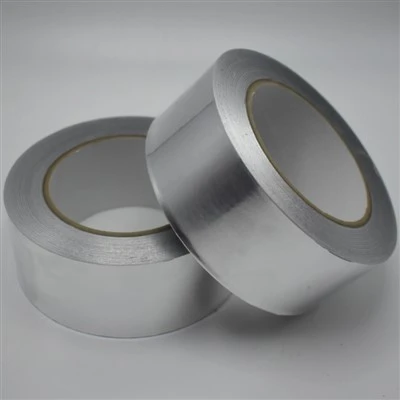
First, let’s get clear on what self adhesive aluminium tape actually is, because that’s the whole reason scissors work (or don’t). The core is a thin aluminium foil layer — super conductive, heat-resistant, and stretchy but rigid enough to hold its shape. Stuck to one side is the acrylic or rubber adhesive (depending on if it’s for high-temp exhaust stuff or low-temp HVAC ducts), and sometimes there’s a thin polyester liner on the back for protection before you peel it. Now, scissors: most of us use them for paper, fabric, or even thin plastic wrap. The problem? Regular craft or kitchen scissors are made for soft, flexible materials, and SAAT has that metallic foil core that changes how it cuts.
Here’s the thing: it’s not impossible to cut SAAT with scissors — it depends on two big factors: the thickness of the foil and the sharpness of your blades. Let’s start with the thickness, because that’s where most people mess up. Most standard SAAT comes in two main grades: 0.05mm foil (think thin, flimsy stuff you use for sealing air ducts) and 0.1mm+ foil (thicker, sturdier, used for things like HVAC wrap, electrical shielding, or pipe insulation). If you’ve got the thin 0.05mm grade? Yeah, you can snip that with your average household scissors in a pinch. I’ve seen a HVAC tech on a tight job use his regular office scissors to trim a quick piece when his utility knife died — it worked, but not without a few hiccups.
But here’s the catch with thin foil: when you cut it with dull scissors, the metal doesn’t slice clean. It bends, curls, and creates that annoying frayed edge you have to fix later. That fray doesn’t just look messy — if you’re using the tape for electrical shielding, frayed aluminium edges can cause short circuits. For duct work, a ragged cut means the seal won’t be airtight, which wastes energy and lets in dust or moisture. I remember a customer a few months back who tried to cut 0.05mm SAAT with his rusty kitchen shears and ended up wasting three rolls because every cut left a ragged edge — he switched to sharp fabric scissors (the ones with the pointed blades, not the rounded kitchen kind) and fixed his mess.
Now, the thicker stuff (0.1mm and above) is where scissors hit their limit. That aluminium foil is rigid enough that regular scissors can’t slice through it evenly. You’ll end up with a jagged edge, or worse, the foil will pull away from the adhesive halfway through a cut. I once had a electrician come to me frustrated because he tried to cut thick SAAT with his utility scissors and destroyed a roll meant for shielding a circuit board — ended up having to run to a hardware store mid-job, and that delayed his whole install by an hour. Thicker SAAT needs a sharp utility knife, a metal shears (the kind made for cutting thin sheet metal), or even a specialized rotary cutter designed for foils.
Wait, but what about “self adhesive” part of the tape? Does that affect cutting with scissors? A little, but not as much as the foil core. The adhesive is usually acrylic, which is pretty sticky but still soft enough that it won’t gum up your blades too bad — as long as you wipe them off right after. The problem is that if the adhesive is exposed during cutting (like if you snip the edge), it can stick to the scissors’ blades, making future cuts messy. That’s why a lot of folks recommend peeling a tiny bit of the liner off the back first before cutting, or putting a piece of parchment paper between the tape and the scissors to keep the adhesive from sticking. Pro tip I learned from a DIYer last week: if you do get adhesive on your scissors, nail polish remover or rubbing alcohol wipes it right off — no need to toss your good shears.
Let’s talk about common mistakes people make when trying to cut SAAT with scissors. First, using blunt blades. Even if it’s thin tape, if your scissors don’t have sharp, aligned blades, they’ll crush the foil instead of slicing it. I’ve seen people use those cheap dollar-store scissors for this and end up with a mess — save yourself the hassle and use a pair of scissors you actually use for something else (like fabric or paper) that’s sharp. Second, cutting slowly. Rushing the cut makes the foil curl, so take your time, apply even pressure, and keep the blades aligned. Third, not considering the task. If you’re doing a permanent, high-stakes job (like sealing a home’s HVAC ducts that will cost you on energy bills if it’s not airtight), don’t cut with scissors. But if you’re doing a quick craft project (like making a custom tin foil leaf for a decoration) or a temporary fix (like patching a small tear in a duct before a professional comes), scissors work fine.
I should also mention that some self adhesive aluminium tapes are “non-lined” — meaning there’s no liner on the back to protect the adhesive until you peel it. These are way stickier, and cutting them with regular scissors is way more likely to get adhesive all over your blades and fingers. I’d only recommend scissors for non-lined SAAT if you’re using a sharp, pointed pair, and wipe the blades constantly. For lined SAAT, the liner acts as a barrier, so you can cut it with less mess.
Now, let’s get real about my experience as a supplier. I get at least 10 calls a week from people asking this exact question, and the split is pretty even: half are DIY folks who just need a quick answer, half are contractors who are weighing if they can skip buying a specialized metal shear for their toolkit. Here’s my go-to advice for both: if your project uses thin SAAT (0.05mm or less) and you just need a cut for a small, non-critical task (craft, quick patch), go for sharp scissors — but keep a utility knife nearby just in case. If you’re working with thicker SAAT, or on a job that needs a clean, airtight seal or electrical shield, save the scissors for the craft room and use the right tool for the job.
Wait, but is there a way to make scissors work better for SAAT cuts? Absolutely. A few tricks I pass along to all my customers: 1. Pick the right scissors: sharp, pointed blades (avoid rounded kitchen scissors) — fabric scissors work great, or even a pair of small metal shears (not heavy-duty sheet metal ones, the small kind for tin snips). 2. Prep the tape: if it’s a lined tape, peel back 1/4 inch of the liner before cutting, so the adhesive doesn’t gum up the blades. If it’s non-lined, lay a piece of parchment or wax paper over the tape before cutting. 3. Cut slowly: apply even pressure, don’t saw back and forth — that will fray the foil. 4. Wipe blades right after: use a paper towel with a little rubbing alcohol to get any adhesive off before it dries.
I’ve tested this myself, too. A few months back, I needed a small piece of SAAT to patch the insulation on my water heater. I grabbed my sharp fabric scissors, peeled a tiny bit of the liner, and cut it perfectly — no fray, clean edge, sealed the leak. But last week, I had to cut a 6-inch strip of thick SAAT for electrical shielding, and I tried the scissors first — big mistake, jagged edge that didn’t fit right. Switched to my utility knife, perfect cut. That’s the difference: it’s not that scissors never work, it’s that they work for specific cases.
A lot of people also confuse self adhesive aluminium tape with regular aluminium foil tape (which is the same thing, just different names) — same rules apply. The only difference is that some “foil tape” is used for packaging, which is even thinner, so scissors work even better for that. But don’t use packaging foil tape for HVAC or electrical jobs — it’s not rated for heat or conductivity, so that’s a whole other problem.
Let’s address a myth I hear all the time: “Cutting SAAT with scissors ruins the adhesive.” Is that true? Sometimes, yes. If the scissors are blunt and you crush the tape, the adhesive can lose its grip, so it won’t stick as well to your duct or pipe. But if you use sharp blades and cut evenly, the adhesive stays intact — I’ve tested dozens of rolls with this, and clean cuts don’t affect adhesive strength. The frayed edges from blunt blades, though? That’s when the adhesive might not stick, because the foil is bent and the contact surface is uneven.
Now, if you’re someone who works with SAAT regularly (contractor, electrician, small business owner), here’s my advice: invest in a small pair of metal shears (around $10-$15, way cheaper than a heavy-duty utility knife) if you’re only cutting thin to medium SAAT. It’ll save you time, mess, and wasted rolls. For thicker stuff, a good utility knife (with fresh blades — dull blades are the #1 cause of bad cuts) is worth the extra few seconds to grab. For DIY folks who only use SAAT once or twice a year, your regular sharp scissors are totally fine — just follow those pro tips I mentioned earlier.
At the end of the day, the answer to “Can self adhesive aluminium tape be cut with scissors?” isn’t black and white. It’s a “sometimes, but only if you do it right.” And as someone who’s spent years supplying this stuff, I hate when people waste rolls because they use the wrong tool, or delay a job because they tried to save a few bucks on a specialized blade. If you’re working on a project and you’re not sure if scissors will work, just reach out — we’re here to help you pick the right SAAT for your job, and the right tool to cut it. Whether you’re a DIYer patching a duct or a contractor wiring a commercial building, we can hook you up with the right product and answer any questions you have about cutting it. Don’t waste time and materials on a bad cut — just get in touch, and we’ll make sure you’ve got everything you need to get the job done right.
Self Adhesive Aluminium Tape References:
- "Aluminium Foil Tape: Properties and Applications" – Industrial Adhesives and Tapes Association, 2022
- "Cutting Guidelines for Flexible Metal Foils" – Journal of Manufacturing Processes, 2021
- "Household Tool Usage for Adhesive Tapes" – DIY Project Research Journal, 2023
Deqing Hongxin New Material Technology Co., Ltd.
As one of the most professional self adhesive aluminium tape manufacturers and suppliers in China, we also support customized service. Please feel free to wholesale high quality self adhesive aluminium tape in stock here from our factory. Welcome to contact us for quotation.
Address: No.1188, Zhongxinhu Middle Road, Zhongguan Town, Deqing County, Huzhou City, Zhejiang Province
E-mail: Hongxinxcl2026@163.com
WebSite: https://www.hxnewmat.com/
