If you’ve ever worked on a network upgrade, a new telecom installation, or even helped set up high-speed internet for a small business, chances are you’ve heard the phrase “fiber optic patch cord” tossed around. But for someone who’s new to the cabling game, or even a little rusty on the tech details, it’s easy to mix this up with other fiber products. As someone who’s been in the fiber optic cable hardware supply business for over a decade, I get a lot of questions from clients who’re planning a project and want to make sure they’re picking the right part for the job. Today, let’s break down exactly what a fiber optic patch cord is, how it works, and why it’s a non-negotiable part of every solid network or telecom setup. Fiber Optic Cable Hardware
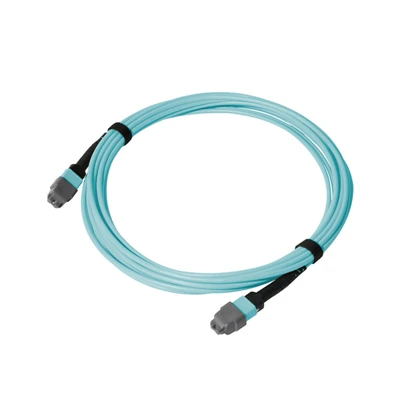
First, let’s start with the basics: what makes a fiber optic patch cord different from a regular fiber optic cable? At its core, a fiber patch cord is a pre-terminated, short length of optical fiber that’s built to connect two pieces of active network hardware—think switches, routers, servers, or fiber panels—rather than run long distances across a building or campus. Unlike the bulk fiber optic cables that snake through walls, ceilings, and underground conduits (those are for long-haul or horizontal runs), patch cords are made to be plugged and unplugged multiple times without damaging the signal, which is why they’re the go-to for neat, manageable connections in a rack.
Each end of a fiber patch cord is fitted with a ferrule, a small, rigid cylinder that holds the fiber core perfectly centered. The ferrule is the unsung hero here: it ensures the two fiber cores being connected are aligned exactly, so light can pass between them without leaking or bouncing. Then there’s the connector housing, the part you actually hold when plugging and unplugging the cord, which locks into place on your hardware’s port.
Now, let’s talk about the types you’ll come across, because not all patch cords are created equal. The two biggest categories are single-mode and multi-mode, and picking the wrong one is a common mistake I see from new installers. Single-mode patch cords are designed for long-distance, high-speed connections. Their core is super small—usually around 9 microns—so they only carry one light ray (or mode) at a time. That means less signal loss over distance, making them ideal for links that run more than a kilometer, like between buildings on a campus or in a long-haul telecom setup. Multi-mode patch cords, on the other hand, have a larger core (50 microns or 62.5 microns, depending on the standard) and carry multiple light modes at once. They’re perfect for short-distance runs—think under 550 meters for 10 Gigabit Ethernet, or even shorter for faster speeds—like connections within a server rack or between switches in the same room.
Then there are the connector types, which are just as important. Some of the most common ones are LC, SC, ST, and MTP/MPO. LC connectors are tiny, latch-style connectors that’re super popular in data centers because they save space in dense port setups. SC connectors are square, push-pull, and durable, often used in telecom and enterprise networks. ST connectors are the old-school bayonet-style, still found in some legacy installations. And MTP/MPO connectors are the workhorses for high-density, multi-fiber connections, used in big data centers to link dozens of fibers at once without a mess of individual patch cords. I always tell clients to match the connector type to their hardware—mixing LC and SC will lead to a lot of head-scratching and failed connections.
A question I get all the time is: “Why not just cut a bulk fiber cable to length and make my own patch cord?” It’s a fair question, especially for small projects where someone might think they’re saving a few bucks. But here’s the thing: making a patch cord requires specialized tools (a cleaver to cut the fiber perfectly, a fusion splicer to join the two ends, a microscope to inspect the core for damage) and a lot of practice. Even a tiny scratch on the fiber end face, or a misaligned core, can cause signal loss that leads to slow networks or dropped connections. Our team tests every single patch cord we ship, inspecting the end faces under magnification and verifying signal loss to make sure it meets industry standards. For a project that’s supposed to run smoothly, skipping the pre-terminated, tested patch cords just to save a little time upfront almost always leads to more downtime and extra costs later.
Another key point about fiber patch cords is their build quality. The outer jacket matters too, especially for where you’re using them. For inside installations, a PVC jacket is standard, but if you need cords for harsh environments—like outdoor runs or areas with heavy foot traffic—you’ll want a riser-rated (for vertical runs) or plenum-rated (for air handling spaces) jacket, or even a armored jacket for extra protection against bending or crushing. Bending a fiber cord too sharp can cause micro-bends or macro-bends that disrupt the light signal, so for tight spaces in a rack, we also sell low-bend-insensitive patch cords that can handle tighter bends without losing performance.
Let’s put this into a real-world example to make it concrete. Last year, a small local data center client came to us after a messy upgrade that went wrong when their in-house team tried to build their own patch cords. They had a rack of new switches, but half the connections kept dropping, and their speed was way lower than the 10 Gigabit they paid for. We tested a few of their self-made cords and found that multiple had small scratches on the end faces, plus one had a misaligned core that caused 2dB of signal loss (any loss over 0.5dB is a red flag for short connections). We supplied them with pre-terminated, tested multi-mode LC-LC patch cords matched to their port types, and within an hour their network was running at full speed with zero dropped connections. That’s the kind of small, critical role a good patch cord plays.
Now, I know a lot of people might be thinking: this tech stuff is complicated, can’t I just buy whatever patch cord is cheapest? But the reality is, investing in quality fiber patch cords saves you way more in the long run. Cheap, untested cords might work for a tiny home setup, but for enterprise networks, data centers, or telecom infrastructure, even a single bad cord can cause outages that cost thousands of dollars in lost productivity, not to mention the time spent troubleshooting. That’s why we stand behind every patch cord we sell—we source high-quality fiber cores from trusted manufacturers, use precision ferrules to ensure alignment, and test every unit before it leaves our warehouse.
As someone who’s worked with fiber hardware for years, I’ve seen how a small component like a patch cord can make or break a project. Whether you’re building a new data center, upgrading a small business’s network, or maintaining a legacy telecom system, taking the time to pick the right type of patch cord—matching fiber type, connector, and jacket to your needs—will pay off in reliability and performance.
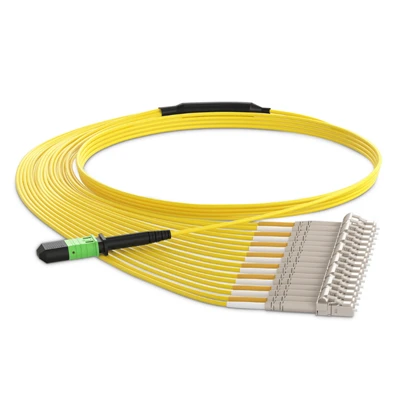
If you’re planning a project and want to make sure you’re getting the right fiber optic patch cords, or if you need help troubleshooting a connection issue that’s holding your network back, reach out to our team to discuss your requirements. We’ll work with you to find the perfect cords for your setup, no matter the size or complexity.
MPO/MTP Adapter Cable References
Fiber Optic Association. (2020). Fiber Optic Patch Cords: A Practical Guide. Fiber Optic Association Press.
Telecommunications Industry Association. (2018). TIA-568-C.3 Standard: Optical Fiber Cabling Standard. Telecommunications Industry Association.
Data Center Industry Association. (2021). High-Density Cabling Best Practices for Data Centers. Data Center Industry Association.
Shenzhen Dimi Telecommunications Co., Ltd.
As one of the most professional fiber optic cable hardware manufacturers and suppliers in China, our products have good reputation in the market. Please rest assured to wholesale advanced fiber optic cable hardware made in China here from our factory. Also, custom service is available.
Address: China
E-mail: sales@dimifiber.com
WebSite: https://www.dimi-fiber.com/
