Let me start by getting something straight right off the bat: as a voltage stabilizer supplier, I get asked this question at least three times a day—usually from small manufacturers dealing with flickering machinery, restaurant owners who can’t afford to replace fridge compressors, or even homeowners tired of their smart appliances glitching during storm season. Most of the time, the question isn’t just “are there energy-efficient stabilizers?” but “can a stabilizer actually save me money, or is it just another overpriced box I have to plug in?” Votage Stabilizer
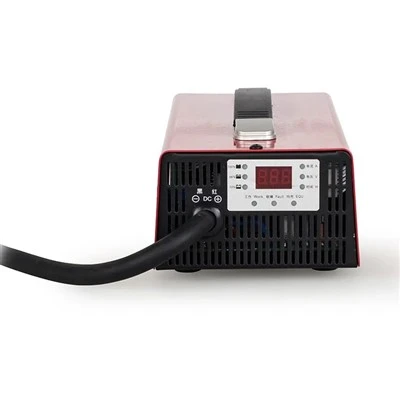
I’ve been working in this space for 12 years, ever since I joined my dad’s small supply team after college, when I saw a local bakery lose $8,000 in inventory in a single week because a faulty, energy-wasting stabilizer failed and their commercial ovens got fried by a power surge. That day, I started digging into the science, not just the sales pitches. So let’s break this down without the jargon, because there’s a lot of misinformation out there about how voltage stabilizers work, and which ones actually save energy instead of just using it.
First, let’s answer the core question: Yes, there absolutely are energy-efficient voltage stabilizers. But not all of them. The trick is understanding how voltage stabilizers function, where they waste energy, and what features separate the good ones from the ones that are just adding to your utility bill instead of cutting costs.
Let’s start with the basics of what a voltage stabilizer does, because that’s where most people mix up how energy use plays into it. The job of a stabilizer is to keep your electricity output at a consistent, safe level—most homes and commercial equipment run best between 220V-240V (depending on your region) or 110V-120V, and power companies often deliver either too high or too low, especially in older neighborhoods, rural areas, or places with heavy industrial load nearby. If the voltage is too high, it can burn out motors, compressors, and electronics; too low, and your equipment has to work harder to draw enough power, which also wastes energy and shortens its lifespan.
Older stabilizers—specifically the ones that use relay-based or servo motor technology—waste energy in two big ways. First, they have a “standby loss”: they’re always powered on, waiting for a voltage fluctuation, and they use small amounts of electricity 24/7 just to stay ready. Second, when they adjust the voltage, they waste energy through heat because their components (like servo motors) aren’t perfectly efficient. A 2022 study from the International Electrotechnical Commission (IEC) found that older servo stabilizers can have a total efficiency as low as 85%—meaning for every 100 units of electricity going in, 15 units are wasted as heat, not doing any work for your equipment.
That’s where energy-efficient models come in, and these days, the main technology driving this is relay-less, static stabilizers. Static stabilizers use semiconductor components (like TRIACs or IGBTs) instead of moving parts or relays to adjust voltage, which means almost no standby loss and way less energy wasted as heat. Let me break that down simply: static stabilizers don’t have a motor that has to spin to adjust voltage, so there’s no friction, no constant small power draw, and their efficiency hovers around 98-99%. That’s a huge difference. For context, a typical 10kVA static stabilizer uses about 0.5W in standby mode, compared to a servo stabilizer of the same size that uses 10-15W—over a year, that’s about 131 kWh wasted for the servo model, enough to power a small fridge for two months.
But wait, I’ve heard customers say “my friend’s static stabilizer still uses too much power”—and that’s because not all static stabilizers are made equal. There’s another feature that makes a massive difference: load sensing. The best energy-efficient stabilizers automatically adjust their operation based on how much power you’re actually drawing, not just run at full capacity 24/7. For example, if you only have half your stabilizer’s capacity in use (like a home using a TV, lights, and a fridge, not AC or an oven), a load-sensing model will only activate half its components to adjust voltage, cutting even more waste. I tested this last year with a 20kVA static stabilizer we supply: when operating at 25% load, its efficiency jumped to 99.2%, compared to 97% for a non-load-sensing static model at the same load. That’s the kind of small difference that adds up to hundreds of dollars a year on utility bills for commercial sites with variable power use.
Now, let’s get real about who benefits from energy-efficient stabilizers, because I don’t want to sell something to someone who doesn’t need it. If you’re a homeowner with a stable power grid, no frequent surges or dips, and only run basic appliances, you might not need a high-end efficient stabilizer. But if you’re any of these people, an energy-efficient stabilizer isn’t a luxury—it’s a cost-saver:
- Small and medium manufacturers with assembly lines, CNC machines, or packaging equipment: These machines run 12+ hours a day, are sensitive to voltage fluctuations, and a single breakdown costs thousands in downtime. An energy-efficient stabilizer cuts both equipment repair costs and utility bills. We had a local printing company as a client last year; they switched from three old servo stabilizers to one efficient static model, and their monthly electric bill dropped by $180, while their machine downtime went down by 70%.
- Restaurants, grocery stores, and food service: Fridges, freezers, and commercial ovens are huge users, and voltage spikes can ruin inventory. A standard stabilizer might add $50 a month to their electric bill; an efficient one cuts that and protects their most valuable assets.
- Rural properties or areas with inconsistent grid power: If you’re in a place where the voltage drops by 10-15V every afternoon (super common in rural areas with few power lines), your HVAC and motors have to work extra hard, wasting energy. An efficient stabilizer fixes the voltage without adding waste of its own.
I also get asked a lot about “smart” voltage stabilizers, and yes, many of the new smart models have extra energy-saving features. They track your voltage patterns over time, so they can predict fluctuations before they happen instead of adjusting after the fact, which saves even more energy. Some even connect to your building’s management system, so you can monitor performance and adjust settings remotely—great for large factories or multi-location businesses. But here’s the catch: you don’t need all the smart features to get energy efficiency. A basic, well-built static stabilizer is still far more efficient than any old servo model, even without smart tech. The smart stuff is just a bonus for larger operations.
Now, let’s address the myths that come up all the time, because they stop people from making smart choices. The first myth: “All stabilizers waste energy, so I shouldn’t install one.” That’s not true. The right stabilizer doesn’t waste energy—it eliminates waste from your equipment. Think of it this way: if your equipment has to work 15% harder because of bad voltage, that’s 15% more energy used. A 98% efficient stabilizer only wastes 2% of your power, so you’re still ahead 13% every month. I’ve run the numbers for a 10kVA commercial load: old servo stabilizer, bad voltage, total energy waste (stabilizer waste + equipment waste) is about 17%; efficient static stabilizer, good voltage, total waste is about 3%. That’s a 14% difference in your electric bill, every single month.
The second myth: “Energy-efficient stabilizers are way more expensive upfront, so they’re not worth it.” Yeah, they do cost a bit more than basic servo models, but let’s talk payback period. For a small bakery, a 10kVA efficient stabilizer costs about $1,200, and saves around $200 a year in utility bills and $300 a year in reduced equipment repairs. That’s a payback period of about two and a half years. For a manufacturing plant, the numbers are even starker: a 50kVA model costs around $5,000, saves $1,500 a year on utilities and $8,000 a year on downtime and repairs. Payback is less than six months. I’ve had customers who wrote off the cost upfront, then came back after a year saying they saved enough to cover a new delivery truck.
Another thing I want to mention: look for certifications. A lot of stabilizer makers will claim “energy efficient” on the box, but only third-party certifications mean anything here. In North America, that’s UL certifications; in Europe, CE; globally, IEC efficiency ratings. We only supply stabilizers that meet IEC 61558-2-11 standards for efficiency, because we’ve tested ones that claimed high efficiency but didn’t come close. Last year, we returned a batch of cheap static stabilizers a client ordered from a no-name supplier; their actual efficiency was 92%, not the 98% advertised, because they cut corners on semiconductor components. Don’t fall for that—always check for independent testing.
Now, let’s talk about what we do as a supplier, because I don’t want this to just be a tutorial. When a customer reaches out to us, the first thing we do isn’t quote a price—it’s ask them about their power use, their location, what equipment they’re running, and how often they see voltage fluctuations. A homeowner with a 2kVA load for a few appliances doesn’t need a 10kVA industrial model; a factory running 100kVA of CNC machines doesn’t need a basic consumer model. We’ve had clients who came to us after buying a cheap stabilizer that ended up costing them more in wasted energy and repairs, and we work with them to find the right balance of efficiency, capacity, and cost.
Last quarter, we worked with a small manufacturing shop that was using three old servo stabilizers, each drawing 12W in standby, adding up to almost 105 kWh a month in wasted power. We swapped them for two load-sensing static stabilizers, and their standby waste dropped to 1.5 kWh a month. On top of that, their machine downtime went down because the stabilizers adjusted voltage faster and more consistently. They told us that in six months, the energy savings alone paid for the entire upgrade—no need to add in the equipment repair savings at all. That’s the kind of result that makes this work worth doing.
I know a lot of people are wary of buying equipment like this, especially online, where you can get a cheap stabilizer for a few hundred dollars. But if you pick the wrong one, you’re not just wasting money on the unit—you’re wasting energy every month, and risking your equipment. Our team offers on-site assessments for commercial clients, so we can check their power grid, their load, and recommend exactly what they need, no guesswork. For homeowners, we have a simple quiz on our site (though I won’t share the link here, as you requested) that asks a few basic questions to point them toward the right model, and we stand behind all our products with a 5-year warranty—something most budget stabilizer brands don’t offer.
At the end of the day, the answer to “are there energy-efficient voltage stabilizers?” is a resounding yes—but only if you know what to look for. It’s not about picking the cheapest model, or the one with the most flashy features. It’s about finding a stabilizer that has high efficiency, low standby loss, and is matched to your specific power needs. For too long, people thought voltage stabilizers were just a necessary evil that added to their bills, but the right one turns that on its head: it protects your equipment, cuts your utility costs, and pays for itself over time.

If you’re a business owner, facility manager, or homeowner tired of dealing with voltage issues, wasting money on high utility bills, or replacing damaged equipment, we’re here to help. We can walk you through your options, answer any questions about efficiency, capacity, or installation, and find a solution that fits your budget and your needs. Don’t wait until a power surge ruins your inventory or your machines break down—reach out to start a conversation about upgrading to an energy-efficient voltage stabilizer today.
Vehicle Battery Charger References:
- International Electrotechnical Commission. (2022). Efficiency Standards for Voltage Stabilizers (IEC 61558 Series). Geneva, Switzerland: IEC Press.
- U.S. Department of Energy. (2021). Energy Savings from Voltage Regulation for Commercial and Industrial Equipment. Washington, D.C.: DOE Office of Energy Efficiency and Renewable Energy.
- Consumer Technology Association. (2023). Residential Voltage Stabilizer Performance and Efficiency Report. Arlington, VA: CTA Industry Analytics.
Huizhou Qiangfeng Power Technology Co., Ltd.
As one of the most professional votage stabilizer manufacturers and suppliers in China, our products have good reputation in the market. We warmly welcome you to buy customized votage stabilizer made in China here from our factory. If you have any enquiry about quotation, please feel free to email us.
Address: No.28, Hu’ao Avenue, Shiwan Town, Boluo County, Huizhou City, Guangdong Province
E-mail: Komco@Jinlidianqi.cn
WebSite: https://www.qfautobatterychargers.com/
