If you’ve ever shipped bulk goods—whether it’s chemicals, food ingredients, pharmaceuticals, or even construction materials—you’ve almost certainly encountered IBC plastic pallets. They’re the workhorses of logistics, stacking up in warehouses, trucks, and ports around the world. But here’s a question that comes up again and again with customers looking to switch from wood or metal pallets: how tough are they, really? As someone who’s been supplying these pallets for over a decade, I’ve seen first-hand what happens when a pallet can’t handle the rough-and-tumble of supply chain life. Today, I’m breaking down their impact resistance, what actually makes them hold up (or break), and why that matters way more than you might think. IBC Plastic Pallet
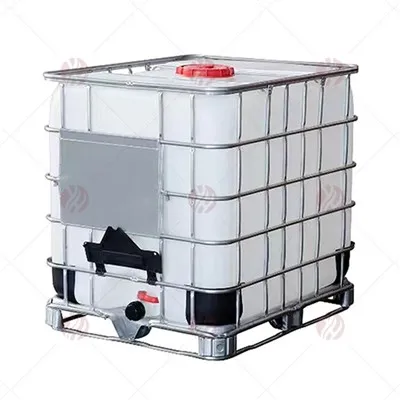
First, let’s get one thing straight: “impact resistance” isn’t a one-size-fits-all term. It’s not just about dropping a pallet from a truck bed and seeing if it cracks. It’s a whole set of scenarios—flicking a forklift tine against the edge, sliding it across a rough warehouse floor, stacking a heavy load when you’re in a hurry, even getting banged around in a sea container during a transoceanic trip. Wood pallets have their own flaws here: they splinter if you drop a heavy load, split if a forklift jolts wrong, and become weak along the grain after repeated use. Metal pallets? They’re tough, but they dent, corrode, and add a ton of weight that crunches your shipping costs. IBC plastic pallets strike a middle ground, but their impact performance depends on way more than just the plastic itself.
Let’s start with the material most of our suppliers use: high-density polyethylene (HDPE). It’s not the flimsy plastic you use for grocery bags, obviously. HDPE is a thermoplastic that’s processed to balance rigidity and flexibility—two properties that fight against impact. Here’s a quick science 101: rigid materials break when hit because they can’t deform. Flexible materials bend, absorb the force, and bounce back. Good HDPE for pallets gets that balance right. If it’s too flexible, it sags under heavy loads; too rigid, it shatters if dropped from just a few feet. Our pallets are made from food-grade or industrial-grade HDPE, depending on what you’re shipping, and we tweak the mix with small additives to boost impact. Stuff like UV stabilizers for pallets that go outdoors, or impact modifiers for those used in cold warehouses (wait, yes—cold makes plastic way more brittle! That’s a big one most people miss).
But material is only half the story. The design of the pallet matters just as much, if not more. Take our standard 48×40 inch pallet, the most common size for North American shipping. We build it with a solid deck, not slats like wood. Slats have gaps that focus impact force on small spots, so a drop can snap a slat clean in half. A solid plastic deck spreads force across the whole surface, so even a heavy load falling on it is less likely to cause a crack. Then there’s the stringers (the support beams underneath) and the feet. We use reinforced stringers—double-walled, with a ribbed interior that adds strength without adding a ton of weight. If a forklift tine accidentally hits the edge of a stringer, the ribs distribute that impact instead of letting it puncture through.
We test our pallets regularly, not just the lab tests you’ll read about, but real-world ones too. Let’s talk about the standard industry drop test, per ASTM D5276—most of our clients care about that, since it’s the benchmark for packaging performance. The test drops a loaded pallet (usually around 1,500 lbs for a standard IBC, plus the pallet itself) from a height of 3 feet onto its corner, edge, and face. If the plastic doesn’t crack or break, it passes. But here’s the thing: that test is a baseline. Real life is way messier. We’ve had a client whose pallets were being dropped from a 10-foot height onto concrete during port transfers. The standard HDPE would crack there, but our modified HDPE with impact modifiers? It just got a small scuff, no structural damage. We even had a customer shipping frozen food, so their pallets were sitting in freezers at -20°F all day. Regular HDPE shatters at that temp, but our cold-graded mix stays flexible enough to handle jolts from forklifts in tight freezer aisles.
Of course, no pallet is indestructible. I’ve seen plastic pallets break, usually for avoidable reasons. One common mistake is overloading. A lot of suppliers list a “static load” (what it can hold stacked in a warehouse) and a “dynamic load” (what it can hold when moving on a truck or forklift). If you exceed the dynamic load, that’s when impact becomes a problem. For example, a standard pallet has a dynamic load of 2,500 lbs. If you stack 3,000 lbs on it and run it through a warehouse, a small bump from a forklift can crack the stringer because the extra weight makes the plastic too rigid to absorb the impact. Another big one: improper forklift use. Forklifts that fork a pallet too close to the edge, instead of centering the tines, put uneven stress on the deck. Do that enough, and even a good pallet will develop a crack that gets bigger every time you move it. And don’t get me started on UV damage. If a pallet is sitting outside in the sun all summer without a cover, the UV rays break down the HDPE, making it brittle over time. That’s why we add UV stabilizers to all outdoor-grade pallets—they make the pallet last 3-5 years in outdoor use instead of 6 months.
Now, compare that to what happens when a plastic pallet fails. You’re mid-shipping a batch of pharmaceuticals, and your pallet cracks. Now you’ve got a load of drugs sitting on a broken pallet, waiting to be repackaged, costing you downtime and extra shipping fees. Or food ingredients—contamination is a risk if a splintered wood pallet breaks, but a cracked plastic pallet can leak or let debris get into the load. For industrial chemicals, a broken pallet can lead to spills, which are not just costly but also a safety hazard. That’s why impact resistance isn’t just a “nice to have” feature—it directly impacts your bottom line and operations.
Wait, let’s talk about a common question clients ask: “Are plastic pallets as impact-resistant as steel?” No, not exactly. Steel is way harder, but it’s also 2-3 times heavier, which means higher shipping costs. Plus, steel rusts, which is a problem for food and pharmaceuticals. The tradeoff? Plastic pallets have almost the same impact resistance for most supply chain scenarios, and they’re way easier to handle, lighter, and recyclable. I’ve seen companies switch from steel to our plastic pallets and cut their shipping costs by 15% just because of the weight savings, while still keeping the durability they need.
Another point people overlook: repeated impact. It’s not just one big drop that matters. A pallet going through a busy warehouse might get hit by a forklift 10 times a day, every day, for 5 years. That adds up to micro-impacts, which cause fatigue over time. Good HDPE doesn’t just resist one big drop—it holds up to hundreds of small jolts. We have a client that uses our pallets for a major grocery chain, moving produce 5 days a week for 4 years. They replace only 5% of their pallets annually, compared to 20% for the wood pallets they used before. That’s the real impact of impact resistance: it lowers your total cost of ownership, not just the upfront cost of the pallet.
So, what should you look for when choosing an IBC plastic pallet based on impact resistance? First, know your operating environment. If you’re working in cold storage, ask for cold-graded HDPE. If you’re shipping outdoors, make sure it has UV stabilizers. Ask about the drop test results—don’t just take the manufacturer’s word, ask for third-party test reports. And don’t skimp on additives; the cheap pallets you see on Amazon for $20? They use regular HDPE with no modifiers, so they’ll crack after a few drops from a forklift. We price our pallets a bit higher upfront, but our clients save way more by not having to replace broken ones every few months.
I’ve been in this business long enough to see trends come and go. Right now, more companies are moving away from wood and metal because of supply chain disruptions, sustainability rules, and labor costs. Plastic pallets check all those boxes, and their impact resistance is a big reason why. They’re not perfect, but for 90% of bulk shipping scenarios, they outperform wood and metal when it comes to withstanding the daily grind of logistics.
If you’re tired of pallets that break mid-ship, that cost you downtime, that add extra weight to your shipments, let’s chat. I can help you pick the right pallet for your specific needs, whether you’re shipping food, chemicals, pharmaceuticals, or construction materials. No pressure, just straight talk about what will work for your operations.
IBC Plastic Pallet References
ASTM D5276, Standard Test Method for Drop Test of Loaded Containers by Free Fall
Plastic Pallet Manufacturing Association (PPMA) Performance Standards for Bulk Packaging Materials
Journal of Applied Polymer Science, “Rheological and Mechanical Properties of HDPE Blends for Packaging Applications”, 2021
Zhenjiang Yuanhai Packaging Co., Ltd.
We’re well-known as one of the leading IBC plastic pallet manufacturers and suppliers in China, featured by quality products and good price. Please rest assured to buy high-grade IBC plastic pallet for sale here from our factory. We also accept customized orders.
Address: No. 9, Danwu Road, Dantu District, Zhenjiang City
E-mail: chin_john@msn.com
WebSite: https://www.yhibc.com/
