Hey there, let’s cut to the chase—if you’re someone who deals with office spaces, data centers, or even retail setups, you’ve probably stared at a tangled mess of cables at some point. You know the drill: tripping over Ethernet cords, staring at a rat’s nest of power lines under a desk, or panicking when you need to reroute wiring for new equipment. Today, I’m gonna break down how an access floor system fixes that cable chaos—plus why it’s not just a “nice-to-have” for spaces that move fast. Access Floor System
First, let’s get real about cable management headaches. I talk to clients all the time who say they spent 20+ hours last year just untangling wires for upgrades. One of my data center clients even had a small outage once because a loose cable got snagged under a server rack—talk about a costly mistake. Traditional floor setups (you know, concrete or vinyl tiles) force you to run cables on the surface, which means they’re exposed to dust, foot traffic, spills, and accidental yanks. Not exactly a recipe for reliability. That’s where access floor systems step in, and let me tell you, they’re way smarter than they sound.
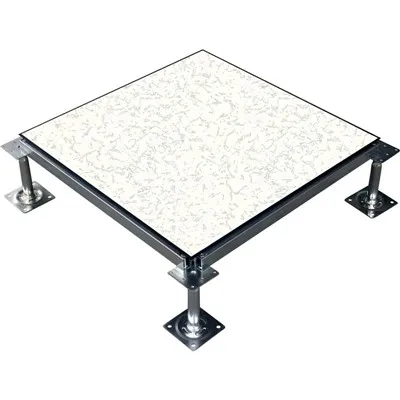
So, what even is an access floor? In simple terms, it’s a raised floor—tiles on metal pedestals that leave a gap between the actual slab and the finished surface. That gap (usually 6 to 36 inches, depending on what you need) is your hidden playground for cables, power lines, even HVAC stuff. Here’s the big win: instead of laying wires on top, you tuck them into that void. Let’s break down how that directly fixes cable management, no jargon required.
First up: organized, accessible routing. When you use a raised floor, you can section off the underfloor space to run different cable types separately—no more mixing power lines with data cords. Why does that matter? Power cables create electromagnetic interference (EMI) that can mess with Wi-Fi, network signals, or sensitive lab equipment. Access floors let you route power in one path and data in another, often with pre-cut conduits built into the tiles or pedestals. I’ve had small business clients who used to have Wi-Fi drop every time someone used the microwave (power interference!) and now? Their signal’s been steady for months. That’s not luck—it’s intentional cable separation.
And here’s the part no one tells you: flexibility. Let’s say you’re rearranging your office, adding a new server, or expanding a retail checkout station. With a traditional floor, you’re drilling holes, chasing cables through walls, and patching up drywall—messy and disruptive. Access floor tiles are super easy to lift. You can yank one up, run a new cable wherever you need, and pop the tile back down in 5 minutes. No contractors, no downtime, no patching. I worked with a tech startup last quarter that moved 3 desks and added 2 workstations in a day—all because the access floor let them reroute cables without ripping anything out. They told me they saved almost $1,500 in labor costs that day. That’s a big deal for small teams with tight budgets.
Wait, what about maintenance? Traditional cable setups mean you have to crawl under desks or behind walls to fix a loose wire. With an access floor, you just lift a tile. No more squeezing into tight spaces, no more guessing where the bad cable is. You can label cable paths directly on the pedestals or tile edges, so if something goes wrong, you know exactly which run to check. One of our data center clients does monthly cable checks, and they cut their maintenance time by 40% last year. That’s less time fixing issues, more time running their business.
Also, let’s talk about longevity. Exposed cables get worn out fast—foot traffic scuffs them, spills (coffee, soda, even cleaning chemicals) eat at the insulation. Under the access floor, cables are protected. Dust can still get in, but it’s easy to vacuum or blow out from the underfloor gap without touching the cables directly. We’ve had clients whose access floor cables lasted 10+ years, compared to 3-5 years for exposed cables. That means you’re not replacing cords every few months, which saves you money in the long run.
Don’t sleep on weight distribution either. Especially for data centers or spaces with heavy server racks—access floors are built to hold way more weight than regular floors. That means you don’t have to worry about a rack tipping and crushing cables, or the floor warping from too much gear. The pedestals are adjustable, so you can level the floor even if the original slab isn’t perfectly flat, which is a bonus for older buildings.
Now, let’s address a common question: “Is this just for big data centers?” Nope. I’ve installed access floors for small offices, retail stores, even healthcare clinics. A local clinic needed to upgrade their monitoring equipment and didn’t want to drill into the floor (since it’s a historic building with concrete underneath). The access floor let them run new patient monitoring cables without damaging the original structure. For them, it was the only way to get the job done without months of permits or construction delays.
Wait, but some people think access floors are expensive upfront. Let’s do the math. Sure, traditional cable management might seem cheaper at first, but add up the labor for reroutes, maintenance, outages, and cable replacements. My clients usually recoup the cost of the access floor in 2-3 years. And if you factor in the flexibility to grow? It’s an investment, not a cost.
Let me hit you with a real example to make this concrete. Last year, a financial firm came to me with a mess. They had a 10,000 sq ft office, and their cable mess was so bad that their IT team spent 10 hours a week just troubleshooting connectivity. We installed a raised access floor, ran all power and data cables into the underfloor gap, labeled every run, and added access points at every desk. Six months later, they told me their IT time for cable issues was down to 2 hours a week. They said that freed up their team to work on new projects, which ended up bringing in $50k in new business. That’s the ROI no one talks about.
Now, if you’re thinking, “This sounds good, but is it right for my space?” Let’s keep it simple. If you’re: dealing with frequent equipment changes, need reliable network/power for sensitive gear, tired of tripping over cables, or working in a space that’s hard to modify (like historic buildings or data centers), an access floor is perfect for you.
I’ve been in this access floor game for years, and I’ve seen every kind of cable mess you can imagine. The number one thing people don’t realize is that good cable management isn’t just about hiding wires—it’s about making your space work better for you. Less downtime, less stress, less wasted time on messy installs.
If you’re ready to stop dealing with cable chaos and make your space more efficient, hit me up. We can talk through your specific needs—whether it’s a small office, a big data center, or something in between. No sales pitch, just straight talk about what’ll work for you.
Before I wrap this up, let’s get one thing straight: an access floor system isn’t just a fancy floor. It’s a tool that makes your cables work for you, not against you. No more outages, no more wasted time, no more tripping hazards. That’s the kind of win anyone in this space needs.
Ready to sort out your cable mess? Let’s connect and work through what fits your space.
Waterproof Raised Access Floor References:
- “Raised Access Floors: A Comprehensive Guide for Data Centers and Office Spaces” (International Data Center Group, 2022)
- “Cable Management Best Practices for Commercial Facilities” (Building Owners and Managers Association, 2023)
- “EMI Mitigation in Structured Cabling Systems” (Telecommunications Industry Association, 2021)
- “Cost-Benefit Analysis of Raised Access Floors for Small to Medium Enterprises” (Small Business Administration, 2022)
Fineco Tech Co., Ltd.
As one of the most professional access floor system manufacturers and suppliers in China, we’re featured by quality products and good service. Welcome to wholesale customized access floor system made in China here from our factory. If you have any enquiry about cooperation, please feel free to email us.
Address: Wuyue Square, Wujin District, Changzhou, Jiangsu, China
E-mail: info@finecotech.com
WebSite: https://www.finecoglobal.com/
