If you’ve ever run your fingers over a corduroy piece—whether it’s a well-worn jacket, a cozy pair of work pants, or a vintage-style throw pillow—you’ve noticed that not all corduroy feels the same. Some are soft enough for a baby’s onesie, others are tough enough for a construction uniform, and a few have that subtle, subtle sheen you only spot in certain light. As a corduroy fabric supplier, I’ve fielded hundreds of questions from designers, small business owners, and even DIY crafters asking: “What makes one corduroy different from another?” The answer lies in more than just color or price. Corduroy is a woven textile built on intentional choices of yarn type, weave density, and finish, each tailored for a specific use. Today, I’m breaking down the core types of corduroy, how they’re made, and what makes each one valuable for your next project. I’ve spent 12 years working with corduroy mills around the world, testing batches, troubleshooting shrinkage, and helping clients pick the right type for their needs, so this isn’t just textbook talk—it’s the real-world insight I wish I’d had when I first started ordering fabric for my own small line of home goods. Corduroy Fabric

Let’s start with the basics for anyone new to corduroy: it’s a pile fabric, meaning it has raised vertical ridges (called wales) cut from extra yarn that’s woven into a plain or twill base. The cut wales are what give corduroy its signature texture. The number of wales per inch is the easiest way to categorize many types, but there are also weaves, blends, and specialty finishes that set some apart. I’ll walk through the most common, useful types you’ll encounter, starting with the ones you’ll see in almost every retail space.
The first type, and probably the most widely recognized, is standard cotton corduroy, often just called “traditional corduroy.” This is the corduroy most people picture: soft, breathable, and made entirely from natural cotton yarn. It’s woven with a base structure that’s usually a 2×2 or 3×1 twill, with extra weft yarns forming the pile. After weaving, the fabric goes through a shearing process that cuts the raised pile yarns to uniform height, then it’s brushed to lift the fibers and open up the ridges. What makes this standard is its versatility: it works for everything from casual shirts to upholstery, and it’s easy to dye, which is why you can find it in every color of the rainbow. That said, not all traditional corduroy is the same. The wale count here varies—most standard cotton corduroy has between 8 and 12 wales per inch. Higher wale counts mean thinner, closer ridges; lower counts mean thicker, more prominent ones. For example, a 10-wale cotton corduroy feels smooth with subtle ridges, perfect for a dress, while a 6-wale version has bold, chunky ridges, great for heavy-duty pants. One thing I always tell clients about cotton corduroy: it’s natural, so it shrinks. Pre-washing and pre-treating it before sewing is non-negotiable, especially if you’re making garments. I once had a client who ordered 100 yards of 8-wale cotton corduroy for a line of children’s overalls and skipped pre-treating—they ended up with garments that shrank two sizes after the first wash, costing them thousands in returns. That’s a small, avoidable mistake, so I include care recommendations with every bulk order from my team.
Next up is stretch corduroy, a game-changer for apparel that needs flexibility. If you’ve ever worn a pair of corduroy jeans that stretches with you while you bend, that’s stretch corduroy. It’s made by blending a percentage of spandex (usually 2 to 5 percent) with cotton yarn, or sometimes weaving spandex yarn into the warp or weft. The spandex gives the fabric 2 to 10 percent give, depending on the blend—enough for pants, skirts, or jackets that need to move with the body. What I love most about stretch corduroy is that it retains its corduroy texture, even with the added stretch, unlike stretch denim which can feel different after a few wears. The catch here is that stretch corduroy needs special handling: the spandex breaks down if exposed to high heat, so it can’t be dry-cleaned and should be washed on cold. It also tends to have a slightly different hand feel than standard cotton—softer, a little more drapey, less stiff when new. I started carrying stretch corduroy in my inventory about eight years ago, after a local apparel designer came to me complaining that all the stretch corduroy she’d found online stretched out too much after a few wears. We worked with a small mill in the Carolinas to adjust the weave: instead of weaving the spandex all in one strand, they wove it in every other weft line, which reduced stretch over time but kept the flexibility. It’s been a top-seller ever since, especially for people making plus-size garments or workwear that needs to move.
Then there’s velvet corduroy, also called “wale velvet” or “corduroy velvet,” a type of corduroy that’s often mistaken for velvet at first glance. The difference between velvet and corduroy is in the pile: velvet has a dense, short pile that’s not cut into distinct ridges, while velvet corduroy has low, tight ridges that are almost as soft as velvet. It’s made with a much higher wale count—usually 16 to 20 wales per inch—so the ridges are super thin and close together. I like to describe velvet corduroy as “corduroy’s fancy cousin” because it has a subtle, lustrous sheen when the light hits it, making it perfect for formal wear, upholstery, or decorative pillows. It’s more delicate than standard corduroy, though. The thin, tight ridges can flatten if you rub them the wrong way, and it takes longer to dye, so it’s often more expensive than traditional corduroy. I used velvet corduroy in a custom order last year for a set of dining chairs for a boutique hotel—they wanted a fabric that looked luxurious but was durable enough for high traffic, and velvet corduroy was the perfect middle ground. It’s soft, doesn’t show creases as much as regular velvet, and has that signature corduroy texture that customers notice.
Heavyweight corduroy is another key type, built for durability. If you’ve ever owned a pair of work pants or a trucker jacket that lasted 10 years, it’s probably made of heavyweight corduroy. This is made with thicker yarns, both for the base fabric and the pile, and usually has a lower wale count—between 4 and 8 wales per inch. The pile is longer and more robust, so it stands up to abrasion, spills, and frequent washing. Heavyweight corduroy is often made with 100% cotton, sometimes with a small percentage of polyester to make it even more resistant to fading. A lot of people think heavyweight corduroy is too stiff for clothing, but it softens up after a few washes. I’ve had customers tell me their 20-year-old work pants made of heavyweight corduroy still look great, just broken in perfectly. It’s also great for upholstery, especially in high-traffic areas like entryways or family rooms, because it hides dirt and stains better than lighter fabrics. I always keep a stock of black and brown heavyweight corduroy in bulk because it’s a staple for workwear manufacturers and small-batch apparel brands.
Now, let’s talk about niche types that have grown in popularity over the last few years, as more people look for sustainable and unique fabrics. One of those is organic corduroy, made from 100% GOTS-certified organic cotton. The cotton is grown without synthetic pesticides or fertilizers, so it’s better for the environment, and the weaving process is done with less harsh chemicals, too. Organic corduroy feels slightly less stiff than conventional cotton corduroy, because the cotton fibers are longer and more uniform. It’s more expensive, but it’s in high demand from eco-conscious designers and consumers. I started offering organic corduroy three years ago, after a surge in inquiries from small clothing brands that wanted to market their lines as sustainable. I work with a small organic mill in Portugal that has strict quality standards—they test every batch for shrinkage and dye fastness, so I can guarantee the quality to my customers. Another niche type is printed corduroy, where designs are printed on the surface after weaving and shearing. This can be anything from floral patterns to plaids, to abstract designs, and it works especially well on lighter-weight corduroy. Printed corduroy is great for making quilts, shirts, or home decor, because the texture of the fabric makes the design look more dimensional than it would on a smooth fabric.
I should also mention a few terms you’ll hear when working with corduroy suppliers, because they come up in every order. First, wale count, which I’ve touched on—it’s the number of ridges per linear inch, the main way to categorize most corduroy. Low wale (4-8 per inch, chunky ridges), medium wale (9-15, classic balance), high wale (16+, soft, thin ridges). Then there’s “pedal pushers,” a term for very thin, lightweight corduroy with high wale counts, used for things like dresses or blouses. “Corduroy velvet” I already mentioned, and “needlecord” is another term for super high wale corduroy—18 to 20 wales per inch, almost like fine velvet.
A lot of new customers don’t realize that corduroy can be blended with other fibers too. Polyester-corduroy blends are common for outdoor or workwear, because they’re more resistant to water, fading, and stretching than 100% cotton. Polyester-corduroy is also cheaper than cotton, so it’s popular for mass-produced garments. Linen-corduroy blends are another option, adding breathability and a slightly crinkled texture, perfect for summer jackets or shirts. I always advise clients to think about the end use when choosing a blend: if you need something durable and low-maintenance, go for polyester; if you want soft and breathable, stick with cotton.
From my perspective as a supplier, the biggest mistake people make is assuming all corduroy is the same. I’ve had designers order a bulk roll of corduroy for a children’s line, only to find it’s too stiff and scratchy for a baby’s skin—they ordered heavyweight instead of a soft, medium-wale cotton. Or a furniture maker ordered velvet corduroy for a sofa, not realizing that its delicate pile would flatten after a few months of use. That’s why I always ask clients a few questions when they reach out: what’s this going to be used for? Is it for indoor or outdoor use? Do you need stretch? What’s your preferred texture or weight? Those answers help me point them to the right type, instead of guessing.
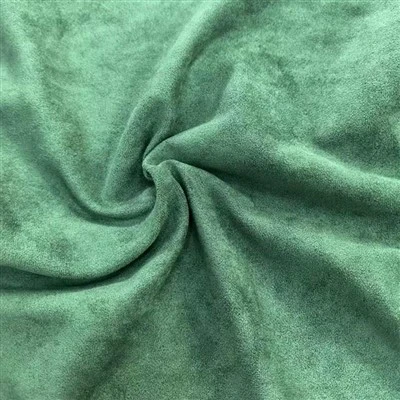
At the end of the day, corduroy is more than just a retro fabric—it’s a versatile, durable material with options for every project. Whether you’re making a work jacket, a custom sofa, a children’s quilt, or a formal dress, there’s a corduroy type that fits. If you’re looking for bulk corduroy, whether it’s standard cotton, stretch, velvet, or any of the other types I talked about, my team can help you source the right fabric for your needs, with quality testing and reliable delivery. Don’t hesitate to reach out to our team to discuss your project, get a sample, or ask any questions about corduroy types and care.
Stretch Suede Fabric References
- Textile Institute. (2019). Woven Pile Fabrics: Technology and Applications. Textile Institute Press.
- Cooper, R. (2021). The Science of Corduroy: Weave, Pile, and Finish. Journal of Textile and Apparel Technology Management.
- European Textile Services Association. (2020). Sustainable Corduroy Production: GOTS Certification and Best Practices.
- U.S. Department of Agriculture. (2018). Cotton Fabric Quality and Characteristics for Apparel and Upholstery.
Shaoxing Haoman Textile Co., Ltd.
As one of the most professional corduroy fabric manufacturers and suppliers in China, we’re featured by quality products and good service. Welcome to wholesale custom made corduroy fabric at competitive price from our factory. If you have any enquiry about cooperation, please feel free to email us.
Address: Room422, Building19, Keqiao Cross-border E-commerce Industrial Park, Shaoxing City, Zhejiang Province
E-mail: 30473967@163.com
WebSite: https://www.haomantextile.com/
