If you’re reading this, chances are you work in manufacturing, automation, or machine design—and you’ve spent more time than you care to troubleshooting ball screw linear modules that just won’t perform like they should. As someone who’s spent the last decade working closely with these components (first as an automation engineer, now as a supplier of ball screw linear modules), I can tell you: most issues aren’t catastrophic failures. They’re small, preventable oversights that show up when you least expect them. Let’s break down the most common problems we see from the field, how to diagnose them, and how to get your modules back up to speed fast. Ball Screw Linear Modules
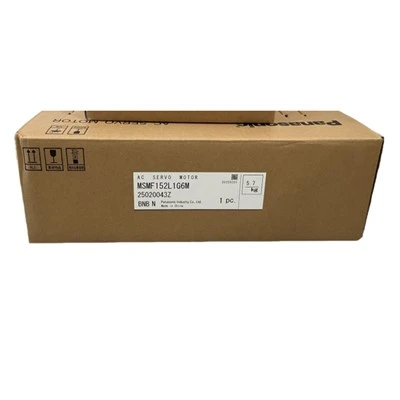
First, let’s set a quick baseline: a ball screw linear module is a precision assembly that converts rotary motion from a motor into linear motion via a recirculating ball screw. It’s the backbone of everything from CNC routers to packaging lines to medical device assembly, so when it breaks, it stops your whole workflow. Over the years, our team has supported thousands of customers across industries, and 80% of the service calls we get tie back to one of four core issues. Let’s start with the simplest, most avoidable one: misalignment.
Misalignment is the silent killer of ball screw modules, and it shows up in two ways: shaft misalignment and load misalignment. Shaft misalignment happens when the motor or gearbox driving the screw isn’t perfectly aligned with the screw’s shaft. Even a tiny angular offset—like 0.1 degrees—can create uneven stress on the ball bearings, cause increased friction, and lead to premature wear. We once worked with a customer in the automotive parts industry who was seeing inconsistent positioning on their wheel hub drilling station; they’d replaced the linear bearing three times in two weeks before we pointed out their coupling was off by just 0.08 mm. We fixed the coupling, and the problem went away. Load misalignment, on the other hand, happens when the load you’re moving isn’t centered on the module’s carriage. If you’re mounting a heavy workpiece off to one side, it creates side loads that the ball screw wasn’t designed to handle. Those side loads push on the screw’s nuts and bearings, creating extra heat and wear. The fix here is simple: always verify load center of gravity, and use a module with a higher load rating if your setup requires off-center mounting.
Next up, inadequate lubrication. Ball screw modules rely on precise lubrication to reduce friction between the balls and the screw threads, and without it, even a brand-new module will wear out in a matter of weeks. The thing most people don’t realize is that lubrication needs change with operating conditions: a module running 24/7 in a dusty factory needs more frequent lubrication than one running 8 hours a day in a controlled environment, and a module moving at high speeds needs a different type of lubricant than one with slow, precise movements. We see two common mistakes here: either people use too little lubricant, or they use the wrong type. Too little, and dry friction causes the balls to grind against the screw, leading to scoring or pitting on the threads. Too much, and you’ll get excess heat, which can break down the lubricant and attract dust. For most standard modules, we recommend a lithium-based grease with a viscosity of 150 cSt for speeds up to 1 m/s, and a synthetic grease for higher speeds. As for frequency: for continuous operation, lubricate every 500 hours; for intermittent operation, every 1,000 hours. If your module starts making a squeaking or grinding noise during movement, that’s the first sign you need to check lubrication—don’t wait for it to fail.
Third, contamination. Dust, metal shavings, coolant, and other debris are the enemy of precision linear motion. Most ball screw modules come with wipers or bellows to keep contaminants out, but those parts wear out over time, and if you don’t replace them, debris will get inside and cause serious damage. We recently supported a 3D printing manufacturer whose extrusion module was missing 20% of its print accuracy every week. When our service team opened up the module, they found fine plastic filament dust had worked its way past the old wiper, embedding itself in the ball bearings. The dust acted like sandpaper, wearing down the screw threads and causing the carriage to bind. The fix? Replace the wiper every six months, and for dusty environments, upgrade to a metal bellows cover that’s more durable than a standard rubber wiper. Also, a quick tip: if you’re working with a module in a wet environment (like a food packaging line where you use water-based sanitizers), make sure you choose a module with a corrosion-resistant coating—standard steel screws will rust if exposed to consistent moisture, leading to jamming.
Fourth, speed and load mismatching. This is a design mistake that shows up when someone uses a module rated for a certain speed or load in a application that exceeds its limits. For example, a compact light-duty module might be rated for a maximum speed of 1.5 m/s, but if you’re running it at 2 m/s, the balls can’t recirculate fast enough, leading to noise, vibration, and even premature screw failure. Similarly, if you mount a load that’s 20% over the module’s rated capacity, you’ll exceed the dynamic load rating, which causes extra stress on the screw and leads to backlash over time. Backlash, by the way, is a common complaint: it’s the small amount of play between the ball nut and the screw, and it gets worse as the module wears. If you’re seeing inconsistent positioning or lost motion, first check if you’re operating within the module’s speed and load limits. We always tell customers: don’t just look at the stated load rating—account for acceleration. A load moving at high acceleration creates much more stress than a static load, so you should size your module to handle 1.5 times your maximum dynamic load.
Now, what if you’ve checked all four of those boxes, and the problem is still there? Let’s talk about more in-depth diagnostics. First, measure the positioning accuracy. If you have a dial indicator or a laser measurement tool, run a test where you move the carriage through a full travel path multiple times, and record the deviation at each point. If the deviation is consistent, you’re likely looking at a wear issue. If it’s random, check for loose mounting bolts or a bent shaft—even a slightly bent screw can cause uneven movement and noise. Another diagnostic step: check for heat. Run the module at half speed for 15 minutes, then touch the screw’s housing (not the screw itself, which gets hot). If it’s hotter than 140°F (60°C), that’s a sign of excessive friction, which points to misalignment, too much load, or inadequate lubrication. We also always recommend checking the motor if you’re seeing movement issues—sometimes the problem isn’t the linear module at all, but a misprogrammed stepper motor or a faulty encoder.
One thing we emphasize with every customer is that proactive maintenance is way cheaper than reactive repairs. A 10-minute check every month can catch a small wiper tear or a low lubricant level before it causes a shutdown. We’ve had customers tell us that since they started our recommended maintenance schedule, their module uptime has gone up by 95%—that’s a huge difference for a production line that runs 20 days a month.
If you’re still troubleshooting a problem that’s not covered here, or you’re unsure how to size the right ball screw linear module for your application, our team is here to help. We’ve worked with industries from automotive to aerospace to medical, and we have the expertise to help you diagnose, fix, and prevent issues with your linear motion systems. Whether you’re dealing with a worn screw, misalignment, or just need a recommendation for a higher-performance module, we can work with you to find a solution that fits your needs.
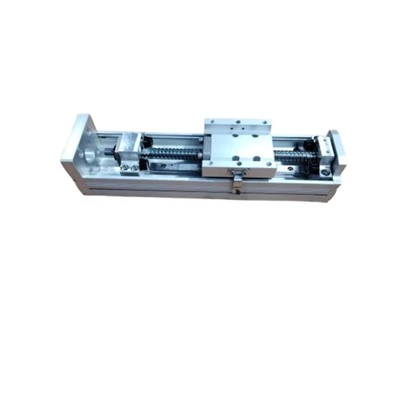
Don’t let a faulty ball screw linear module derail your production. Reach out to our team to discuss your specific challenges, and let’s get your linear motion systems running at peak performance.
Ball Screw Linear Modules References
- Bolton, W. (2017). Mechatronics: Electronic Control Systems in Mechanical and Electrical Engineering. Pearson Education.
- Design for Manufacturing: Linear Motion Systems Best Practices. (2021). Society of Manufacturing Engineers.
- Nabar, A. (2019). Precision Linear Motion: Troubleshooting & Maintenance Guidelines. Industrial Press.
- Thalmann, R. (2020). Ball Screw Technology: Selection, Installation, and Failure Analysis. Springer.
Yangning (Xiamen) Intelligent Technology Co., Ltd.
With abundant experience, we are one of the most professional ball screw linear modules manufacturers in China. As we have world-leading production equipment and strong manufacturing capabilities, we warmly welcome you to buy bulk advanced ball screw linear modules from our factory. Customized orders are welcome.
Address: Room 307-2, No. 15 Duiying Road, Software Park Phase III, Torch Hi-Tech Zone, Xiamen, Fujian, China
E-mail: mia@ynautos.com
WebSite: https://www.ynautos.com/
