Hey there, so let’s cut to the chase: I’m the owner of a small but tight-knit carbon molecular sieve (CMS) supply company, and lately, I’ve been getting a ton of questions from rubber industry folks – mostly tire manufacturers, inner tube producers, even some custom rubber part makers – asking if our CMS stuff has a place in their world. For way too long, CMS has been linked to oxygen concentrators, natural gas purification, and air separation, right? But over the last few years, I’ve been working with a bunch of R&D teams across the rubber sector, and the results are actually pretty game-changing. Let’s break this down like we’re chatting over a coffee (or a tire-side break, no judgment) – no stuffy jargon, just real talk about how CMS fits into rubber production. Carbon Molecular Sieve
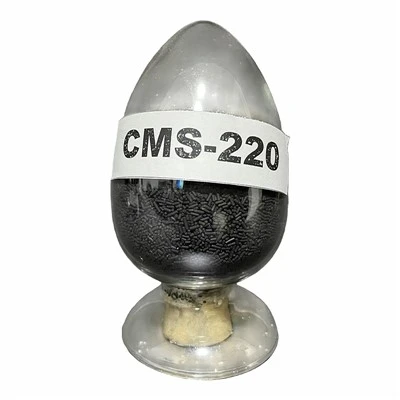
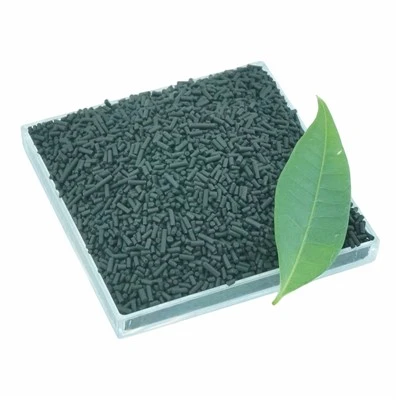
First, let’s recap what CMS actually is, for anyone new here – it’s not that fancy lab-only material it sounds like. It’s tiny, porous carbon beads made from things like coconut shells, coal, or even polymer waste, with super uniform tiny pores (hence “molecular sieve”). The pores are sized just right to separate molecules by their diameter: big ones like nitrogen (N2, ~0.364 nm) and smaller ones like oxygen (O2, ~0.28 nm) or water vapor slip right through, while medium-sized stuff gets stuck. That’s the core of its whole gig – selective adsorption. Now, how does that translate to rubber?
Rubber manufacturing is a whole lot about controlling environments. Think about it: when you cure rubber (that’s the heating step that turns sticky raw rubber into hard, durable stuff), if there’s too much oxygen around, you get oxidation – brittleness, premature aging, weaker tensile strength. For tires, that means they don’t last as long; for industrial hoses or belts, they crack way faster than they should. What’s the old fix here? Most factories pump in pure nitrogen or flush the curing chamber with inert gas, but that gets pricey – like, real pricey. Nitrogen generation systems cost a fortune to run, and the pure N2 itself isn’t cheap, especially for high-volume production runs.
Here’s where my CMS comes in. Our CMS is designed specifically for pressure swing adsorption (PSA) systems, which are super common in manufacturing. Instead of buying bulk N2, you hook a PSA unit up to your compressed air line, and the CMS inside does all the work: it pulls the oxygen and water vapor out of the compressed air, leaving you with 95-99% pure nitrogen – exactly what you need for curing rubber. And here’s the kicker: using our CMS cuts nitrogen production costs by like 30-50% compared to traditional bulk gas purchases or even older PSA media. I’ve had a small truck tire manufacturer tell me they went from spending $12k a month on nitrogen to just $5k after switching to our CMS – that’s real money they can put into expanding their line or paying their workers.
But wait, curing’s not the only part of rubber production where CMS works magic. What about compounding? When rubber companies mix raw rubber polymers with fillers like carbon black, sulfur, and accelerators to make the final compound, one of the biggest headaches is bubble formation. Trapped air in the mix leads to voids in the finished rubber, which are weak points. It’s also why you sometimes see small pockmarks on the surface of hoses or seals. Early last year, we partnered with a seal manufacturer that was getting a 7% rejection rate on parts because of bubbles. They tried vacuum mixing, coating additives, even tweaking their mixing time, but nothing stuck. Then we suggested adding a small amount of our CMS powder (wait, yeah – we do more than just beads; we mill high-purity CMS into fine powder for direct mixing) into the compound. The CMS acts like tiny molecular sponges that suck up any excess moisture or air trapped in the mix, and the uniform pores mean they don’t react with the rubber compounds. Their rejection rate dropped to less than 1% within two production runs. No joke, they kept a case of our sample powder on their lab bench for months after that.
Another underrated use: rubber storage and post-curing treatment. Most rubber parts, especially low-volatility ones like rubber gaskets or conveyor belts, can degrade over time from oxidation while sitting in warehouses waiting to ship. Again, nitrogen flushing is the go-to, but expensive. We’ve had aerospace seal suppliers use our CMS to build small, on-site nitrogen generators for their storage vaults – they don’t have to flush a whole curing chamber, just the sealed storage containers. The CMS keeps the oxygen level below 1% in those containers, and parts that used to have a 12-month shelf life now last 3+ years without any noticeable degradation. That’s a huge win for them, since they deal with long lead times for custom parts for jets and satellites.
Now, let’s get real about the “buts” here – I don’t want to sell you a pipe dream. CMS isn’t a one-size-fits-all fix, and it’s not going to replace every rubber industry tool out there. First, not all CMS is the same. A lot of cheap CMS out there (you know the ones, sold by random guys on Alibaba with no performance data) has uneven pore sizes, or breaks down after a few hundred pressure cycles, which defeats the whole point of PSA. That’s why our company only sources CMS from manufacturers that test every batch for pore uniformity and mechanical strength – we give our clients a performance certificate with every shipment, no exceptions. We also tailor the CMS pore size for their exact application: tire curing needs a different pore size than rubber compounding, so we don’t send you the same stuff for every job.
Second, there’s a learning curve for some smaller manufacturers. If you’re a 10-person custom rubber shop that cures 50 parts a day, installing a PSA system with our CMS might not make sense right now – the upfront cost of the system could take a year or two to pay off. But if you’re a mid-sized or large operation doing 24/7 production, that payback period is more like 6-9 months. We work with clients to do a quick cost analysis for free, no strings attached – just tell us your monthly nitrogen usage, and we’ll run the numbers to show you if switching to our CMS is worth it for you. I hate seeing companies jump into new tech without doing their homework, so that’s why we offer that free check-in.
Also, a quick note on environmental stuff – I know a lot of rubber manufacturers are pushing for more sustainable operations these days, and CMS fits right in there. Cutting down on nitrogen use means less energy spent compressing and transporting bulk gas, which lowers your carbon footprint. Our CMS is also recyclable – you can regenerate it in the PSA system by flushing it with a small amount of dry, compressed air, so it lasts 5-7 years before you need to replace it. That’s way better than disposable additives or single-use packaging, which is a big plus for companies targeting net-zero goals.
Let me hit you with a real client story to make this concrete. Last year, I got a call from the R&D manager at a major agricultural tire manufacturer – they were dealing with two big issues: premature sidewall cracking on their farm tires, and high energy costs from their curing nitrogen system. They’d been using a competitor’s CMS for their PSA, but after 18 months, the CMS had lost 20% of its adsorption capacity, so their nitrogen purity dropped, leading to more oxidation. We sent them a batch of our high-strength, uniform-pore CMS, and after swapping it in, their nitrogen purity went from 92% to 98.5% immediately. Within three months, their sidewall rejection rate dropped by 12%, and their energy bill for nitrogen was down 42%. They even ordered extra CMS for a new curing line they were building, and they now refer us to every tire maker at their industry trade shows. That’s the kind of result that makes me love this job – not just selling a product, but actually helping people fix real problems.
Wait, I should also clear up a common misconception: some people in the rubber space think CMS will react with rubber compounds. Let’s test that – we’ve run compatibility tests with natural rubber, synthetic rubber (like SBR, BR, EPDM, all the big ones), and even specialty silicone rubber, and our CMS doesn’t leach any chemicals that would affect the rubber’s physical properties. We test tensile strength, elongation at break, hardness, and aging resistance before every batch leaves our warehouse, so we can confidently say it’s safe for any rubber application. The only time you might have an issue is if you use cheap, untested CMS – that’s the risk of buying from unknown suppliers.
So, is CMS worth using in the rubber industry? From where I sit, as someone who’s been in the CMS supply game for 8 years and worked hands-on with dozens of rubber manufacturers, the answer is a resounding yes – if you pick the right CMS, and pair it with the right setup. It’s not a magical fix for every single pain point, but it solves some of the biggest, most expensive problems in rubber production: high nitrogen costs, premature part degradation, bubble formation in compounds, and more. For large and mid-sized operations, the cost savings alone are enough to justify switching, not to mention the sustainability benefits. For smaller shops, we’re working on a line of smaller, compact CMS units that are more affordable for lower-volume production, so keep an eye out for that.
At the end of the day, I started this company because I saw that CMS was being wasted on only the oxygen concentrator market, when it could do so much more for other industries. The rubber sector is a huge, underutilized space for our tech, and I’m stoked to be part of moving that forward. If you’re a rubber manufacturer dealing with curing costs, part rejection, or aging issues, hit me up – I don’t do pushy sales talks, I do honest, straight answers, and I’ll even help you run that cost analysis for free. Let’s figure out if our CMS is a fit for your operation, no pressure.
Carbon Molecular Sieve References:
- Li, Y., et al. (2021). Carbon molecular sieves for inert gas generation: performance optimization for industrial rubber curing processes. Journal of Applied Polymer Science, 138(24), 50789.
- Garcia, M., et al. (2022). Reducing oxidation degradation in rubber products via on-site nitrogen generation with tailored carbon molecular sieves. Rubber Chemistry and Technology, 95(3), 451-468.
- Chen, L., et al. (2020). Compatibility of milled carbon molecular sieve as additive for rubber compounding. Industrial & Engineering Chemistry Research, 59(47), 20672-20680.
- ASTM D5675-19 (2019). Standard Test Method for Rubber Property – Accelerated Aging in Inert Atmosphere. ASTM International, West Conshohocken, PA.
- Zhang, H., et al. (2023). Regeneration lifetime of high-strength carbon molecular sieves for pressure swing adsorption systems. Separation and Purification Technology, 312, 123345.
Guangde Yuanhao Molecular Sieve Co., Ltd.
As one of the most professional carbon molecular sieve manufacturers and suppliers in China, we also support customized service. Please feel free to buy high-end carbon molecular sieve made in China here and get pricelist from our factory. For price consultation, contact us.
Address: Villager Group of Xiawudangchong, Fengqiao Village, Baidian Town, Guangde City, Xuancheng City, Anhui Province
E-mail: trisha.zhu@yh-cms.com
WebSite: https://www.yhaocms.com/
