If you’ve ever worked with industrial piping systems, high-vacuum equipment, or fluid handling components, chances are you’ve interacted with a metal bellows—even if you didn’t notice them. These flexible, corrugated metal assemblies do the heavy lifting: they compensate for thermal expansion in pipelines, absorb vibration from pumps and compressors, and seal off critical systems in aerospace and semiconductor manufacturing, where a single leak can derail an entire production run. As someone who’s spent the last 12 years supplying custom and standard metal bellows to clients across energy, medical, and tech industries, I’ve fielded hundreds of questions from engineers and procurement teams alike: What makes a quality metal bellows? And how do you avoid the cheap, ill-fitting options that fail after a few months of use? The answer boils down to standards—not just industry guidelines, but the rigorous testing and material specs that separate a bellows that lasts 10 years from one that needs replacing every quarter. Metal Bellows
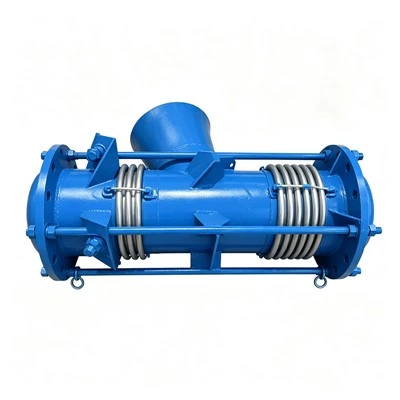
First, let’s break down the core international and regional standards that govern metal bellows. The most widely adopted set comes from the European Committee for Standardization (CEN): EN 13445, which covers unfired pressure vessels, includes a dedicated section on metal bellows expansion joints, and outlines requirements for design, material testing, and fatigue life. For North American clients, ASME Boiler and Pressure Vessel Code (BPVC) Section VIII Div. 1 is non-negotiable for applications operating at or above atmospheric pressure, especially in chemical processing and power generation. Then there’s the aerospace and vacuum sector, where ASME Section III (Nuclear Power Plant Components) and ISO 14698 for cleanroom vacuum systems add layers of precision testing that don’t apply to less demanding environments.
But standards don’t stop at design rules. The manufacturing side has its own benchmarks, too. For example, AWS D1.6 is the American Welding Society standard for welding stainless steel, a material used in 80% of the metal bellows we supply. Metal bellows rely on precision welds between individual convolutions to create a leak-tight seal, and a weak weld is the number one cause of early failure. I’ve seen competitors cut corners here: they’ll use generic welding parameters for thick plate steel instead of the low-heat, pulse-welding techniques required for thin bellows stock (most bellows wall thicknesses range from 0.1mm to 1mm). That’s why we adhere to AWS D1.6’s guidelines for austenitic stainless steels, like 304 and 316L, which are the go-to for corrosion resistance in most industrial settings.
Material specs are another make-or-break standard. ISO 9001-certified suppliers (like our team) stick strictly to material certifications that trace back to the original mill—no recycled or mislabeled alloys here. For metal bellows, common materials include austenitic stainless steels (304, 316L), nickel alloys (Inconel 625, Hastelloy C-276) for high-temperature or corrosive environments, and even titanium for aerospace applications. Standards like ASTM A240 define the chemical composition and mechanical properties for these materials, so a bellows made to ASTM A240 316L won’t rust when exposed to saltwater, while one made to a substandard alloy will fail in months. I once had a client in the oil and gas sector who switched to a cheaper bellows that wasn’t made to ASTM specs; within six months, it cracked from hydrogen sulfide exposure, costing them $20,000 in downtime. That’s a story I share to drive home why cutting corners on material standards isn’t just a bad deal—it’s a financial risk.
Fatigue testing is another critical standard that’s often overlooked. Metal bellows are designed to flex repeatedly, so their ability to withstand thousands or even millions of cycles is non-negotiable. ISO 16135 sets the standard for testing the fatigue life of metal expansion joints, requiring suppliers to test prototypes under conditions that mimic real-world use: varying pressures, temperatures, and flex cycles. For example, a bellows used in a steam pipeline might need to withstand 10,000 flex cycles at 300°C, while one in a semiconductor fab could need 1 million cycles at room temperature with ultra-high vacuum. We do 100% non-destructive testing (NDT) on every batch we ship, including pressure testing and eddy current testing to detect tiny flaws in the corrugations that would cause leaks. Competitors who skip this step might get a lower price, but their bellows often fail during the first few cycles—costing clients far more in replacements than they saved upfront.
It’s also important to note that standards aren’t one-size-fits-all. A metal bellows for a medical device, like a portable oxygen concentrator, has different standards than one for a refinery pipeline. For medical applications, ISO 13485— the standard for medical device quality management systems—adds requirements for biocompatibility and traceability, ensuring no residual materials from manufacturing contaminate the device. For aerospace, AS9100 (the aerospace quality standard) requires even tighter controls on material traceability and component testing, since a failed bellows in a satellite could mean a multi-million dollar loss. I’ve worked with a team of aerospace engineers to supply bellows for a satellite’s fuel line, where every weld and convolution had to be documented with a serial number—something that’s only possible when you follow AS9100’s guidelines.
As a supplier, I don’t just sell metal bellows; I sell peace of mind. That means making sure every bellows we ship meets or exceeds the relevant standards for your application, no exceptions. If you’re in the market for metal bellows, don’t just ask for a price tag—ask to see the material certifications, fatigue test reports, and compliance documents for the standards that apply to your industry. A quality supplier will be transparent about these, not defensive when you ask for them. I’ve had clients come to us after a bad experience with a cheap bellows, and after we share our test data and compliance records, they switch to us permanently.
If you’re planning a project that requires metal bellows—whether it’s a new piping system, a vacuum chamber, a medical device, or an aerospace component—don’t settle for substandard parts. Reach out to our team to discuss your specific requirements, and we’ll walk you through the standards that apply, review your design, and supply bellows that meet all necessary guidelines. We’re here to help you avoid the costly mistakes that come with ignoring industry standards, so your project stays on track and your systems run reliably for years to come.
Elastic Components References
- European Committee for Standardization (CEN). EN 13445: Unfired Pressure Vessels. 2021.
- American Society of Mechanical Engineers (ASME). ASME BPVC Section VIII Div. 1: Rules for Construction of Pressure Vessels. 2023.
- American Welding Society (AWS). AWS D1.6: Structural Welding Code – Stainless Steel. 2022.
- International Organization for Standardization (ISO). ISO 16135: Expansion Bellows for Piping Systems – Fatigue Testing. 2019.
- ASTM International. ASTM A240/A240M: Standard Specification for Chromium and Chromium-Nickel Stainless Steel Plate, Sheet, and Strip for Pressure Vessels and for General Applications. 2023.
- International Organization for Standardization (ISO). ISO 13485: Medical Devices – Quality Management Systems. 2016.
- International Organization for Standardization (ISO). ISO 9001: Quality Management Systems – Requirements. 2015.
- International Aerospace Quality Group (IAQG). AS9100: Quality Management Systems – Requirements for Aerospace. 2022.
Yixing Blog Pipeline Equipment Co., Ltd.
As one of the most professional metal bellows manufacturers and suppliers in China, we’re featured by quality products and good service. With abundant experience, we warmly welcome you to wholesale bulk metal bellows in stock here and get quotation from our factory. Customized orders are welcome.
Address: Zhizao Park, No.50 Chunjiang Road, Industrial Cluster Zone, Heqiao Town, Yixing City, Wuxi City, Jiangsu Province
E-mail: 1351116816@qq.com
WebSite: https://www.blogbellows.com/
