If you’re a facility manager, workshop owner, or someone who relies on portable electric hoists for lifting heavy loads—whether it’s moving industrial components on a construction site, loading cargo at a warehouse, or rearranging machinery in a fabrication shop—you already know how critical these tools are. But here’s the hard truth: 60% of hoist-related safety incidents (per recent industry data) trace back to electrical wiring issues, not mechanical failures. As a portable electric hoist supplier with 12 years on the ground, I’ve seen first-hand how skipping regular wiring checks can turn a routine lift into a dangerous, costly setback. I’ve also walked dozens of clients through step-by-step wiring inspections, and I can tell you: most issues are preventable, if you know what to look for, and when to call in a pro. Portable Electric Hoist
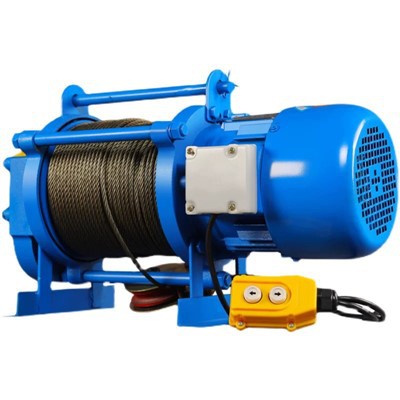
Portable hoists are designed to be moved between job sites, stored in tight spaces, and exposed to dust, moisture, and frequent impact—all of which take a toll on electrical wiring that’s built to be flexible, not indestructible. Unlike fixed hoists that sit in one spot, portable models get jostled, tangled, and sometimes pulled too hard, which weakens insulation, loosens connections, or exposes live wires. That’s why regular wiring checks aren’t just a “nice-to-have” — they’re a core part of equipment maintenance. Below, I’ll break down how to inspect your hoist’s wiring safely, spot red flags that mean you need a repair, and know when to replace wiring entirely.
First, the non-negotiables before you start: never skip these prep steps to avoid shock, electrocution, or accidental startup. I once had a new client who skipped this and got a minor burn when a hoist accidentally turned on during an inspection—don’t make that mistake. First, unplug the hoist from the power source. If you’re working with a hardwired portable hoist (some industrial models are, instead of corded), flip the circuit breaker controlling that hoist to the “off” position, and tape the breaker switch to ensure no one turns it on while you work. Next, clear a 3-foot workspace around the hoist so you don’t knock it over, and lay down a rubber mat rated for at least 1,000 volts to insulate you from any residual current. If you’re working outdoors, pick a shaded, dry area—moisture amplifies electrical risk, so even a light drizzle can make a seemingly harmless wire damage deadly.
Now, let’s get to the wiring itself. Start with the power cord, the part that takes the most abuse because it’s dragged across floors, stepped on, and crammed into storage. For a corded portable hoist, the cord is your first line of defense. I’ve inspected cords where a forklift ran over it, leaving a 2-inch tear in the insulation that exposed a copper wire—someone tried to tape it up and keep using it, and that cord later sparked and burned through a warehouse pallet rack. So, what to check here: run your hand (gently) along the entire length of the cord, from the plug to the connection on the hoist body. Feel for cracks, frays, or indentations—even small ones mean the insulation has been compromised. Next, check the plug prongs: if they’re bent, cracked, or have discolored burn marks, that’s a sign of loose connections or overheating, which can cause the cord to fail mid-lift. If you have a multimeter (get a non-contact one for basic checks) you can test the plug: hold the non-contact probe near the prongs, and if it lights up or beeps when the plug is off, there’s residual current that means a wiring fault inside the hoist.
Next, move to the cord strain relief. This is the plastic or rubber collar that secures the power cord to the hoist body, and it’s designed to take the pull of the cord when you move the hoist—without it, the wire’s internal conductors will break from repeated tugging. I’ve seen strain reliefs crack after being left out in the sun for a year, so check for splits, missing pieces, or a loose fit. If the cord wiggles when you pull it at the strain relief, that’s a red flag: the internal wires might already be bent or broken, even if the outside insulation looks fine. Tug the cord gently (no yanking) to test this—if it moves more than ¼ inch, the strain relief needs to be replaced, a job that takes 10 minutes and costs a few dollars, but saves you from a $5,000 hoist repair later.
Now, open the hoist’s control switch and motor housing—this is where the internal wiring lives, and where most hidden issues lurk. First, make sure the hoist is still unplugged (I can’t stress this enough). Most portable hoists have a Phillips screw on the side of the control box; unscrew it and lift the cover carefully—don’t yank, because wires might still be attached. Once inside, look at the terminal connections: these are the metal tabs where the power cord and motor wires screw in. Check for loose screws: if a screw is barely holding, or if the terminal shows signs of arcing (black, burnt marks around the connections), that’s from electricity jumping between loose parts, which overheats the wire and can cause a fire. I once had a client who ignored a small burnt mark on a terminal; three months later, the loose connection sparked and melted the control box, shutting down their production line for two days. It’s a small check that prevents big headaches.
Next, inspect the internal wires for insulation damage. These wires are usually color-coded (black, white, green for North American models, blue, brown, yellow/green for international) and wrapped in plastic insulation. Look for fraying, cracks, or wires that are exposed through the insulation. If a green (ground) wire is exposed, that means the hoist isn’t properly grounded, so you risk electric shock if the metal hoist body becomes live. If a black (hot) wire is exposed, that’s a fire hazard—even a tiny spark from that exposed wire can ignite dust or flammable materials near your job site. Also, check the wire routing: wires should be secured with clips so they don’t rub against metal edges of the hoist, which wears down insulation over time. If a wire is rubbing against a sharp edge, that’s a slow leak of insulation damage, so you need to re-route it and add a plastic sleeve to protect it.
Don’t forget the control pendant (the handheld remote or switch you use to operate the hoist). Most portable hoists have a pendant with its own cord, and that cord gets the same abuse as the power cord. Check the pendant cord for frays where it bends at the plug (the “knee” of the cord is where breaks most often happen). Press each button on the pendant: if a button feels loose, or if the hoist doesn’t respond when you press it, that could be a wiring fault inside the pendant. I’ve seen clients try to tape a frayed pendant cord, but the right fix is replacing the pendant cord entirely—they’re cheap, and a faulty pendant is one of the most common causes of unexpected hoist shutdowns.
Now, when is it time to call a professional? If you find any of these issues, don’t try to fix the wiring yourself unless you’re a certified electrician (even experienced equipment operators often miss subtle faults that can lead to injury). If you see exposed live wires, burn marks on terminals, or loose ground connections, that’s a job for an electrician who specializes in industrial hoists. Also, if your hoist is more than five years old, even if it seems to work fine, schedule a professional wiring inspection—age causes insulation to degrade, and portable hoists take way more wear than fixed models.
As a portable electric hoist supplier, I recommend that all clients do a quick visual wiring check before every use, and a more thorough inspection once a month. A 10-minute check every time you use your hoist will save you from downtime, injury, and costly replacements. And if you’re in the market for a new portable hoist, look for models with reinforced power cords, heavy-duty strain reliefs, and sealed control boxes—these are designed to withstand the rough use of job sites, so you’ll spend less time inspecting and more time working.

If you have questions about hoist wiring checks, need a replacement component, or want to learn more about our portable hoist models built for durability, reach out to our team to discuss your specific needs. We work with small workshops and large construction firms alike, and we can help you find the right hoist for your job, plus share customized maintenance tips to keep your equipment safe.
Pallet Handling Vehicle References:
- Occupational Safety and Health Administration (OSHA). 2023. “Portable Power Tool Safety Guidelines for Electrical Equipment.” U.S. Department of Labor.
- National Institute for Occupational Safety and Health (NIOSH). 2022. “Analysis of Hoist-Related Electrical Incidents in Industrial Settings.” Centers for Disease Control and Prevention.
- Hoist Manufacturers Institute (HMI). 2021. “Maintenance Standards for Portable Electric Hoists.” Industrial Equipment Association.
- Electrical Safety Foundation International (ESFI). 2023. “Corded Tool Inspection Best Practices.” Nonprofit Electrical Safety Organization.
Hebei Hengtai Crane Machinery Manufacturing Co., Ltd.
Address: Weigezhuang Village, Donglu Township, Qingyuan District, Baoding City, Hebei Province
E-mail: hbht@cnhengtai.com
WebSite: https://www.cnhengtai.com/
