Hey there, if you’ve ever worked with industrial parts—like gaskets for a factory machine, seals for a water processing unit, or even protective liners for heavy equipment—you’ve probably wondered: can industrial rubber sheets really be molded into all those random shapes you need? As someone who’s been in the industrial rubber sheet game for 8 years (yep, I’ve messed up more mold runs than I can count), I’m here to break this down straight, no fancy jargon, and tell you exactly how it works, why it matters for your shop, and how we make it happen without breaking your timeline. Industrial Rubber Sheet
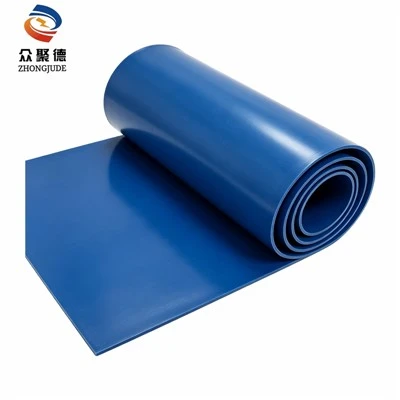
First off, let’s get one thing clear: industrial rubber sheets aren’t that thick, stiff stuff you find in a random craft store that only does basic rectangles. The industrial grade we supply is formulated specifically for molding—most of it’s either nitrile (good for oil), EPDM (weatherproof), silicone (heat-resistant), or neoprene (general all-around). The short answer? Yeah, you can mold these sheets into almost any shape you need—rounded corners, custom-sized gaskets with odd bolt patterns, even complex curved parts for heavy machinery. But it’s not just slapping a sheet into a mold and calling it done. Let’s walk through how we do it step by step, because that’s where most people get tripped up.
First, we start with the base rubber sheet, but wait—molding doesn’t always mean turning a flat sheet into a 3D shape. Sometimes it’s die cutting a custom gasket from a thick sheet, but if you’re talking about deeper shapes, we’ll take the raw sheet and do compression molding. Here’s the lowdown: if you send us a blueprint—even a rough sketch, honestly—we’ll cut a piece of your chosen rubber sheet to fit a custom mold cavity (we don’t use off-the-shelf molds here, because 9 times out of 10, standard shapes don’t work for industrial parts). We heat the mold to the rubber’s vulcanization temp—usually between 300 and 350°F depending on the rubber type—and apply consistent pressure for 5 to 15 minutes. That pressure makes the rubber flow into every nook and cranny of the mold, so you don’t get gaps or weak spots. I’ll admit, our first year in business, we tried to rush this step—cut corners on pressure, and half the runs came out with tiny bubbles that made the gaskets leak. Learned real quick that slow and steady beats fast every time.
Wait, what about thinner sheets? A lot of customers ask if we can mold thin rubber (like 1mm or 2mm) into custom shapes. Yep, but we use a different method for that—call it transfer molding, though we just say “prepping the sheet for tight shapes” around here. For thin sheets, we don’t compress them directly; instead, we cut a blank from the sheet, place it in a transfer mold, and melt it just enough to push it into the tooling. That way, the thin stuff doesn’t stretch or tear when it’s shaped. We use this a lot for custom seals for food processing equipment—since it’s thin enough to fit into small gaps, but still durable enough to hold up to repeated cleaning.
Now, why is this a game-changer for your business? Let’s say you’re a mining company that needs custom rubber liners for a new ore chute—standard flat sheets would slide around and wear out in 2 weeks. Molded curved liners, though, fit perfectly, so they last 6 months. Or a chemical plant that needs gaskets with a weird oval shape to fit their unique pipe connections—you can’t buy those off the shelf, but molding lets you make them exact. The key here is that our sheets are formulated to be moldable, not just cuttable. A lot of suppliers sell rubber sheets that are too rigid—they’ll crack if you try to bend them into a custom shape, but ours are mixed with additives that let them flow without losing their strength.
But here’s the catch: not all industrial rubber molds are equal. If you go with a cheap supplier that uses low-grade rubber, their molded shapes will have uneven thickness or tear easily. We test every batch before it goes to molding—we check the tensile strength, the resistance to whatever chemical or temperature you’re dealing with, and we do a test run on a small number of molds before we commit to a big order. Last quarter, a customer from a wastewater treatment plant came to us with a bad batch from another supplier—their molded seals were shrinking 10% after a week of being in cold water. Their rubber wasn’t properly vulcanized, so we re-molded it with our EPDM sheet, and it’s been working for 3 months straight with no issues. That’s the stuff we actually care about, not just hitting a cheap price point.
Another thing people don’t realize: molding isn’t just for small parts. We’ve molded industrial rubber sheets into huge shapes—like 10-foot long curved pads for heavy truck suspension systems. The trick there is using a large-format mold, but we also work with the rubber’s flow rate so the big sheets don’t warp as they cool. We even do custom shapes that people think are impossible—like a rubber sheet molded with small, evenly spaced indentations for non-slip stair treads, or ones with cutouts that fit specific sensors for medical equipment (wait, yeah, we work with medical manufacturers too—silicone is perfect for that, since it’s non-toxic).
Let’s talk about common myths, because I hear these all the time. Myth 1: You have to use a liquid rubber to make custom shapes. Nope—our solid industrial rubber sheets are way more durable than liquid rubber, and molding them from a sheet cuts down on material waste (we only use what we need, no excess liquid that has to be discarded). Myth 2: Molding takes forever. If you have a simple shape, we can turn it around in 3-5 days. Even complex shapes take 2 weeks max, unless you need a huge order—we have a team that can prioritize urgent runs for customers who can’t wait. Myth 3: Molded shapes are more expensive. Yeah, maybe a little per piece, but when you compare the lifespan of a molded custom part vs. a cut-to-fit flat sheet that needs replacing every month, it’s actually cheaper in the long run. Last year, a customer from a construction site saved over $12,000 a year by switching from cut gaskets to molded ones—they lasted 3x longer.
So, what do you need to get started? You don’t need a fancy engineer to draw up a perfect blueprint. A rough sketch with dimensions, what the part will be used for (oil? water? extreme cold?), and how many you need is enough. We’ll handle the rest: picking the right rubber sheet, designing the mold, testing a sample, and delivering your order. The only thing to keep in mind is that if your shape has really tight corners, we might suggest a slightly thicker sheet so it doesn’t crack when we mold it—just a little tip from experience.
Wait, I should also mention post-molding, because that’s another thing that separates us from other suppliers. After we mold the sheet, we do a little finishing: trim any excess rubber, smooth out the edges so they don’t cut hoses or equipment, and even add custom markings if you need them. For example, a food processing customer asked for their gaskets to have a small logo etched into the rubber for brand recognition—we can do that with the mold, no extra steps.
At the end of the day, industrial rubber sheets being moldable is all about getting a part that fits exactly what your operation needs, no compromises. I’ve seen too many companies waste money on generic parts that don’t hold up, and that’s why we focus on making custom molded shapes work for you. If you’ve got a project—big or small, simple or wild— and you’re wondering if we can mold your industrial rubber sheet into what you need, just reach out. No sales pitches, no hidden fees, just a conversation about what you’re working on. We’ll send you a free sample of the right rubber sheet, answer all your questions, and get you a quote fast.

Don’t settle for parts that almost fit. Work with someone who’s been doing this long enough to know how to make molded industrial rubber sheets work for your specific needs. Hit us up to chat through your project, and let’s figure out the best way to get you the exact shape, durability, and price you need.
Industrial Rubber Sheet References
- ASTM International. (2022). Standard Specification for Compression-Molded Rubber Products for Industrial Applications.
- Society of Automotive Engineers. (2021). Guide to Molding of Solid Rubber Sheets for Heavy-Duty Machinery.
- Rubber Manufacturers Association. (2023). Industrial Rubber Sheet Formulation for Molded Custom Components.
Hebei Zhongjude Power Technology Co., Ltd.
With abundant experience, we are one of the most reliable industrial rubber sheet manufacturers and suppliers in China. Welcome to buy bulk high quality industrial rubber sheet for sale here and get quotation from our factory. For price consultation, contact us.
Address: Shenghe Plaza, No. 88 Qilian Street, High-tech Zone, Shijiazhuang City, Hebei Province, China
E-mail: zhongjude@outlook.com
WebSite: https://www.zjdinsul.com/
