Hey there, it’s Jake from the aluminum cable tray team – I get tons of questions when I’m on client calls, emails, even random warehouse drop-ins, and one that pops up all the time is: “What’s the actual right installation angle for an aluminum cable tray?” I’ve had guys come in thinking it’s just, like, eyeball a 45-degree bend and call it a day, and others who overcomplicate it with 10 pages of specs, so let’s cut through the noise – no jargon, no overly technical fluff, just real stuff we use daily on our jobs (and the stuff I’ve learned messing up a few early projects, trust me). Aluminum Cable Tray
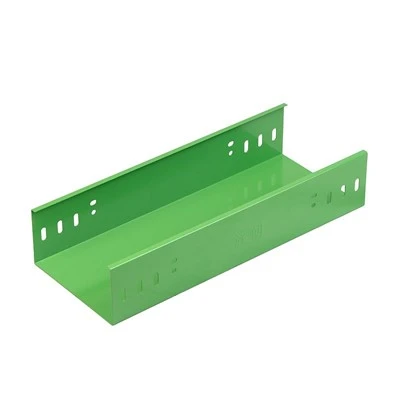
First, let’s get one thing straight: when people ask about “installation angle” for cable trays, they’re almost always talking about two tiny, related things: the slope (that’s the downward angle we use to keep water or condensation from pooling) and the bend angle for turns (like if you’re running a tray around a ceiling beam or a wall corner). Both matter, but most of the confusion comes from mixing those two up – so I’ll break ’em down separately, starting with the slope because that’s the one that actually causes headaches if you get it wrong.
Let’s start with why slope matters in the first place. Aluminum cable trays are used everywhere: industrial warehouses, data centers, outdoor parking garages, even coastal facilities where salt air can mess with metal. The number one enemy of any cable tray installation (other than a rogue forklift or a new intern who thinks power tools are toys) is standing water. If you install a tray completely level, any dew, rain that seeps in through wall jacks, or condensation from HVAC lines will pool in the bottom of the tray, not only weighing it down (aluminum’s strong, but extra weight’s not ideal) but also corroding the tray itself over time – and then that water leaks onto the cables, which is a whole other can of worms.
So what’s the standard slope for that? I know the NEMA (National Electrical Manufacturers Association) has a spec, but for our clients, we usually say 1/4 inch of drop per foot of tray. That sounds fancy, but let’s make it real: if you run a tray that’s 10 feet long, it should drop a quarter inch from the high end to the low end. For a 20-foot tray? Half an inch. No need to pull out a protractor – just get a 12-foot level, mark one end, and use a small spacer or even a stack of business cards to get that 1/4 inch per foot. I’ve seen guys use a tape measure and do the math in their heads, and that works too, but for big runs, a laser level’s a lifesaver – saves so much time.
Wait, but hold on – when would you adjust that slope? If you’re running a tray in a super cold climate, condensation’s way worse, so we bump that up to 3/8 inch per foot. And if it’s an outdoor installation where it’s exposed to rain or snow? 1/2 inch per foot minimum, no exceptions. I once had a client in Florida skip that extra slope, and 6 months later, they had rust spots on the bottom of the tray and water pooling around the cable connections – they called us back to adjust the slope and replace the corroded sections, and that was a $2k fix they could’ve avoided if they’d just listened to me. That’s the stuff I always bring up because it’s preventable.
Now, the other angle people mix up: bend angles for turns. That’s the angle you cut or bend the tray when you need to go around a pipe, a structural column, or a corner. A lot of new installers think you can just do a 90-degree sharp bend, and technically, you can, but it’s not good for your cables. Cables have a minimum bend radius, right? If you yank them too tight around a sharp bend, you can damage the insulation, fray the wires inside, or even cause a short down the line. So the bend angle of the tray has to match or be wider than the cable’s minimum bend radius.
Here’s the thing about aluminum trays specifically: they’re way easier to bend than steel, so you can get a smoother, wider bend without even using a specialized tool (we’ve got a cheap handheld bender most of our installers keep in their truck). For most power cables, the minimum bend radius is around 10 times the cable’s diameter, so we aim for a 90-degree bend that’s at least 12 inches radius – that translates to about a 15-degree angle for the bend side? No, wait, let’s not overcomplicate. The key takeaway here is: don’t do sharp 90-degree bends. Make gradual bends, and if you’re working with thicker power cables or fiber optic cables (which are way more fragile), go even wider – 18 inches of radius minimum. I once had a client who installed a tray with tight 90s for fiber, and within a year, half the cables were glitching because the insulation had frayed from the sharp turns. They had to re-do the whole run, and that’s a job that could’ve been avoided just by taking an extra 10 minutes to make a smoother bend.
Wait, are there any cases where you would use a different angle? Let’s talk about rare scenarios. If you’re running a tray in an area with high seismic activity, you might need to adjust both slope and bend angle to make it more flexible. Seismic zones often require steeper slopes (3/8 inch per foot) and a few more flexible bends instead of rigid 90s to keep the tray from snapping during an earthquake. Also, if you’re running a tray that carries both power and data cables, you have to make sure the bend angle works for both – data cables have tighter minimum radii, so they’re the limiting factor there.
Another common question: can you use fittings to get the exact angle you need instead of bending the tray? Absolutely. We stock pre-made aluminum angle fittings – 15-degree, 30-degree, 45-degree, and 90-degree – so if you don’t want to bend the tray on site, you can just snap or bolt the fitting in place. These are great for small, precise runs, and they take all the guesswork out of the angle. But just make sure that the fitting’s bend radius still meets the cable specs, okay? A lot of cheap third-party fittings have tight radii, so stick to fittings from a reputable supplier like ours – we test all our fittings to make sure they work for standard and heavy-duty cables.
Let me also bust a myth here: some guys think that a steeper slope is always better. No way. If you make the slope too steep (like more than 1/2 inch per foot for indoor runs), you can end up with cables shifting to one side of the tray, which makes them hard to secure and can even cause strain on the cable ends. I had a client try to make a slope of 1 inch per foot, and by the end of the 50-foot run, all the power cables were leaning against the tray edge, and they had to add extra cable ties every 2 feet to keep them in place. That’s unnecessary work – stick to the recommended slopes, adjust only for climate or outdoor use, and you’re golden.
So to wrap this up, the two main angles you’re dealing with here are: 1) the slope (downward angle) to prevent water pooling, which is 1/4 inch per foot for indoor, 3/8 for cold climates, 1/2 for outdoor, and never over 1/2 inch for indoor runs, and 2) the bend angle for turns, which should be gradual enough to match your cables’ minimum bend radius – no sharp 90s unless absolutely necessary, and always use reputable fittings if you’re not bending on site.
At the end of the day, this stuff isn’t rocket science – it’s about not cutting corners on the small details that cause big problems later. If you’re planning a new installation, or you’re dealing with a tricky run that requires custom angles, I’m here to help. We don’t just sell aluminum cable trays – we help you figure out the right specs, the right angles, and the right products for your specific job. No pressure, just good advice from guys who’ve been doing this for years and have messed up enough projects to know what works.
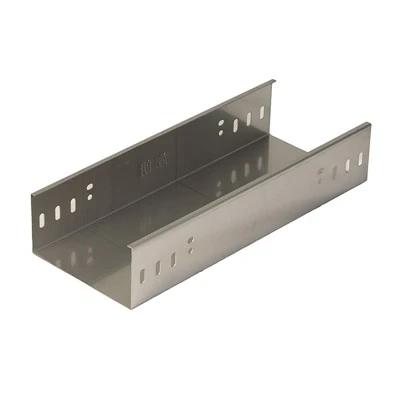
If you need more info, want to go over a specific project, or get a quote for aluminum cable trays and fittings, hit us up – we’re here to make your installation go as smooth as possible. Don’t overcomplicate it, just follow the basics, and you’ll be good to go.
Industrial Cable Tray References:
- National Electrical Manufacturers Association (NEMA) Standards for Cable Tray Systems, 2020
- Aluminum Association, Design Manual for Aluminum Cable Tray Installations, 2019
- National Fire Protection Association (NFPA) 70: National Electrical Code (NEC), Article 390, 2023
Hebei Jinglang Industrial Co., Ltd.
As one of the most professional aluminum cable tray manufacturers and suppliers in China, we also support customized service. We warmly welcome you to wholesale high quality aluminum cable tray in stock here from our factory. If you have any enquiry about quotation, please feel free to email us.
Address: Nanxinzhuang Village, Daweihe Hui and Manchu Township, Wen’an County, Langfang City, Hebei Province
E-mail: 18231629992@163.com
WebSite: https://www.jinglangcabletray.com/
