If you’ve ever worked in HVAC manufacturing, refrigeration, or industrial heat transfer systems, you’ve probably wondered about the not-so-obvious power suckers on your production floor—especially when it comes to corrugated fin forming machines. I’m Jake, and I’ve been selling these machines for 7 years now, fielding questions like “How much juice does that thing actually use?” at least a dozen times a week. The answer isn’t a one-size-fits-all number, but once you break it down, it makes total sense, no fancy engineering degree required. Let’s get into it. Corrugated Fin Forming Machine

First off, let’s define what we’re even talking about here. A corrugated fin forming machine isn’t just a fancy metal press—it’s a whole workflow in one machine: unspooling thin aluminum or copper coil, feeding it through precision rollers to stamp those wavy (corrugated) fins, punching holes for tubing, cutting it to length, and sometimes even bending or stacking the finished parts. Every step uses power, and that’s where the consumption varies so much.
Let’s start with the basics: average numbers, because that’s what most new buyers ask first. For a standard, mid-sized machine that handles 0.1mm to 0.5mm aluminum coil (the most common stuff for residential HVAC units), you’re looking at 15 to 30 kilowatts (kW) when it’s running at full tilt. Wait, hold on—“running at full tilt” is key here, because idle power is way lower, like 2 to 5 kW, which is what it uses when it’s sitting there waiting for the next coil roll or a new production order. If you’ve got a bigger machine that handles thicker copper coil (for commercial refrigeration or high-heat systems), that jumps to 40 to 60 kW when in full operation. I always tell customers to stop right there if they’re budgeting: don’t just look at the max kW, figure out how long the machine actually runs per day, because idle time adds up faster than you think.
Now, let’s talk about what actually uses all that power, because once you know the main suckers, you can tweak your operation to cut costs. The biggest one by far is the main forming drive. That’s the set of heavy-duty motors that spin the precision rollers to shape the fins. If you’re working with thick copper, that motor’s got to generate way more torque to bend the metal without cracking or warping—so that’s why copper machines use more power. Next up, the uncoiler and recoiler units: these are the things that hold the big coil rolls tight and feed them through the machine without slipping. A 2,000-pound aluminum roll needs a decent motor to spin it smoothly, and if you’re running it fast, that adds to the load.
Then there’s the auxiliary stuff that people often forget. Most modern fin machines have a hydraulic system for punching holes and cutting the fins—hydraulic pumps use constant power even when they’re idling a little, so if your machine has a inefficient pump, that’s a hidden drain. There’s also the control system: the PLC (programmable logic controller) that runs the machine, the touchscreen, the sensors that check coil thickness and alignment, and the cooling system for the hydraulic parts and the drive motors. Wait, cooling is huge—if you run a machine nonstop, those motors get hot, and if the cooling fan is underrated or not maintained, it has to work harder to keep things from overheating, which cranks up power use more.
Let’s test this with a real example, because numbers are meaningless without context. A customer of mine in Ohio runs two mid-sized aluminum fin machines 8 hours a day, 5 days a week, making fins for residential AC units. Their machine is rated at 22 kW full load, 3 kW idle. They run at 70% of max speed for most of that time (they don’t need top speed for thin aluminum), so actual average load is around 15 kW. Let’s do the math: 15 kW x 8 hours a day = 120 kWh a day. At their local industrial rate of $0.12 per kWh, that’s $14.40 a day, $72 a week, $3,744 a year per machine. Compare that to their old, 10-year-old machine that used 25 kW average load and had a 5 kW idle—they were burning $6,000 a year. That’s a $2,256 difference just for one machine, no joke. Another customer in Texas runs a copper fin machine 24/7 for commercial refrigeration parts: 50 kW full load, 4 kW idle, average 85% load because copper is trickier to shape. That’s 42.5 kW x 24 = 1,020 kWh a day, over $47,000 a year in power costs. Yeah, that’s when power consumption stops being a tiny line item and becomes a big factor in your bottom line.
Now, why do these numbers vary so much? It’s not just size of the machine. First, material type: copper is denser and stiffer than aluminum, so forming it takes more force, hence more power. Thickness matters too: a 0.8mm coil (used for heavy-duty commercial units) needs way more power than 0.1mm residential coil. Speed is another big one—if you run a machine at 100 feet per minute vs. 150 feet per minute, you’re using more power to move the metal faster, though most manufacturers optimize speed for their needs. Also, machine age: old machines with worn rollers, inefficient hydraulic pumps, or outdated motors can use 20-30% more power than a new, energy-efficient model. I’ve seen a 5-year-old mid-sized machine that was rated at 25 kW full load actually draw 31 kW because the drive motor was worn out. Maintenance plays a part too—lubricating rollers, cleaning cooling fans, and replacing worn sensors keeps the machine running at peak efficiency, so less power wasted.
Wait, can you actually calculate power consumption for your specific machine without having it in front of you? Yeah, there’s a quick way. First, check the manufacturer’s nameplate—every machine has a tag that lists the main motor’s horsepower (HP). 1 HP is roughly 0.746 kW, so a 20 HP main motor is about 14.9 kW, which lines up with the mid-sized numbers I mentioned earlier. But don’t just go by the main motor—add the power for auxiliary systems: hydraulic pumps are usually 3-5 kW, cooling systems 2-4 kW, controls 0.5-1 kW. Total that up, and you’ll get the max full load number, then you can adjust based on your material and speed. Also, get a power meter—they’re cheap, and plugging one into your machine for a week will give you the most accurate number, because real-world use is never exactly rated load.
Now, let’s talk about common myths I hear all the time. First myth: “Higher kW machines are always better.” No, not if you don’t need the power. If you only work with thin aluminum, a 20 HP machine is perfect—buying a 50 HP machine will just mean you’re paying for power you don’t need, even if you don’t use the full motor. Second myth: Idle power is negligible. Look back at that Ohio customer—their old machine’s 5 kW idle was $1,314 a year extra. If you leave a machine idling overnight and on weekends, that adds up fast. Third myth: All fin machines use the same power. I once had a customer compare two machines from different manufacturers, same size, and one used 20% less power because it had a variable frequency drive (VFD) on the main motor. VFDs adjust the motor’s speed based on how much load it’s handling, so they don’t waste power spinning at full speed when you only need half that. That’s a game-changer for efficiency.
So, what does this mean if you’re in the market for a corrugated fin forming machine? Power consumption isn’t just a utility bill afterthought—it’s part of the total cost of ownership, right up there with price, maintenance, and output speed. Here’s my advice: don’t just ask “how much power does it use?” Ask for a breakdown of full load, idle, and average load for your specific material and production needs. Ask if it has energy-saving features like VFDs, high-efficiency motors, and low-power idle modes. And if you’re replacing an old machine, calculate the projected power savings vs. the cost of a new model—you’ll be shocked how quickly that pays off.
I’ve been in this long enough to know that most buyers fixate on upfront cost, but the hidden costs—power, maintenance, downtime—can make a cheap machine way more expensive in the long run. I had a customer last year who bought a used machine for $10,000 less than a new one, but his power bill was $5,000 higher a year, plus he had to replace the hydraulic pump and rollers every 2 years for another $3,000 each time. Total, he ended up paying way more over 3 years than if he’d bought the new, slightly more efficient machine. That’s why I always lay all the cards on the table when I talk to people about fin machines—no hidden numbers, no vague claims, just real-world data based on their specific needs.
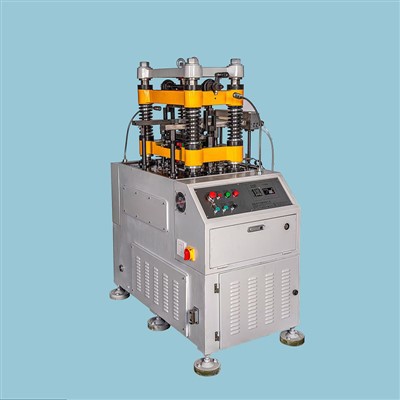
If you’re currently shopping for a corrugated fin forming machine, or you’re looking to upgrade your current setup to cut down on power costs, I’m here to help. I can walk you through specific numbers for different models, break down exactly how power use lines up with your production, and even share case studies from other companies in your industry. Don’t guess at power consumption or end up stuck with a machine that bleeds your profits every month—reach out, and we can hash out exactly what you need.
Servo Cutting Machine References
- ASHRAE. (2021). Energy Efficiency Guide for Industrial Heat Transfer Equipment. American Society of Heating, Refrigerating and Air-Conditioning Engineers.
- Machine Design. (2022). "How to Calculate Power Consumption in Forming Machinery." Association for Manufacturing Technology.
- U.S. Department of Energy. (2023). Industrial Motor Systems: Best Practices for Reducing Energy Use. Office of Energy Efficiency & Renewable Energy.
- Finishing Trades Institute. (2020). Operations and Maintenance Guidelines for Corrugated Metal Forming Equipment. International Union of Painters and Allied Trades.
Suichang Lvye Machinery Co., Ltd.
We are one of the most professional corrugated fin forming machine manufacturers in China, also support customized service with low price. We warmly welcome you to buy discount corrugated fin forming machine for sale here from our factory. If you have any enquiry about quotation, please feel free to email us.
Address: No. 402, Mudanting East Road, Miaogao Street, Suichang County, Lishui City, Zhejiang Province
E-mail: L528753@outlook.com
WebSite: https://www.suichanglvye.com/
